REVIEW · STOCKHOLM
Classic Stockholm Small Group Walking Tour | 3 Hours
Book on Viator →Operated by Adding:tours · Bookable on Viator
Stockholm clicks into focus fast on this walk. I like the small-group pace and the way your guide threads together big events with street-level details, from Viking links to today’s politics. The one thing to consider is that this is mostly an outside walking experience, with no museum entry fees included, so you will still want to book top attractions separately if you want indoor time.
I also like the “start smart, end strong” flow: you begin near the Stockholm City Museum area, then work your way toward the medieval Old Town core and finish at Stockholm City Hall. Guides run in English and you get local advice for cafes and restaurants, which is handy when you’re hungry right after the tour.
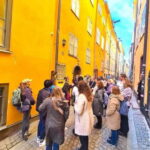
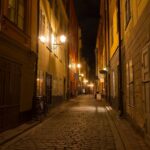
Finally, this is a true city walk. Expect cobblestones and a few step-and-stair moments, including the climb through Mårten Trotzigs Gränd, so wear supportive shoes and plan for some uneven footing.
In This Review
- Key highlights before you go
- Why a 3-hour Stockholm Old Town walk works so well
- Getting oriented at Södermalmstorg and the Stockholm City Museum area
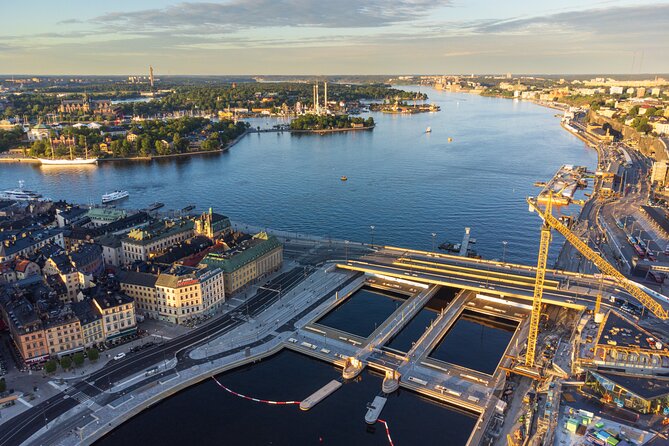
- Slussen: the bridge between old Stockholm and today’s changes
- Järntorget and Mårten Trotzigs Gränd: names that tell stories
- S:ta Gertrud and the German Church story, plus the Viking link at Runsten
- Nobel Prize Museum and Stortorget: a town square with consequences
- Saint George and the Dragon, the Iron Boy, and the Finnish Church
- Royal Palace exterior viewpoints, then Riddarholmen’s legal and monastic past
- Nobility, Supreme Court, Parliament, and Rosenbad: Sweden at work
- Stockholm City Hall finish: what to look for in the Blue and Golden halls
- Price and value: what you get for $66.52
- Pace, footing, and what to wear
- Who this tour is best for
- Should you book this Classic Stockholm Small Group Walk?
- FAQ
- How long is the Classic Stockholm Small Group Walking Tour
- How much does the tour cost
- What language is the tour offered in
- Where do you meet for the tour
- Where does the tour end
- Are attraction entry tickets included
- Do you get a ticket on your phone
- Is the tour suitable if I have moderate physical fitness
- Are service animals allowed
- What is the maximum group size
Key highlights before you go

- Small-group feel with the chance to end up in a tiny group on some departures
- Stop-by-stop storytelling that connects places you can see with events you can remember
- Photo-ready Old Town classics plus lesser-known corners like Mårten Trotzigs Gränd
- Sweden’s “now” as well as “then”, including current projects around Slussen
- Finish at Stockholm City Hall, with what to look for in the Blue and Golden halls
- Guide recommendations for food and cafes, so you know where to go next
Why a 3-hour Stockholm Old Town walk works so well
If you only have a short time in Stockholm, this tour is a strong first-day move. The route is compact enough to keep momentum, but varied enough that you quickly understand how different neighborhoods fit together on the islands and waterways.
You also get a helpful mix of topics. It’s not only kings and churches. You’ll hear about turning points in development, the meaning of street names, and what modern Stockholm is trying to change right now.
One more practical plus: the guide style shows up in the reviews. People talk about guides who answer questions during the walk, not only at the end. If you like to ask follow-ups as you go, this format fits.
You can also read our reviews of more walking tours in Stockholm
Getting oriented at Södermalmstorg and the Stockholm City Museum area
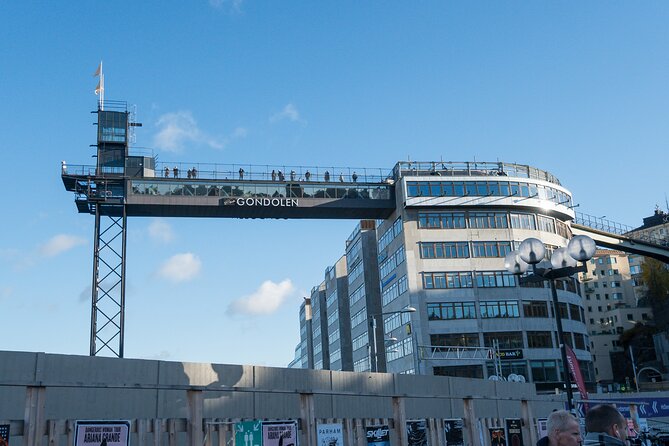
You meet at Götgatan 1, at the east entrance of the Stockholm City Museum area. That’s a good choice because it places you near public transit and sets you up for a route that moves toward Slussen and then into the Old Town orbit.
Södermalmstorg is where the tour begins to explain the city’s “layers.” Even in a few minutes, the guide sets the pattern: a place name isn’t just a label. It’s a clue to trade, community life, and how Stockholm expanded and reorganized over time.
If you’re arriving jet-lagged, this start helps you get oriented fast. You’re not stuck with a long lecture. You’re walking, looking, and learning as the city comes into view.
Slussen: the bridge between old Stockholm and today’s changes
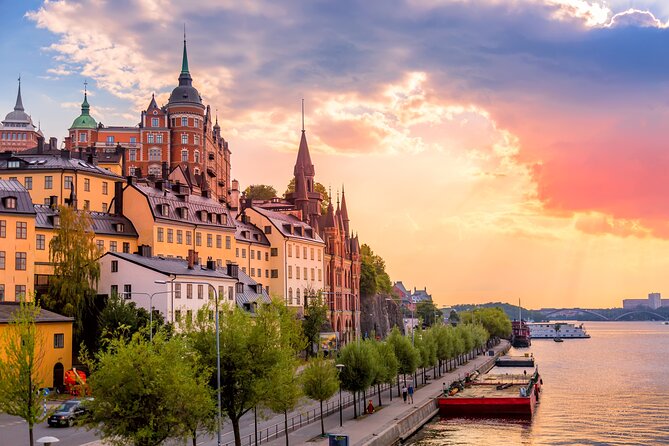
At Slussen, you get the tour’s early big-context moment. The stop focuses on Slussen as a key development point in both the early history and the current era, with attention to the project period listed as 2016 to 2025.
What I like here is the balance. You’re not only hearing “what used to be there.” You also learn what the area is doing now, which makes the next neighborhoods feel less random. By the time you reach the Old Town direction, you understand why the city is shaped the way it is.
Slussen is also a good place to pause and look around. The guide points out structures and development ideas at a walking pace that stays comfortable.
Järntorget and Mårten Trotzigs Gränd: names that tell stories
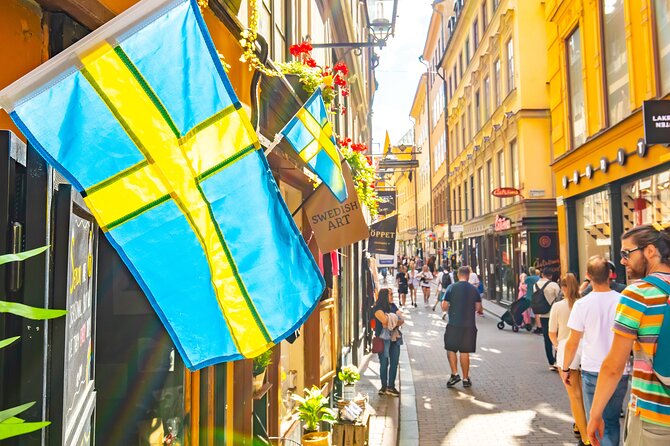
Next comes Järntorget, literally Iron Square. The tour uses the name to connect Stockholm to the iron processing world, then branches into how the square served other roles over time, including banking and cultural landmarks.
This stop works well if you enjoy human-scale history. You don’t just learn dates. You learn how economic life and cultural life shared the same streets.
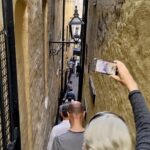
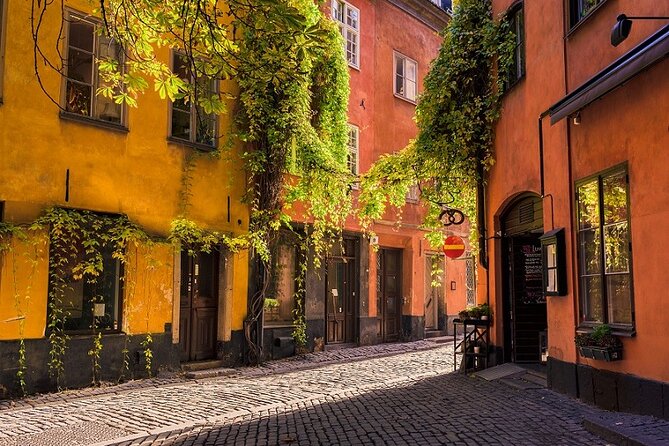
Then you move into one of Stockholm’s most memorable walking moments: Mårten Trotzigs Gränd. This narrow alley connects a 16th-century origin story involving a German merchant with a later 20th-century revival and preservation. The physical experience matters too: you climb 36 steps as part of the passage.
That step-and-stair moment is the practical drawback to keep in mind. If stairs make you slow or uncomfortable, plan for a slower pace here and keep your footing steady on stone.
S:ta Gertrud and the German Church story, plus the Viking link at Runsten
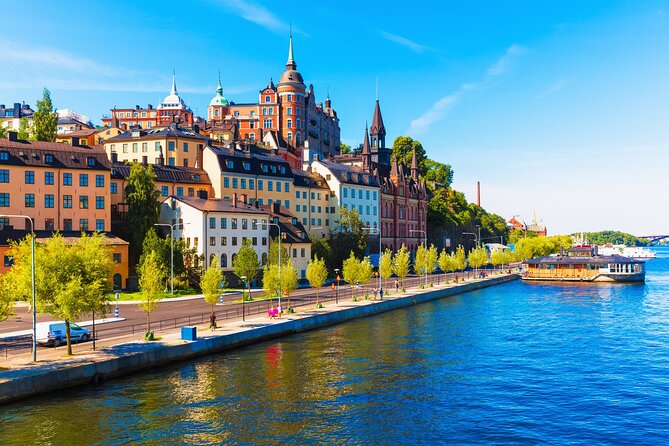
S:ta Gertrud and the Tyska kyrkan area is a big lesson in how communities formed in Stockholm. You learn that S:ta Gertrud’s Parish is one of the oldest German-speaking parishes outside Germany, with roots going back to the 16th century.
The guide explains how King Johan III granted Germans the right to form their own congregation in 1571, then later described how Germans were given exclusive rights to an original church cottage by 1607. Even if you are not visiting churches as a main priority, the explanation gives context for what you see in the neighborhood.
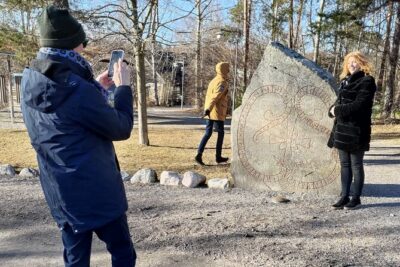
After that, you head to Runsten, specifically Rune Stone U 53. This is where the tour earns its “connection between eras” reputation. The guide frames the runestone as a bridge to Viking roots, and you also learn about preservation efforts that keep it part of modern Stockholm’s story.
I like this shift in tone. After churches and alleys, you get a simple, powerful object that makes history feel tangible.
You can also read our reviews of more tours and experiences in Stockholm


Nobel Prize Museum and Stortorget: a town square with consequences
The tour reaches the Stockholm Stock Exchange Building area, where the Nobel Prize Museum is located. You get key background: the museum was inaugurated in 2001 and that timing lines up with the Nobel Prize’s 100th anniversary.
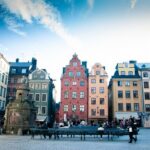
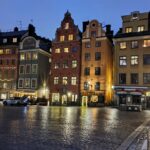
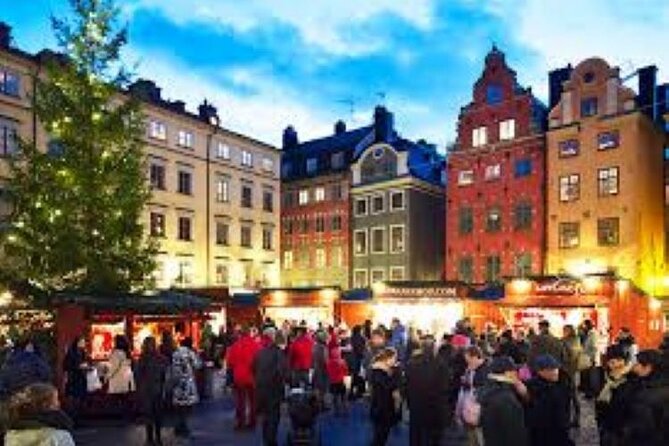
You then continue to Stortorget, Stockholm’s oldest square and the original growth center of the city. The tour doesn’t skip the hard part of history here. You hear about the Stockholm Bloodbath, dated November 7 to 9, 1520, which took place in this very square.
If you like architecture details, this segment delivers. The guide points out building names around Stortorget, including several historic houses tied to the square’s older elite families.
One extra Stockholm-to-pop-culture detail you may enjoy: the description includes that the famous ABBA photo was taken at a fountain in 1976, tied to Stortorgsbrunnen. Even without museum entry, it gives you a modern memory hook for a historic setting.
Saint George and the Dragon, the Iron Boy, and the Finnish Church
You’ll see Saint George and the Dragon associated with Stockholm Cathedral (Storkyrkan). The sculpture’s story is treated as symbolic history, not just art facts.
The guide explains the legend behind the piece and points to the belief that Sten Sture the Elder commissioned the original wooden sculpture in 1489, connected to his victory over the Union King Christian I at the Battle of Brunkeberg in 1471. Whether you care about sculpture or not, that historical link makes the statue easier to “read” when you look at it.
Then you reach Jarnpojken, the Iron Boy. What makes this stop fun is how small it is compared with everything around it, and how the tradition builds meaning. The tour description includes visitors leaving coins, patting its head, and knitting winter garments—little rituals that turn a tiny sculpture into a living Stockholm custom.
Finally, you pass by or learn about the Finnish Church, Finska kyrkan. The tour focuses on its story as a place that evolved from a royal tennis court into a worship site, and compares its significance to the German Church area. Even though it may not feel as grand, it’s presented as an important community anchor.
Royal Palace exterior viewpoints, then Riddarholmen’s legal and monastic past
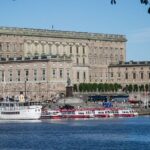
As you approach the Royal Palace area, the guide frames it as a 13th-century origin story tied to the Tre Kronor complex. You also hear what’s inside at a high level, including the Hall of State, the Royal Chapel, and Gustav III’s Museum of Antiquities.
Since the tour does not include entry to attractions, your time here is about orientation and what to notice. The guide points out statues tied to names like Karl XIV Johan and Gustav III, along with Olaus Petri and Kristina Gyllenstjerna.
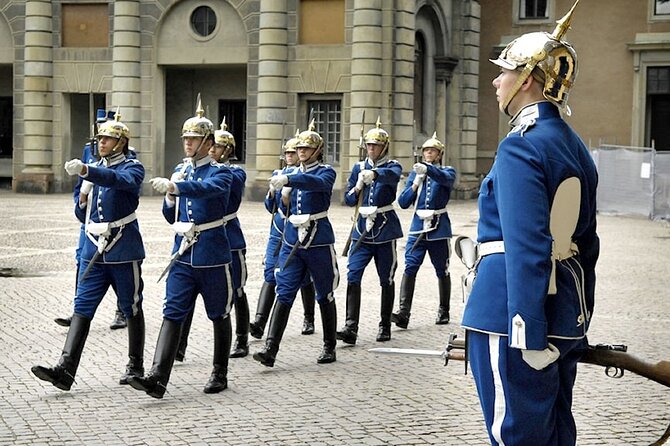
If your timing aligns, you may also catch the changing of the guards near the palace, which has shown up in guide experience reported from past tour days. Even if you miss it, the guide’s focus helps you watch without feeling lost.
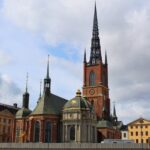
From there, you move into Riddarholmen. This district is described as a living museum, starting with the Grey Friars Monastery built in the 1200s. After the Tre Kronor castle fire in 1697, the island gradually shifted toward state agencies and court functions.
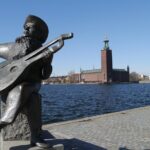
That legal shift is what I find valuable. It helps explain why Riddarholmen feels like it “means” something beyond tourism. The guide also mentions the Riddarholm Church and the Evert Taube statue, connecting literature and civic space.
Nobility, Supreme Court, Parliament, and Rosenbad: Sweden at work
The tour then keeps moving toward modern governance. You visit Riddarhuset, the House of Nobility palace, built between 1641 and 1674. You learn that it’s owned and managed by Sweden’s knighthood and nobility, and you get a sense of why the building is treated as a heritage symbol today.
Next comes Bondeska Palace, explained as the home of the Supreme Court. The point here is continuity: the building links architecture to the idea of justice and authority in a modern system.
Then you reach Riksdagshuset, Sweden’s Parliament building, constructed between 1895 and 1904. You also get a key governance change: the bicameral system replaced by a unicameral system in 1971. The tour adds a notable detail about a statue titled The Homeless Fox on the premises.
Rosenbad is the next stop, described as the seat of the Swedish government. It’s framed less like a historic monument and more like a working hub where policies are crafted. The tour doesn’t ask you to pretend this is only about the past.
If you like to understand how countries function, this chunk is one reason the tour scores so high. You finish learning about what Stockholm was, and then you learn what it’s trying to be now.
Stockholm City Hall finish: what to look for in the Blue and Golden halls
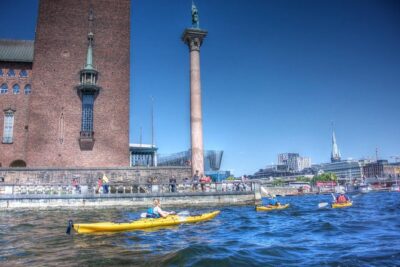
The tour ends at Stockholm City Hall. This is a smart finish because City Hall is both visually striking outside and important inside.
The guide explains the building’s mixed styles: Italian Renaissance and Nordic Gothic influences, plus the National Romantic style. Then the guide brings the building to life by connecting it with uses like the Nobel Banquet.
Even without entry, you can still understand why the building is famous. When your guide mentions the Blue Hall and Golden Hall, it gives you names to attach to photos later, and it helps you picture what events happen there.
If you plan your day tightly, this ending point is also convenient. It’s a strong landmark, which makes it easier to plan your next stop or transport home.
Price and value: what you get for $66.52
At $66.52 per person for about three hours, this tour is priced for value because it’s not just “pass by sights.” You’re paying for interpretation: connecting street names, structures, and sculptures to real events and institutions.
You also get guide support beyond the walk. The tour includes local advice for cafes and restaurants, which can save time and prevent you from settling for something mediocre after your tour ends.
One more value factor is the group size in practice. The format is sold as small group, and past departures have included cases where the group got very small, even to a one-on-one feel. That’s the kind of difference that turns a walking list into a conversation.
Pace, footing, and what to wear
This tour involves walking across varied terrain, including cobblestones and stair climbing. The Mårten Trotzigs Gränd segment includes 36 steps, and multiple reviews call out being ready for cobblestones.
I’d pack supportive shoes first and everything else second. If you have knee issues or balance concerns, take your time on the steps and plan for short pauses when your guide offers them.
The pace is described as leisurely, and the duration stays close to three hours, so you are not signing up for a full-day ordeal. Still, it’s not a sit-and-watch experience.
Who this tour is best for
You’ll like this tour if:
- You want a guided “first look” at Stockholm that helps you choose what to do next
- You enjoy history that connects to place names and street details, not only museums
- You like questions answered during the walk, not only at the end
- You want a route that covers Old Town areas plus today’s governance zone
You might skip it or add planning if:
- You want long indoor time inside museums or churches
- You have difficulty with stairs or uneven cobblestones and can’t comfortably manage short step segments
Should you book this Classic Stockholm Small Group Walk?
If your goal is to get grounded in Stockholm fast, I think it’s a smart booking. For one price, you get orientation across neighborhoods, plus storytelling that ties the city’s past to its present. And finishing at City Hall gives you a satisfying anchor at the end of three focused hours.
My booking advice: do this early in your trip. You’ll leave with clearer priorities, a better sense of where things are, and a guide’s recommendations for where to eat after. If you do it later, it still works, but the benefit is strongest when you use it to plan the rest of your days.
FAQ
How long is the Classic Stockholm Small Group Walking Tour
It runs for about 3 hours.
How much does the tour cost
The price is $66.52 per person.
What language is the tour offered in
The tour is offered in English.
Where do you meet for the tour
The meeting point is Götgatan 1, 116 46 Stockholm, Sweden, at the east entrance of the Stockholm City Museum area.
Where does the tour end
The tour ends in a different location. The information provided indicates it ends at Stockholm City Hall.
Are attraction entry tickets included
No. The tour prices do not include entry fees for museums or other special sites, and attractions are not entered during the tour.
Do you get a ticket on your phone
Yes, it uses a mobile ticket.
Is the tour suitable if I have moderate physical fitness
It’s listed as suitable for travelers with a moderate physical fitness level.
Are service animals allowed
Yes, service animals are allowed.
What is the maximum group size
This activity lists a maximum of 100 travelers.
If you want, tell me your travel dates and what you care about most (Old Town streets, royal stuff, Nobel connections, or politics), and I’ll suggest how to pair this walk with the best next stop.