REVIEW · STOCKHOLM
Private Tour: 3h Viking History from Stockholm to Runic Kingdom
Book on Viator →Operated by Sweden History Tours · Bookable on Viator
Runestones, laws, and Viking-world places in hours. This private 3-hour trip out of Stockholm turns the countryside into a classroom, with pickup included and a guide to translate the stories behind the runic monuments you’ll see.
I especially like the focus on real people and power, from Estrid and her memorial stones to Jarlabanki’s message carved into stone. I also love that you’re not stuck indoors; you actually walk the sites and hear how Vikings lived, fought, and made rules.
One possible drawback: the timing is tight. You’ll spend a lot of the 3 hours on the move and outdoors, so pack for weather and wear shoes you’re comfortable walking in.
In This Review
- Key highlights worth your time
- From 9:30 Pickup to a Fast Trip Into Viking Country
- Stop 1 in Täby: Estrid, Graves, and the Viking Women You Don’t Hear Enough About
- Jarlabanki’s Bridge Around 1030: Walk the Causeway and Read the Messages
- Arkils tingstad: The Viking Thing Meeting Place and Real-World Law
- Vallentuna Church: Runes, Signatures, and the First Written Swedish Ending Rhyme
- Why This Tour Works for Authentic Viking Understanding
- Price and Value: When $431.94 Per Person Makes Sense
- Practical Tips for Your 3 Hours Outside Stockholm
- Should You Book This Private 3-hour Viking History Tour?
- FAQ
- How long is the Private 3h Viking History from Stockholm to Runic Kingdom tour?
- Is this tour really private?
- What language is the guide?
- What time does the tour start, and where does pickup happen?
- Does the tour include round-trip transportation?
- Which cruise piers have pickup included?
- What stops are included during the tour?
- Are there admission tickets for the stops?
- What’s the cancellation policy?
Key highlights worth your time
- Private guide + round-trip vehicle: hotel or cruise pickup and drop-off with only your group
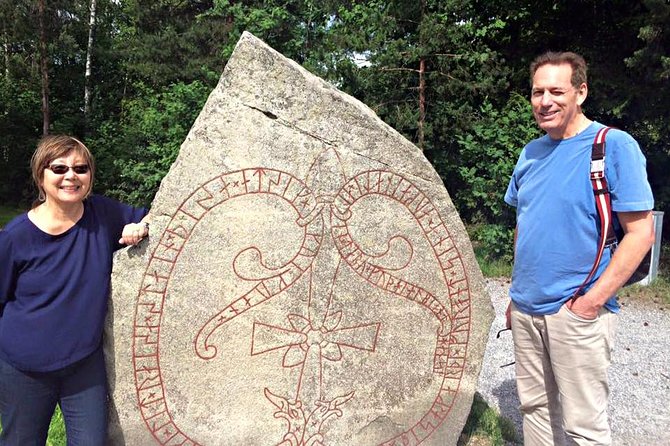
- Estrid’s runestones at Täby: a powerful Viking woman tied to graves, monuments, and memory
- Jarlabanki’s 150-meter bridge (around 1030): a causeway built by a Viking lord, with rune messages to interpret
- Arkils tingstad assembly site: Viking law and order, including stories about divorce and killing over insults
- Vallentuna Church (13th century): stone-master signatures and the first known written Swedish ending rhyme
- Free access at all stops: you’re not paying entry fees at each location
From 9:30 Pickup to a Fast Trip Into Viking Country
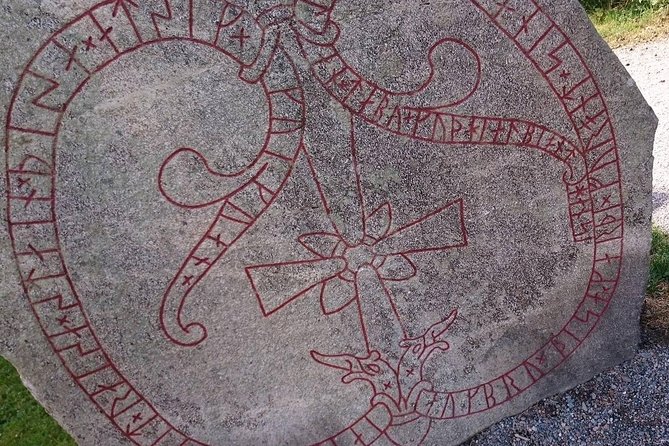
Your day starts at 9:30 a.m. with pickup from central Stockholm hotels and accommodations within about 5 km of Stockholm Central Station. Cruise passengers get specific meeting directions depending on the pier. If you’re arriving at Nynäshamn, note that pickup is not included there since it’s about 50 km away—plan to meet in central Stockholm instead.
From there, you’ll ride out in a comfortable private vehicle, and the drive is part of the experience. Many guides use the transfer time to give you the cultural background you’ll need once you’re staring at runestones and archaeological sites. Expect about 30 minutes each way for travel time, with the rest focused on a handful of meaningful stops.
This is the kind of format I like when you don’t have a full day. You get momentum (you’re out of the city fast), and you still get time to ask questions instead of rushing through a dozen photo stops.
You can also read our reviews of more private tours in Stockholm



Stop 1 in Täby: Estrid, Graves, and the Viking Women You Don’t Hear Enough About
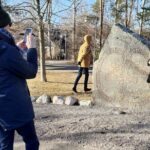
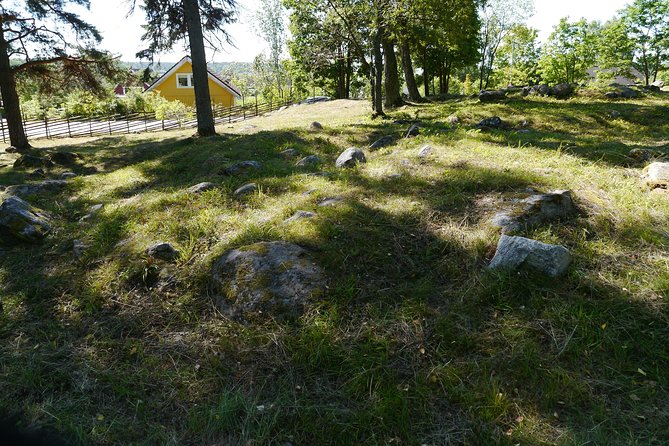
The first stop lands in the Täby area, where you’ll find several Viking Age rune stones and an associated gravefield with monuments and graves. This is where the tour leans into Viking life as something grounded: people lived, died, and carved their messages into the landscape so the memory would last.
Here you’ll learn about Estrid, a famous Viking woman tied to the stones she raised in remembrance of her dead family. The storytelling matters because it avoids turning the Vikings into one big movie plot. You’ll hear why the stones were made, what they were meant to communicate, and how local power worked through memorials.
Another strong detail: you’ll also see a local early Viking Age Christian gravefield with over 20 skeletons. That’s a useful reminder that the Viking world wasn’t a single, clean timeline. It was a real transition era—beliefs changing, communities overlapping, and burial traditions reflecting that complexity.
You’ll also get practical context, like how people dressed and what daily life might have looked like. Since this stop is free to visit, you’re using your time for meaning, not tickets. If you’re the type who likes to understand what you’re looking at before you move on, this first segment is a great start.
Jarlabanki’s Bridge Around 1030: Walk the Causeway and Read the Messages
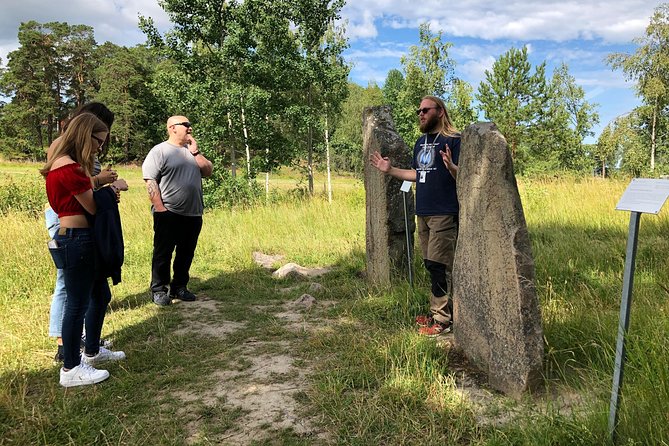
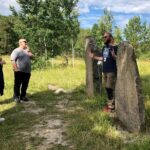
Next comes Jarlabanki’s runestones and the famous Viking bridge he had built around 1030. The causeway is about 150 meters long, which is a satisfying scale for a walk on a short tour. It’s not just a monument you glance at; it gives you a sense of how a powerful leader shaped movement and infrastructure.
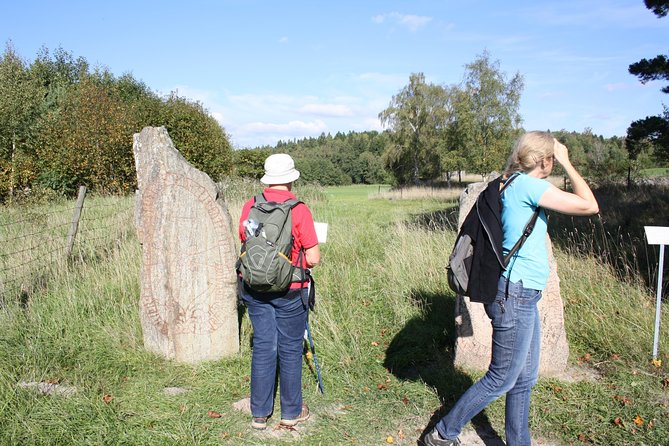
This is also where the rune stones become more than “cool carvings.” You’ll hear the message they carry—runestones as monuments of dead Vikings and also as public statements. Jarlabanki is presented as a self-confident lord, and the tour focuses on what that confidence meant in the Viking world: control, authority, and social structure made visible in stone.
A nice thing here is pacing. You get a short walk, then interpretation while you’re still physically close to the stones. That timing helps your brain connect reading the rune message with the geography—because in this part of Sweden, the stones weren’t randomly collected. They were placed in meaningful locations.
Since this stop is free, it’s easy to recommend to anyone who wants value and doesn’t want to trade time for paperwork.
Arkils tingstad: The Viking Thing Meeting Place and Real-World Law
Arkils tingstad is a unique stop because it focuses on governance, not just legend. This is a well-preserved Viking Age assembly place—often described as a place where the community handled legal and social decisions.
The tour explains how the thing worked as a system of law and order, including examples that sound both specific and oddly human. You’ll hear about laws around divorce, and rules related to killing someone due to insults. Even when you know the Vikings from the headlines and sagas, it’s helpful to hear law described as practical rules enforced inside a tribal structure.
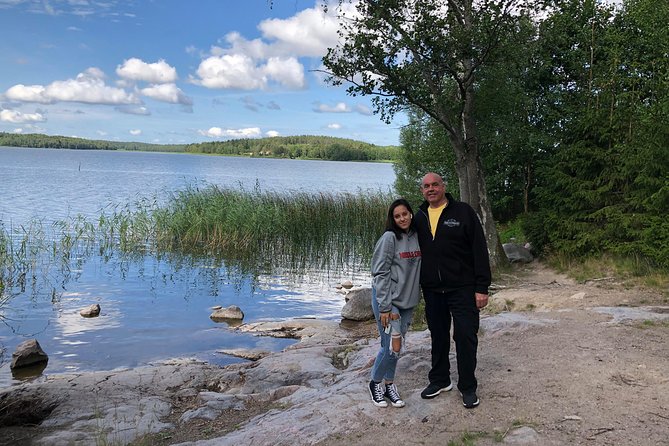
You’ll also have a lakeside setting, so the experience isn’t all dry explanation. You can step back, look around, and let the idea of public debate and community decision-making settle in.
One consideration: this stop is more about concepts than scenery. If you want only dramatic visuals, you may find yourself wanting a bit more time for questions. But if you’re curious about how people actually organized life, Arkils tingstad delivers.
Vallentuna Church: Runes, Signatures, and the First Written Swedish Ending Rhyme
The last stop shifts from Viking-era sites into a 13th-century church in Vallentuna. That change of setting is part of the point. Viking-era memory and medieval-era record-keeping meet here in one compact experience.
You’ll see the church interior described as more reformatic and bare compared with the vivid painted rooms that came before. That contrast helps you understand how the religious world in Sweden changed—and how older layers of memory survived even after major shifts in church practice.
Inside and around the church, you’ll also explore the stone-master signatures from when it was built. These signatures are a small detail, but they matter because they give names and human authorship to the stonework. It’s one way history stops feeling abstract.
The tour also highlights something truly specific: the first known written down Swedish ending rhyme is said to be in the church. That’s the kind of fact you’ll remember later, because it’s concrete and tied to place.
And since you’re still within Viking context, you’ll see the most locally known of Jarlabanki rune stones referenced in this stop. The tour effectively closes the loop: runic messaging, memorial meaning, and then later written culture.
You can also read our reviews of more historical tours in Stockholm



Why This Tour Works for Authentic Viking Understanding
I like this tour format because it treats Viking history like evidence, not like fantasy. You’re shown what the runes might have meant, then you stand where the stones still sit. That connection is the difference between learning about Vikings and understanding how Vikings left information behind.
This kind of private experience also makes a big difference. A good guide can answer the kind of questions you’d never ask on a bus ride. Some guides on this route are described as very engaged and professional, with people praising guides like Olof, Charlotte, Karl, Erik, and Quentin for their ability to explain both the big picture and the small details. (It’s worth noting that guides are people, so the vibe can vary—if you care about depth, go in ready to ask.)
I also appreciate the balance between myth and reality. You’ll hear stories and the cultural meaning of the stones, but you’ll also get practical context like daily life, clothing, and how laws were handled. That mix is why the stop selection feels thoughtful for a short tour.
If you’ve only visited Viking sites in museums, this will feel sharper. Museums are great for overview. This tour gives you the “why here” factor—why these monuments were placed where they were.
Price and Value: When $431.94 Per Person Makes Sense
At $431.94 per person for about 3 hours, this isn’t a budget choice. You’re paying for a private format: a guide, a driver, and round-trip transport, not just access to outdoor monuments.
So the value depends on you:
- If you’re a couple or a small group who wants to avoid crowding and get real Q and A time, the private setup is usually worth it.
- If you only have a short window in Stockholm and want Viking history without spending a whole day figuring out transport, this becomes strong value.
- If you’re traveling solo and you’re price-sensitive, it may feel steep. The upside is that this format is still efficient—this tour is designed to give meaning fast.
Also remember the tour includes pickup and drop-off (with the Nynäshamn limitation). That single detail can save you time and stress, especially on a cruise day when your schedule is tight.
Practical Tips for Your 3 Hours Outside Stockholm
Because this trip mixes walking and outdoor stops, you’ll enjoy it more with a bit of prep.
- Wear comfortable shoes. You’ll walk around runestone areas and across a causeway at Jarlabanki’s site.
- Dress in layers. Swedish weather can shift quickly, and you’ll be outside at multiple stops.
- Bring a small bottle of water. There’s time in between stops, but you don’t want to run out mid-walk.
- Ask before you start each site. If you want to understand runes and symbolism, it helps to request context early so you know what to look for while you’re there.
- If you’re on a cruise, double-check your pier. Pickup is included for certain terminals like S165/S167 (Stadsgården), F638 (Frihamnen), and V523 (Värtahamnen), but not for Nynäshamn.
If you do these basics, your 3 hours feel purposeful instead of rushed.
Should You Book This Private 3-hour Viking History Tour?
I’d book this if you want Viking history tied to real locations outside Stockholm—and you want it guided, not self-guided. The combination of Estrid’s memorial stones, Jarlabanki’s bridge, an actual thing assembly site, and a 13th-century church with a specific Swedish ending rhyme is a rare mix for such a short timeframe.
Skip it if you’re hoping for a long day with lots of stops, or if you only want dramatic Viking visuals and fewer explanations. This one is best for people who enjoy learning how societies worked: power, memory, law, and belief.
If you’re on the fence, consider this simple test: do you like runestones as messages and monuments, not just “cool rocks”? If yes, you’ll likely be glad you booked.
FAQ
How long is the Private 3h Viking History from Stockholm to Runic Kingdom tour?
It runs for about 3 hours.
Is this tour really private?
Yes. It’s a private tour, meaning only your group participates.
What language is the guide?
The tour is offered in English.
What time does the tour start, and where does pickup happen?
The start time is 9:30 a.m. Pickup is offered from central hotels, ports, and accommodations within 5 km of Stockholm Central Station. (Nynäshamn Harbour is not included for pickup.)
Does the tour include round-trip transportation?
Yes. It includes hotel or cruise port pickup and drop-off, plus a private vehicle/driver.
Which cruise piers have pickup included?
Pickup is included for cruise terminals at S165 or S167 (STADSGÅRDEN), F638 (FRIHAMNEN), and V523 (VÄRTAHAMNEN). NYNÄSHAMN does not include pickup.
What stops are included during the tour?
You’ll visit sites including Täby with Viking Age rune stones and a gravefield, Jarlabanke Runestones and his Viking bridge, Arkils tingstad (a Viking assembly place), and Vallentuna Church.
Are there admission tickets for the stops?
The tour information lists admission for the stops as free (including the rune stone and gravefield areas and the church stop).
What’s the cancellation policy?
There is free cancellation. You can cancel up to 24 hours in advance for a full refund. If you cancel less than 24 hours before the start time, the amount is not refunded.