REVIEW · STOCKHOLM
Private blood, ghosts and folklore Old Town 2h Stockholm tour
Book on Viator →Operated by Sweden History Tours · Bookable on Viator
One street at a time, Stockholm gets spooky. This private 90-minute walk turns Old Town landmarks into a Q-and-A ghost-story lesson and keeps the focus on specific Swedish folklore details you can actually picture on the spot. The only catch: if you expect a nonstop parade of famous, super-graphic hauntings, the story beats can feel more like well-paced folklore storytelling than a horror movie.
I liked how the route is built around places you can see and touch—squares, stairways, and church doors—so the myths feel less like reading and more like street-level explanation. You’ll also get an easy sense of direction while your guide handles the turns, which matters in Old Town’s maze of lanes.
If you’re sensitive to dark themes like executions, curses, and spirits that harm people, come ready for that tone. It’s also a short tour, so you’ll want comfortable shoes and a mindset that you’re sampling stories, not collecting every answer in Stockholm.
In This Review
- Key highlights you’ll remember
- Why Stockholm’s Old Town works so well for ghost stories
- Price and what a private 90-minute tour is really buying you
- Stortorget: death, executions, and the folklore logic of curses
- Prästgatan: the street nicknamed Hell
- Old Town: iron protection, vaesen in mist, and the mythology of doorways
- Logårdstrappan: Näcken and the water spirits that lure you under
- Kungsträdgården: huldran, Skogsrået, and the undead child Myrling
- S:t Jacobs Kyrka: the church door, baptism exorcism, and punishing enemies
- Walking pace and how long it takes to absorb the stories
- Who this tour suits best (and who should skip it)
- Should you book it? My honest take
- FAQ
- How long is the Private blood, ghosts and folklore Old Town tour?
- Is this tour private?
- Where do I meet the guide?
- Where does the tour end?
- Is a guide included?
- Do I need paid admission tickets for the stops?
- Are service animals allowed?
- What’s the cancellation policy?
Key highlights you’ll remember
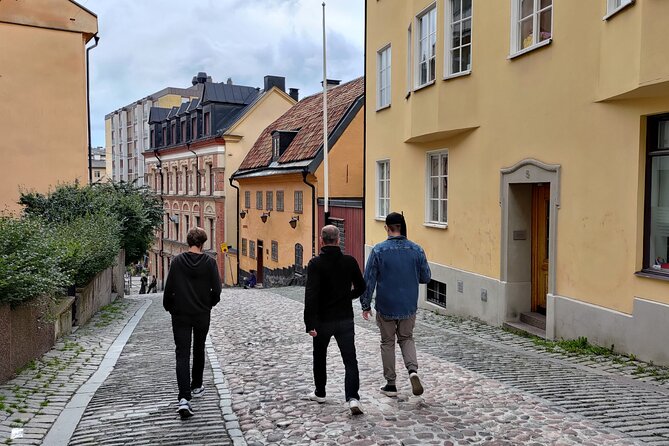
- Private-only walking format with time to ask questions and stay on your route
- Stortorget to S:t Jacobs Kyrka: folklore stops tied to very specific Old Town locations
- Protection magic on doorways: iron wards against vaesen, trolls, and even newborn vulnerability
- Water spirits at Logårdstrappan: Näcken, bäckahästen, Sjörå, and skepps-rå with luring and drowning themes
- Dark creatures in Kungsträdgården: Skogsrået/huldran and Myrling stories
- A church-door focus at the finish: baptism exorcism themes and what the folklore says about enemies
Why Stockholm’s Old Town works so well for ghost stories
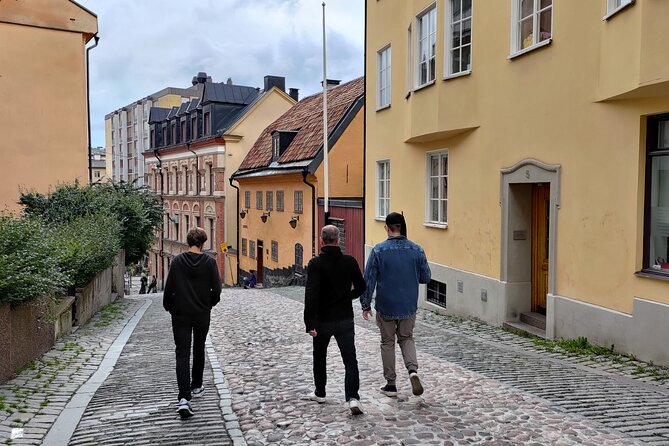
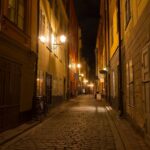
Old Town in Stockholm is perfect for this kind of tour because everything is close. You’re not hopping to far corners of the city—you’re walking within a compact area where squares, stone stairways, and church fronts keep repeating the same visual language: old materials, old thresholds, old “do not cross” vibes.
This is also a smart format for anyone who hates reading dry material. The tour is structured to take you from one story setting to the next, so you’re always grounding the folklore in a real location. You’ll catch the meaning behind the myths because the guide can point out what the story is reacting to—doors, water, stairs, and places where people gathered.
And yes, it’s dark. You’ll hear about curses, death, and spirits that don’t behave. But it’s not random. The stories connect to everyday concerns people had in earlier centuries: how to stay safe, who to fear, and what rituals people believed could protect a household.
You can also read our reviews of more private tours in Stockholm


Price and what a private 90-minute tour is really buying you
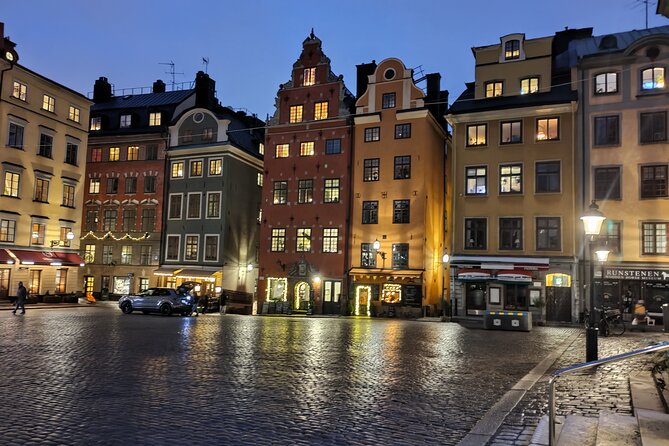
At $188.16 per person for about 1 hour 30 minutes, this isn’t an impulse, budget add-on. You’re paying for a private format, a guide, and a tight route that keeps you moving without getting lost.
So the value question becomes: do you want guided storytelling and on-the-spot explanations, or do you want to wander independently with a phone? If you enjoy asking questions and you’d rather not translate mythology on your own, private can be worth it. If you mainly want a self-guided walk with a playlist of spooky tales, you’ll likely find the price harder to justify.
You also get some small practical perks: there’s a mobile ticket, and there are group discounts. The tour runs as just your group, which helps if you want a calmer pace than a large group tour.
Stortorget: death, executions, and the folklore logic of curses
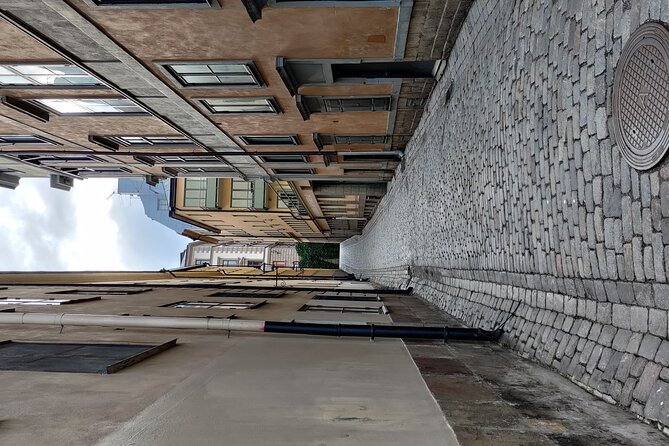
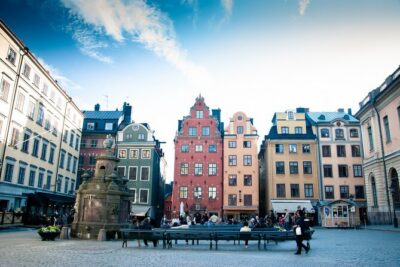
You start at Nobel Prize Museum Stortorget 2, in the orbit of Stortorget. This first stop sets the tone fast by talking about death and how folklore used the body in imaginative ways—yes, in gruesome terms, but with an explanation of what people believed it could do.
Stortorget is tied to the period when the Danish king Kristian took Stockholm, and the tour connects the place to executions of around 90 souls. That kind of detail matters because it turns a central square into a historical event space, not just a pretty postcard.
Then the story shifts from public violence to folk beliefs. You’ll hear about the belief that blood of the dead could be used for curses, and that body-part “components” played roles in how people imagined both protection and harm. It’s the kind of folklore logic that sounds shocking, until you remember the goal: people were trying to explain suffering, danger, and misfortune in a world that had fewer official answers.
Why I think this opening works: it gives you a framework. Once you hear how folklore was used to manage fear, the later vaesen stories make more sense.
Possible drawback: if you came in expecting only famous ghost tales from well-known legends, this start is more “myth and belief system” than “one specific mansion haunting.”
Prästgatan: the street nicknamed Hell
Next you walk along Prästgatan, where the tour brings up that it was formerly named Hell. That’s a great example of why walking matters: a name change can feel like trivia, but here it’s treated as a clue to what the street meant socially and emotionally.
Even with just a short stop, the idea sticks. “Hell” isn’t a random label—it suggests fear, wrongdoing, or a place where unpleasant realities were made visible. And it helps set your expectations for Old Town: people didn’t sugarcoat the dark parts of life.
The practical benefit: you’ll likely start spotting how the guide uses everyday details—street layout, named places—to connect myth to place. It trains you to look at Old Town like a puzzle, not a museum.
Old Town: iron protection, vaesen in mist, and the mythology of doorways
The core of the tour is when the stories move from events to household protection. At the door of a house, the guide focuses on protective beliefs—especially the use of iron to guard against vaesen.
You’ll hear about threats connected to mist and unrest: elves that arrive with the mist are tied to souls that don’t get rest. It’s folklore built on the idea that the world is full of in-between states—between life and death, safety and danger.
Then you’ll get the mix of familiar and surprising creatures:
- Tomte, a Swedish household spirit you’ll hear about in the context of home and guardianship
- door protection as a practical ritual idea
- the theme that a newborn before baptism lacks protection against trolls and even the Devil
That last part is especially interesting because it makes protection feel immediate. You’re not just fighting ghosts. You’re protecting a family in a specific moment of vulnerability. Doorways become a border line between inside (controlled) and outside (uncertain).
How to use this on your own visit: after hearing the door-focused folklore, you’ll likely notice thresholds more on your walk—steps, entries, and how homes face the street. That alone can change your entire Old Town experience.
You can also read our reviews of more tours and experiences in Stockholm



Logårdstrappan: Näcken and the water spirits that lure you under
At Logårdstrappan, the tour turns to water folklore—spirits that are tied to drowning and luring. Water in a dense city like Stockholm isn’t just scenery. It’s transport, work, danger, and myth all at once.
You’ll hear names that sound like they were made for storytelling:
- Näcken
- bäckahästen, the Swedish version compared to the kelpie idea
- Sjörå
- skepps-rå
The theme is consistent: these vaesen are connected to water and can harm people, pulling them toward deep places. It’s folklore that treats the shoreline like a boundary zone where the rules change. If you walk near water after this stop, you’ll probably feel the myth tugging at you in the background.
A small pacing note: this is a focused stop, so don’t expect a full encyclopedia lecture. Expect the names, the danger pattern, and the folklore reasoning behind why people feared water in the first place.
Kungsträdgården: huldran, Skogsrået, and the undead child Myrling
Now you shift from water to forest-adjacent and death-linked creatures, starting at Kungsträdgården. This stop brings in vaesen like Skogsrået, also known as huldran. You’ll also hear about Myrling, an undead living child tied to sucking blood and spreading death.
The point of this section isn’t just scary names. It’s a reminder that Swedish folklore includes multiple categories of threat:
- nature spirits tied to specific environments
- household threats that target vulnerable life stages
- and undead stories that turn childhood into a symbol of fear and loss
The guide’s job here is to keep the map straight. They connect each creature to a theme—woods, death, or household boundaries—so you don’t leave with a pile of names and no pattern.
If you’re picky about tone: this section leans darker than the door protection stories. It’s still explained, but the creature themes are brutal.
S:t Jacobs Kyrka: the church door, baptism exorcism, and punishing enemies
The tour continues to the outside of S:t Jacobs Kyrka and focuses on the church door and the folklore idea of weak points. That sounds odd until you realize the theme again: doors and thresholds are where protection is tested.
Here, the stories circle back to baptism. You’ll hear about exorcism of the kid at baptism and what you should do if you had a worst enemy to punish. The goal is to show how folklore treated sacred moments as high-risk and high-need for protection.
Churches were among the most solid buildings in earlier communities, so the folklore logic of “still, doors have weak points” is a reminder: people believed the supernatural could reach even where you’d expect safety.
When the tour ends, it finishes outside Old Town on the north side beside Kungsträdgården, with a roughly 10-minute walk back to the start area. That makes it easy to keep sightseeing afterward without feeling trapped in a long loop.
Walking pace and how long it takes to absorb the stories
This is about 1 hour 30 minutes total, so you’ll be moving often, with short storytelling segments at each point. That can be a plus or a minus depending on what you want.
If you like compact tours with clear stops, it’s a good fit. The guide takes care of navigating, so you won’t waste time trying to figure out where the next “story door” is. And because it’s private, you can ask questions without competing with a crowd.
If you prefer long, slow rambling and deep back-and-forth discussion, you might feel the tour moves quickly. The stops are designed to keep the flow tight, so you’ll likely want to save deeper follow-up reading for later once you know which stories hooked you.
Who this tour suits best (and who should skip it)
I’d point you toward this tour if you want:
- a private ghost and folklore walk with question time
- a route that uses real Old Town locations to explain myths
- a guided way to make sense of death-related folklore without turning it into a homework project
You might consider skipping it if:
- you mainly came for famous, high-drama palace-style ghost stories and want lots of detailed event retelling
- you’re hoping for a long list of modern folklore facts rather than a guided storyline about protection, vaesen, and thresholds
- you dislike dark themes like curses, executions, and spirits that harm people
Should you book it? My honest take
Book it if you like folklore with a sense of place and you value a guide who can answer questions while you walk. For the price, you’re really buying convenience (private route focus) and a story structure that turns Old Town’s streets into an actual “map of fear.”
Don’t book it expecting a never-ending horror show. The tour is short, and the stories are paced like a guided walk-through, not a theatrical monologue. If you’re okay with a focused, myth-centered approach—doors, water spirits, and church-door protection—this is a strong way to spend your time in Stockholm.
If you’re unsure, a good rule is simple: if you’re excited by names like Näcken, bäckahästen, huldran, and Myrling, you’ll probably have a good time. If those myths don’t interest you, the tour’s dark tone may not feel worth the cost.
FAQ
How long is the Private blood, ghosts and folklore Old Town tour?
It’s approximately 1 hour 30 minutes.
Is this tour private?
Yes. It’s a private tour/activity, so only your group participates.
Where do I meet the guide?
The meeting point is at Nobel Prize Museum, Stortorget 2, 103 16 Stockholm, Sweden.
Where does the tour end?
It ends just outside Old Town on the north side besides Kungsträdgården, outside Saint Jacob’s Church at Västra Trädgårdsgatan 2A, 111 53 Stockholm, Sweden.
Is a guide included?
Yes, the guide is included.
Do I need paid admission tickets for the stops?
The listed stops show admission ticket free.
Are service animals allowed?
Yes, service animals are allowed.
What’s the cancellation policy?
You can cancel for a full refund up to 24 hours before the experience starts. If you cancel less than 24 hours before, the amount paid is not refunded.