REVIEW · STOCKHOLM
Stockholm Must See – Old Town, boat + Vasa Museum 3h small group
Book on Viator →Operated by Sweden History Tours · Bookable on Viator
Old Town becomes a history lesson fast. This is a small-group Stockholm classic that strings together the city’s top sights in Gamla Stan and then ties it all to Sweden’s big stories, including a guided visit to the Vasa Museum with skip-the-line access. I like tours that do more than point: this one uses guide storytelling to connect squares, churches, alleys, and royal power to what really happened there.
Two things really stand out to me. First, you get a lot of must-see Old Town in one compact 3-hour plan, so you’re not stuck guessing which corners matter most. Second, the guide work can be standout—names like Peter, Olaf, Tobi, Christoff, and Åsa pop up in past experiences, and the common thread is clear: the history feels explained, not recited.
One possible drawback: the Vasa Museum time is fixed and Vasa tickets are not included in the tour price. If you’re the type who wants to linger for hours at one museum, you may wish you had scheduled a longer, separate Vasa visit.
In This Review
- Key highlights at a glance
- Slottsbacken Obelisk to the first big story: Gustav III’s dramatic end
- Gamla Stan power stops: Royal Palace views and Stortorget’s Bloodbath
- Small signs of old Stockholm: runes, executioner streets, and Storkyrkan
- Nobel to knights and monks: Riddarholmen, Järntorget, and the House of Knights
- Harbor promenade to Djurgården: ferry views and medieval battle talk
- Making the Vasa Museum worth the fixed time
- Price and value: paying $135.69 for a guided plan that saves time
- Practical tips that make the tour feel smoother
- Who this Old Town plus Vasa combo fits best
- Should you book this tour?
- FAQ
- How long is the Stockholm Old Town and Vasa Museum tour?
- What is included in the tour price?
- Are Vasa Museum tickets included?
- Which language is the tour offered in?
- What is the maximum group size?
- Where do we meet and where does the tour end?
- Does the tour run in bad weather?
- Is the tour mostly walking?
- Is free cancellation available?
- What if the tour doesn’t meet the minimum number of travelers?
Key highlights at a glance
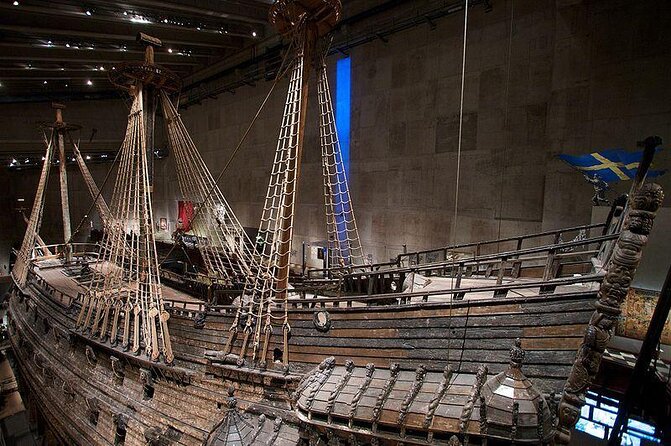
- Skip-the-line access to the Vasa Museum (but you buy museum entry separately)
- One-way ferry ticket to Djurgården, so you see the water routes, not just streets
- A guided Old Town walk through places tied to Gustav III, the Bloodbath, and medieval power struggles
- Max 15 travelers, with a chance it can feel close to private if the group is small
- Small alley stops like Marten Trotzigs grand, plus runes and executioner-related streets
- Djurgården and WWII shelter context, before you return to the big hit: the Vasa ship
Slottsbacken Obelisk to the first big story: Gustav III’s dramatic end
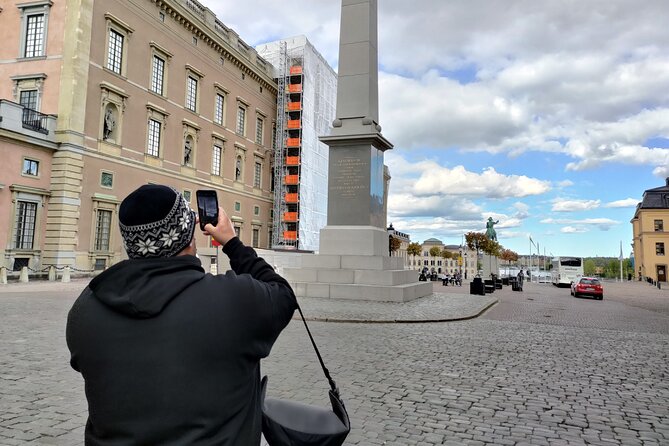
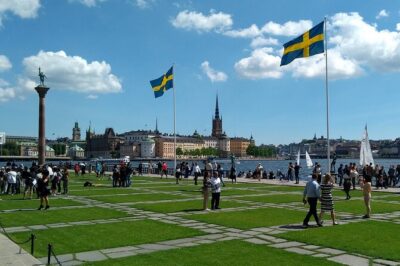
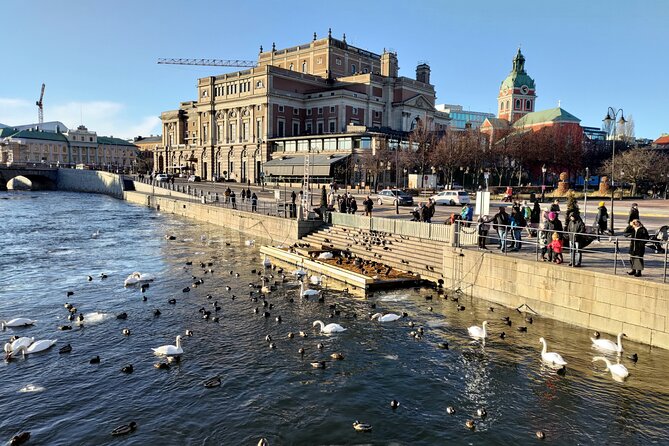
Your tour meets at Gustav III:s Obelisk on Slottsbacken. It’s a smart start because you’re standing above Old Town with a view of the kind of power that shaped Stockholm. Your guide kicks off with the day’s plan, then ties this monument to the history of King Gustav III’s killing connected to the Royal Opera.
That opening matters. If you try to learn Stockholm on your own, you’ll see buildings and dates. With a guide framing the story immediately, the rest of Gamla Stan starts to click: who held power, who lost it, and how public spaces became stages for politics and violence.
Also, this first stop is quick—around 10 minutes—and it’s free to be there. If you want a tour that respects time while still giving you context, this is the right way to begin.
You can also read our reviews of more boat tours in Stockholm



Gamla Stan power stops: Royal Palace views and Stortorget’s Bloodbath
From the Obelisk, the walk moves through the heart of Old Town’s political and public spaces. You pass by the Finnish church of Stockholm early on, then you reach the Royal Palace area. The palace stop is short and outside-focused, with the palace itself not included for entry. That’s fine, because the payoff is your guide’s explanation of the monarchy and what the palace role meant for daily life and national identity.
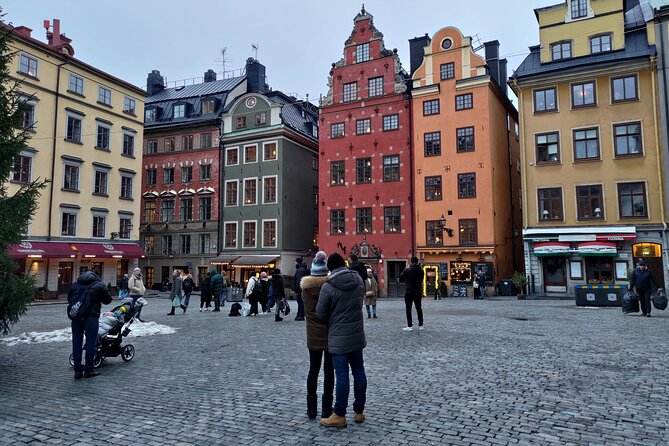
Then comes Stortorget, Stockholm’s main square. This is one of those places you can technically wander alone—but you’ll miss the emotional weight if you do. Your guide connects Stortorget to the Bloodbath of Stockholm and points out the 17th-century facades and decorative details you’d otherwise rush past.
If you want to photograph Stockholm’s classic “postcard square,” this is where you do it. And if you care about history with consequences, this is where your guide’s stories make the stone-and-stucco backdrop feel real.
Small signs of old Stockholm: runes, executioner streets, and Storkyrkan
After Stortorget, the tour shifts into the kind of history you don’t get from a basic guidebook list. You’ll see a runestone at Runsten, then walk by Prästgatan, known for its connection to executioners. It’s an intense topic, but the guide keeps it grounded in place—meaning you understand why this street existed, not just that something happened on it.
Next is Storkyrkan, Stockholm’s main church. There’s a brief stop where your guide explains what you can learn from the church and even mentions recent archaeological excavations shaping how people understand ancient life in the area. Even if you don’t go inside, you’ll leave with a clearer sense of how layered Stockholm’s center really is.
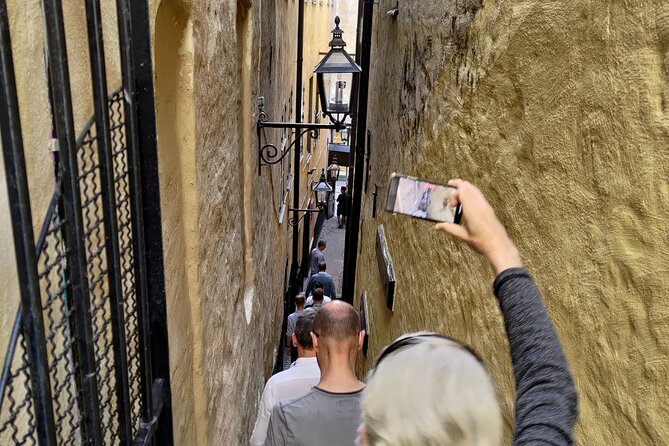
Then you’re sent to one of the most memorable Old Town details: Marten Trotzigs grand, celebrated (and named) for being one of Stockholm’s smallest alleys. It’s only about a 5-minute stop, but it’s perfect for breaking the pace. You get a quick, striking visual, plus a tragic or cautionary story tied to the alley’s name—exactly the kind of detail that makes a guided tour feel worth it.
Nobel to knights and monks: Riddarholmen, Järntorget, and the House of Knights
Old Town isn’t only kings and battles. Stockholm also built prestige through learning, awards, and church-linked power. You pass by the Nobel Prize Museum area and hear about Alfred Nobel and the history surrounding Stortorget itself.
Then the walk heads to Riddarholmen, described as the island of the Nobels. The guide threads together stories of monks, fires, and flames. This is another stop where your imagination can catch up with the physical space. From the streets you see today, it’s hard to picture how often cities like this were shaped by disaster and rebuilding. Hearing it explained here helps.
You also get time around the House of Knights in Stockholm—another short stop, but a useful one if you like history that includes institutions, not only people. After that, the tour shifts to Järntorget, tied to trade networks and the German part of Old Town. You don’t have to read old maps to follow the story; your guide translates it into what you can see on the ground.
If you’re trying to get a map in your head quickly, this stretch does a lot of work.
Harbor promenade to Djurgården: ferry views and medieval battle talk
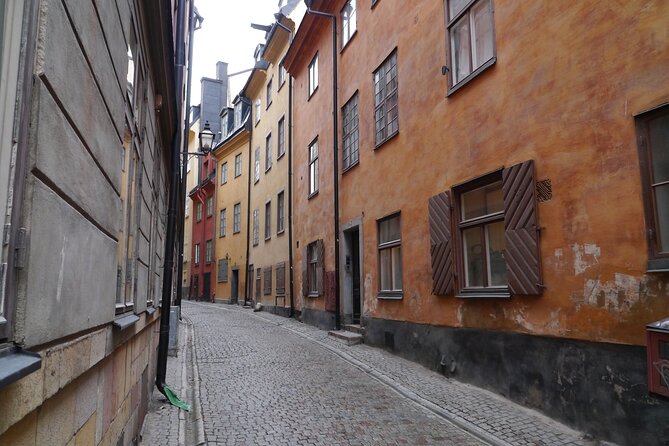
Next you move toward Skeppsbrokajen Promenade, the old harbor area. Even if you’ve been to other northern capitals, Stockholm’s waterways change the feel of the city. Here, you get trade-and-waterway context while you wait for the ferry crossing.
The ferry is a real part of the experience. You get a one-way ferry ticket, then step across toward Kungliga Djurgården. This is no random detour. Djurgården was historically tied to royal hunting and military naval use, and it’s now a park-and-museum island.
Along the way, the tour includes a stop by the Statue of St. George, with medieval battle stories connected to the statue. It’s brief, but it adds a different flavor: less “royal palace” and more “how legends and power fights show up in public art.”
On Djurgården, you’ll also hear about Vrak and Viking museums and that they’re housed in WWII shelters built to withstand airplane bombs. That gives you a quick layer of 20th-century Stockholm before you go back in time even further at the Vasa.
Your guide also points out modern runestones at the entrance and talks about the Viking age. Even though you’re moving fast, these stops keep the tour from turning into one long march.
You can also read our reviews of more museum experiences in Stockholm





Making the Vasa Museum worth the fixed time
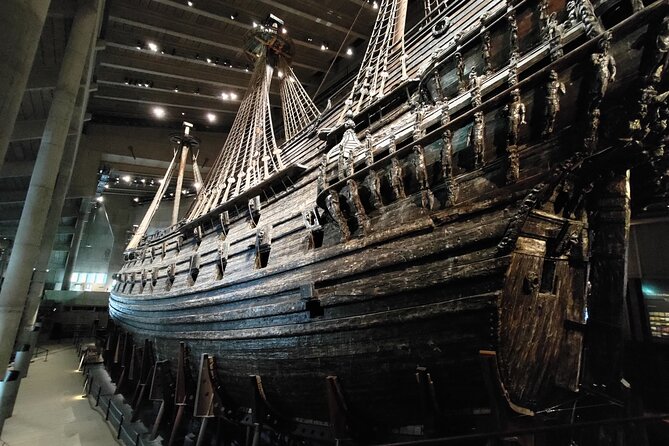
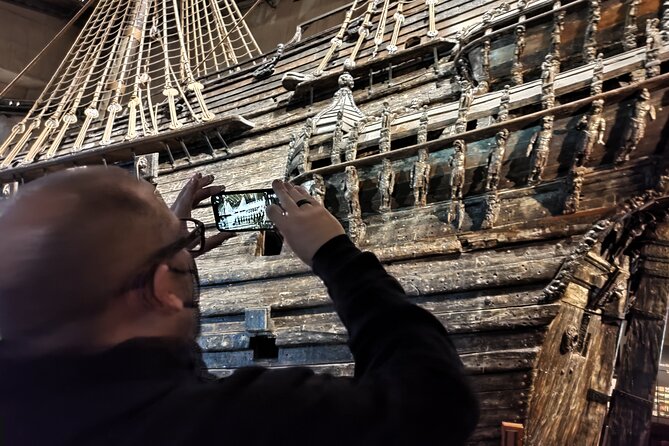
The Vasa Museum is the big finish. Your guided time focuses on the ship and the story behind it: the Vasa set sail, failed, and sank after sailing roughly 1,200 meters. The ship you see today is about 40 meters long, and it’s described as around 98% original 17th-century wood.
This museum can feel overwhelming if you’re walking in cold, because there’s so much detail. That’s where the guide earns their keep. You don’t just look at a wreck; you learn what failed, why it mattered, and what the ship says about the people who built it and the world that funded it.
One important planning note: the tour includes skip-the-line access, but Vasa tickets aren’t included. Also, the guided visit doesn’t mean unlimited time. On some departures, museum closing time affects how long you’ll be inside. In practice, expect that the guided segment is designed to fit a short, structured visit rather than a slow, self-paced browse.
If Vasa is your top priority, plan your day so you’re not trying to do three other things afterward. Even with a tight schedule, this stop is built to be the emotional climax.
Price and value: paying $135.69 for a guided plan that saves time
At $135.69 per person for about 3 hours, you’re paying for three kinds of value:
1) Time-saving routing in Old Town
You cover a lot of recognizable landmarks quickly: squares, churches, alleys, and harbor areas. If you’re short on time, this is the difference between wandering and actually seeing the places that tell Stockholm’s story.
2) Ferry + guide structure
The tour includes a one-way ferry ticket and uses it as part of the narrative. You also get a local, authorized guide. That matters because the ferry and the city walk connect to the history instead of just being transit.
3) Skip-the-line at Vasa
This is the biggest operational win. The Vasa Museum is popular, and skip-the-line access helps you start your visit sooner rather than burning your limited time.
What you should watch for is your own willingness to trade flexibility for guidance. If you like to linger, you’ll feel the time boundaries. If you want a “best-of” route with explanations that turn the city into a story, the price looks more fair fast.
Practical tips that make the tour feel smoother
A few practical points can save you stress:
- Wear walking shoes. Old Town is cobblestones and short distances that still add up.
- Dress for all-weather operation. This tour runs rain or shine, so bring layers and a rain layer if needed.
- Use the mobile ticket you receive. It’s meant for day-of smoothness.
- Expect short stops. Many locations are outside or brief. If you want long indoor time at places like the Royal Palace or Nobel sites, those entries aren’t part of this experience.
- Bring stamina for a moderate walking pace. It’s not described as a strenuous trek, but it is a walking-and-standing day.
If you’re doing Stockholm with kids, this can be trickier because the stops are history-heavy and structured. If your group likes stories and photos, it works well.
Who this Old Town plus Vasa combo fits best
This tour is best for you if you are:
- A first-timer who wants Gamla Stan basics fast
- Time-pressed and want top sights linked by real stories
- Interested in the Vasa ship but would rather have it explained than just stared at
- Traveling in a group that likes hearing context while walking
It’s also a good pick if you’re the type who benefits from a guide’s corrections and details. Stockholm’s Old Town can trick you into thinking everything is just pretty facades. This tour pushes you to see why the facades exist.
On the lighter side, there’s plenty of humor in the way guides present it, so it doesn’t feel like a lecture. And since group sizes top out at 15, you’re not stuck in a huge shuffle line.
Should you book this tour?
I’d book it if Stockholm Old Town and the Vasa Museum are your two main priorities and you want them connected by a guided story. The combination of a guided Old Town walk plus a skip-the-line Vasa visit is a strong use of a half-day.
I’d think twice if you’re the kind of museum visitor who wants to spend a long, slow afternoon inside Vasa with no structure. In that case, you might prefer buying a longer Vasa plan separately.
My take: if you want the city’s highlights in one go, and you enjoy history that points to what you’re actually standing next to, this is a smart way to spend your time in Stockholm.
FAQ
How long is the Stockholm Old Town and Vasa Museum tour?
It runs about 3 hours.
What is included in the tour price?
The tour includes an Old Town city walk, a local Stockholm City Tour Guide, a one-way ferry ticket, and skip-the-line access to the Vasa Museum. Central meeting and a mobile ticket are also included.
Are Vasa Museum tickets included?
No. Vasa Museum tickets are not included.
Which language is the tour offered in?
The tour is offered in English.
What is the maximum group size?
The tour has a maximum of 15 travelers.
Where do we meet and where does the tour end?
You meet at Gustav III:s Obelisk, Slottsbacken 1, 111 30 Stockholm. The tour ends at Vasa Museum, Galärvarvsvägen 14, 115 21 Stockholm.
Does the tour run in bad weather?
Yes. It operates in all weather conditions, and you should dress appropriately.
Is the tour mostly walking?
Yes. It’s a walking tour with short stops and includes a ferry crossing.
Is free cancellation available?
Free cancellation is available up to 24 hours in advance for a full refund.
What if the tour doesn’t meet the minimum number of travelers?
The tour requires a minimum number of travelers. If it’s canceled due to not meeting the minimum, you’ll be offered a different date/experience or a full refund.