REVIEW · STOCKHOLM
The Nordic Food Walk Stockholm
Book on Viator →Operated by Food Tours EU · Bookable on Viator
Stockholm tastes different on foot. I love the Östermalms Saluhall start and the way the tour mixes classic Swedish comfort food with modern takes, not just the same old tourist snacks. I also like that you get multiple tastings plus a glass of wine, so you actually leave fed and informed. One possible drawback: it’s a good walking tour, and the group can be up to 20 people, so pacing matters in colder months.
This is a 4-hour Nordic Food Walk in English, with morning or afternoon departures. You’ll start near Beirut Café on Nybrogatan (find your group at the meetup address), then finish in the Old Town area around Kindstugatan. Expect mobile tickets, a guide leading the way, and stops packed into different neighborhoods instead of one restaurant loop.
The finale is a proper Swedish fika moment—usually kanelbullar (cinnamon bun) plus strong coffee—so plan your appetite accordingly. I’d also count on tasting enough food that you’ll want to skip a big meal beforehand; one of the most repeated tips is to not eat breakfast and show up hungry.
In This Review
- Key highlights I’d mark on your Stockholm map
- Why this Stockholm food tour feels practical (not just tasty)
- Östermalms Saluhall: carved wood, family-run food, and the meatball lesson
- Stureplan to K25 on Kungsgatan: seafood, people-watching, and less-touristy Stockholm
- Chokladfabriken’s hot chocolate and Hötorgshallen’s produce energy
- P&B Delikatesser to Fagel & Vilt: truffles, licorice, and game meats
- Norrlands Guld, fruit stops, and Old Town’s fika finale in Gamla Stan
- Price and value: what you’re really paying for at $122.32
- Pace, group size, and what to wear on the cobblestones
- Best for whom (and who might want a different style of tour)
- Who’s driving the day: real guide names and what to expect
- Should you book the Nordic Food Walk Stockholm?
- FAQ
- How long is the Nordic Food Walk Stockholm?
- Where does the tour start and end?
- Is the tour offered in English?
- What’s included in the price?
- Can the tour handle vegetarian diets or allergies?
- Should I eat before the tour?
Key highlights I’d mark on your Stockholm map
- Östermalms Saluhall first: an old-school market hall that feels like it still belongs to long-time families
- Meatballs with context: you learn what’s served with them and why jams matter, not just what the dish is
- Stureplan and Kungsgatan detours: you see areas many people skip, plus a modern food-hall vibe at K25
- Chokladfabriken hot chocolate: made with 65% cocoa and cardamom—sweet, but not boring
- The licorice factor: traditional Swedish licorice shows up, and yes, it can be intensely salty
- Gamla Stan fika ending: cobblestones, candy, then the kanelbullar-and-coffee break
Why this Stockholm food tour feels practical (not just tasty)
A good food tour does two jobs: it feeds you, and it helps you read the city. This one does both. You get guided access to Stockholm’s food culture through markets and specialty shops, then you learn how everyday Swedish foods connect to places, traditions, and even local shopping habits.
I also like the “walk and taste” rhythm. Instead of one long meal, you’re sampling in small chunks across the day’s route. That makes it easier to keep your energy for the neighborhoods you’re moving through—Stureplan, Kungsgatan, then eventually Old Town—without feeling like you’re chained to a table.
At $122.32 per person for about 4 hours, the value is mostly in the food coverage: multiple tastings, plus water and a glass of wine included. This is the kind of tour that helps you decide where to eat later, because you’ll know what you actually want to repeat (or what you’re happy to try once and move on).
You can also read our reviews of more walking tours in Stockholm
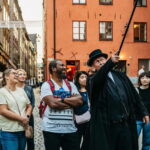

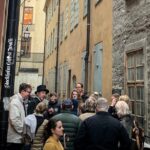
Östermalms Saluhall: carved wood, family-run food, and the meatball lesson
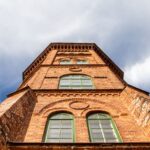
Your tour begins near the food world’s old heart: Östermalms Saluhall, described as Stockholm’s oldest food market. The building isn’t just a backdrop. You’re meant to notice the preserved interior wooden carvings and the craftsmanship on the eaves—details that make the whole place feel older than your phone photos.
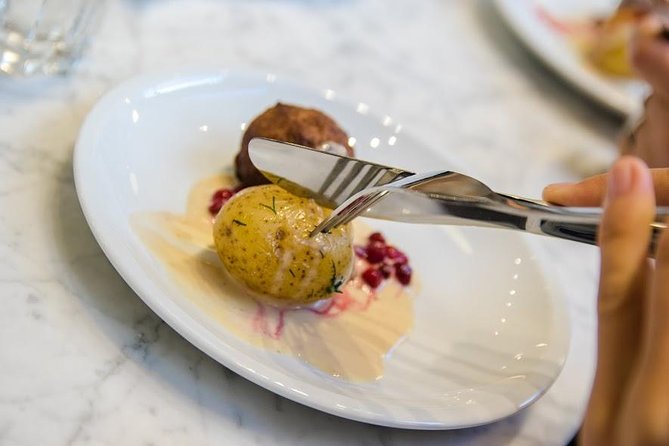
From there, you start eating. The tour’s first tastings include Swedish staples, including modern Swedish meatballs, often described as slightly changed from the classic version and lighter in style. You won’t just take a bite and move on. The guide walks you through the meatball basics—what types of potatoes to serve with them and why Swedish jams show up with the dish.
That jam piece sounds small, but it’s the kind of Swedish food detail that changes how you order later. If you know the role of sweet-tart accompaniments, you’re less likely to treat Swedish meatballs like generic hamburger meat in sauce.
This stop is also a nice orientation for the trip. You’ll get your bearings fast: the market layout, how Swedish vendors present products, and what kinds of ingredients are normal here.
Stureplan to K25 on Kungsgatan: seafood, people-watching, and less-touristy Stockholm
After the market start, you head toward the center with a goal: see areas that many visitors skip. One of the route’s specific moves is going through Stureplan, then continuing to Kungsgatan.
At K25, you’re in an urban food-court setting that feels more like where locals grab meals than where tourists pose for pictures. You’ll try local seafood as part of the tastings, and you also get a glass of white wine during this stretch. This pairing makes the seafood stop feel like a real meal moment, not just another bite-and-go station.
Even if you’re not a big seafood person, this is one of the route sections I’d recommend because it breaks the pattern. You’re learning Swedish food in two ways at once: via traditional market culture and via modern, city-style eating spaces.
A practical note: this part involves walking between areas. If your pace is slower, it helps to stay close to the guide early so you’re not always joining the group at the far end.
Chokladfabriken’s hot chocolate and Hötorgshallen’s produce energy
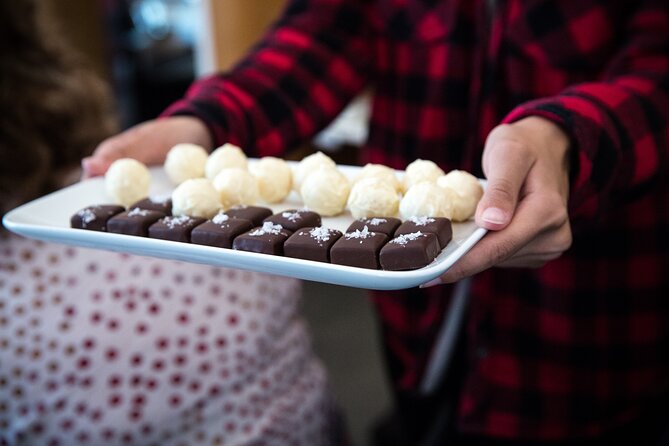
Next comes a sweet stop with real street-level Stockholm credibility: Chokladfabriken. Their hot chocolate is described as legendary, made with 65% cocoa and cardamom. The flavor combo matters: cardamom gives it a warm, slightly spicy edge, so it’s not just thick sugar.
After that, you shift back into market territory at Hötorgshallen. This is where you get to peruse stalls filled with Swedish delicacies and fresh produce. The point isn’t only to shop. It’s to see what people buy when they’re planning meals at home.
This segment is a good time to reset your palate. Hot chocolate helps if you’re feeling overwhelmed by savory tastings earlier, and it gives you something cozy to hold onto during the winter cold (if you’re visiting then).
One small consideration: if you’ve been walking nonstop since the morning, the hot chocolate can feel heavy. Take small sips. You’ll still get the experience without overdoing it.
P&B Delikatesser to Fagel & Vilt: truffles, licorice, and game meats
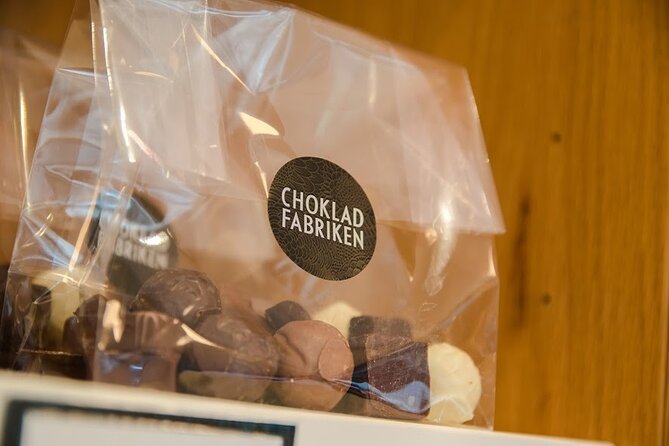
This is the part of the tour that turns into a real “try everything” challenge. At P&B Delikatesser, you taste a mix of homemade products—think truffles, traditional Swedish licorice, and cloudberry jam. Licorice is the most talked-about item from the overall experience, and it’s a great reminder that Swedish flavors can be bold in ways that don’t always translate overseas.
Then the route continues through more specialty stops:
- Husmans Deli for artisan cheese
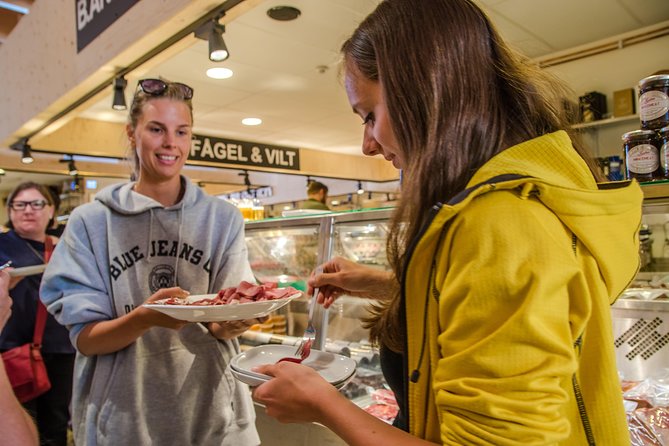
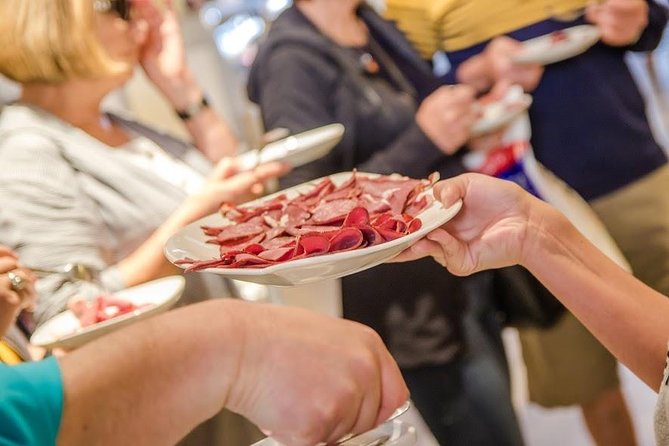
- Fagel & Vilt for cured meats, including smoked reindeer and elk salami
Game meats aren’t rare in Swedish menus, but they can feel intimidating if you’ve never had them. Here, you’re tasting them in small amounts with guidance, so it’s less of a “commitment dinner” and more of an education in what these flavors are like.
This stretch is also where the guide’s style really shows. I’ve heard guides named Cotton, Theresa, Sarah, and Caoimhe praised for sharing the food-and-places context—like how preparation and local preferences shape what ends up on the counter. The best moment is when the guide connects what you’re eating to where you’re standing.
One drawback to keep in mind: tastings vary slightly from one person to another based on what’s served and how fast the line moves. On one day, you’ll get a perfect final bite. On another, you might find a pastry component drier than you expect. If you’re picky about freshness, keep your expectations flexible.
You can also read our reviews of more food & drink experiences in Stockholm

Norrlands Guld, fruit stops, and Old Town’s fika finale in Gamla Stan
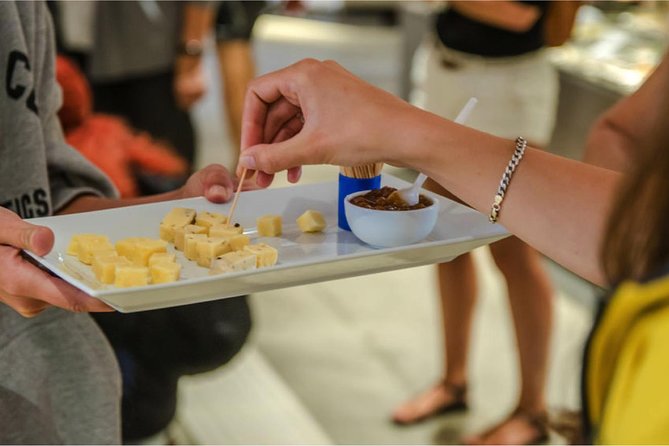
After the cured meats and cheese, the tour keeps the pace going—no long sit-down restaurant endurance required. You’ll wash it down with Norrlands Guld beer, then follow that with fresh fruit from Lisbeth Janson Frukt & Grunt. That fruit break is smart. It cuts through the salt and smoke from the cured meats so you can enjoy the last leg instead of feeling like you’re stuck in “savory only.”
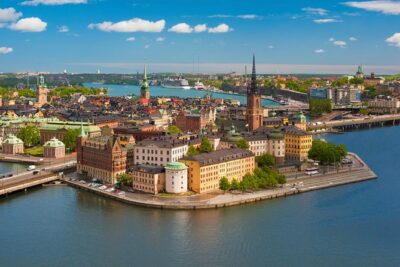
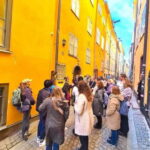
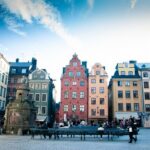
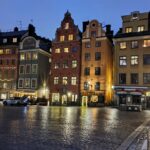
Then you walk into Gamla Stan, Stockholm’s Old Town, where the cobblestone streets change the mood. Along the way, there’s a pause at a candy store before the last tasting: traditional fika.
Fika is the heart of the Swedish rhythm: a mid-afternoon or evening break built around coffee and a pastry. On this tour, the fika focus is kanelbullar and strong coffee. If you’ve only tried coffee on your own while traveling, this is where you learn the Swedish version of slowing down—small breaks, good conversation, and a pastry that isn’t an afterthought.
As for timing, the tour is listed at about 4 hours, but plan extra buffer. I saw feedback that the experience can run longer in practice. If you’re booking the rest of your day tightly, give yourself breathing room.
Price and value: what you’re really paying for at $122.32
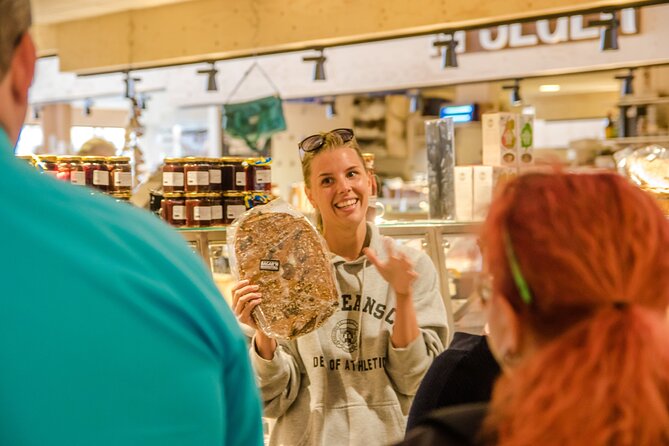
The ticket price of $122.32 for around 4 hours sounds like a lot until you break down what’s included. You’re paying for:
- a professional guide
- multiple food tastings across several food halls and specialty shops
- water
- a glass of wine
The real value is how the guide helps you make sense of what you taste. Markets like Östermalms Saluhall and specialty shops aren’t just places to eat; they’re places to understand the Swedish food system—how products are arranged, how flavors pair, and what locals tend to buy.
It’s also a good deal compared to “paying retail” for all the same foods yourself. You’d likely spend similar money if you added a seafood stop, cheese sampling, cured meats, dessert, and drinks one by one. Here, those costs are bundled into a guided route.
If you care about food as more than entertainment—if you want to actually learn what to order in Sweden—this price tends to feel fair.
Pace, group size, and what to wear on the cobblestones
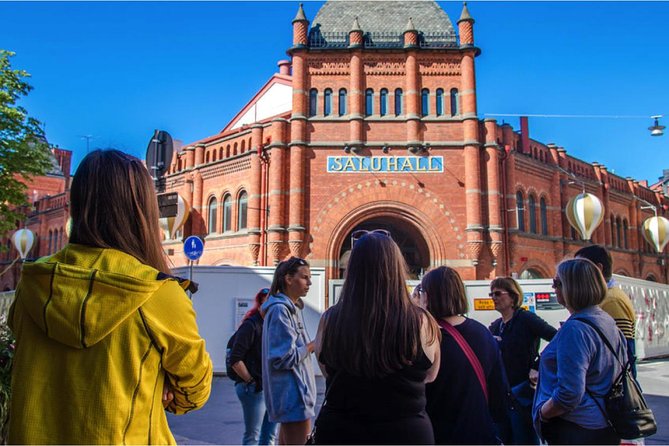
This tour has a moderate fitness requirement, and it’s walking-focused. The route includes multiple stops across central Stockholm, plus cobblestones in Old Town at the end. Wear shoes you trust. One of the clearest tips from experience is to bring good walking boots.
Group size is capped at 20, and in the past, some people felt the number mattered for tasting flow. That means you might occasionally stand in a short line or wait for the group to get served. Nothing unmanageable, but it’s not a private-foodie bubble.
If you’re sensitive to cold, bundle up. I’ve seen feedback that cold weather shouldn’t stop you, but you’ll feel better if you’re prepared. Bring a warm layer for outdoor segments and something windproof if your weather is sharp.
If your group tends to move quickly, stay near the guide at each stop. That helps with getting your share of the tastings without feeling rushed.
Best for whom (and who might want a different style of tour)
I think this tour is ideal for:
- food-first travelers who want a Swedish taste test with context
- couples or solo travelers who like small-group walking
- people who plan to eat their way through Stockholm later and want a cheat sheet of what to seek
It may not be ideal if:
- you hate crowds and prefer one long seated meal
- you’re looking for a super-slow, sit-and-savor pace
- you can’t handle walking between several stops, especially if you’ll find cobblestones tough
If you have dietary restrictions, this is something to plan carefully. You should tell the operator during booking if you’re vegetarian or have food allergies. Once the tour begins, tastings can’t be changed, so don’t rely on last-minute adjustments.
Who’s driving the day: real guide names and what to expect
A big reason people rate this tour so high is the guide. I’ve seen multiple names praised for both food guidance and city context:
- Cotton (including spellings like Colton/Kotton)
- Theresa
- Sarah
- Caoimhe
The common thread is clear: these guides don’t treat Swedish food like trivia. They explain how and why foods show up where they do, and they answer lots of questions without making you feel silly for asking.
If your guide has that conversational style, you’ll get more than tastings. You’ll walk away with “I can order this next time” confidence.
Should you book the Nordic Food Walk Stockholm?
If you want a real Stockholm food education—market halls, specialty shops, a modern food-court stop, and a proper fika finale—book it. It’s one of the best ways to get from first-time arrival to having a working sense of Swedish flavors in a single afternoon or morning.
I’d especially recommend it if you’re the type who likes to keep traveling plans flexible: you’ll taste enough different foods that you can adjust your next restaurant choices based on what you actually enjoyed.
If you hate walking, or you want a restaurant-style tour with long seats and slow service, you might prefer a different kind of food experience. But if you can handle a few hours on your feet and show up hungry, this one is an efficient, flavorful way to understand Stockholm through food.
FAQ
How long is the Nordic Food Walk Stockholm?
It runs about 4 hours.
Where does the tour start and end?
The tour starts at Beirut Café, Nybrogatan 29, and ends at Kindstugatan 1 in Stockholm.
Is the tour offered in English?
Yes, it’s offered in English.
What’s included in the price?
You get a professional guide, food tastings and free samples, a glass of water, and a glass of wine.
Can the tour handle vegetarian diets or allergies?
Let them know during booking if you are vegetarian or have food allergies. Once the tour has begun, tastings can’t be changed.
Should I eat before the tour?
I’d plan to arrive hungry. Multiple people suggest skipping breakfast because the tastings are substantial and you’ll likely be full by the end.