REVIEW · STOCKHOLM
City Sightseeing Stockholm Hop-On Hop-Off Bus
Book on Viator →Operated by City Sightseeing Ltd - Europe · Bookable on Viator
Stockholm’s sights are easiest when you move at your pace. This red double-decker hop-on hop-off bus gives you a full sightseeing loop with onboard commentary, so you can hop off for the big hits and hop back on when you’re ready. I like that it’s built for first-timers and for short trips, with stops placed close to major landmarks across central Stockholm and Djurgården.
I love the flexibility of choosing a 24- or 72-hour ticket (this specific booking is a 24-hour option) and the practical setup onboard: audio guide commentary in English and free headphones. You also get free Wi-Fi and wheelchair-accessible buses, which matters more than you’d think on a long day.
One drawback to plan around: the last departure is 5pm from Stop 1, and while buses run about every 30 minutes, service can feel slower at busy stops or in peak times. Build in some extra time so you don’t end up chasing the next bus.
In This Review
- Key Points That Matter
- Why This Hop-On Hop-Off Loop Works in Stockholm
- Price Check: What You Really Get for $40.85
- Tickets, Timing, and How to Not Get Stranded
- Route Walkthrough: From Stromgatan to Old Town and Into Djurgården
- The Big Hits: Vasa, ABBA, Skansen, and Gamla Stan
- Audio Guide Reality: 11 Languages, Headphones, and Sync Issues
- On-Board Comforts: Wi-Fi, Accessibility, and Where to Sit
- For Cruise Passengers: Using the Bus as Your Shore-Day Backbone
- So, Should You Book This Stockholm Hop-On Hop-Off Bus?
- FAQ
- What’s the duration of the City Sightseeing Stockholm hop-on hop-off bus loop?
- Do I need to choose between a 24-hour and a 72-hour ticket?
- Are mobile tickets accepted on this tour?
- What language is the audio guide offered in?
- What attractions are included in the ticket price?
- Is the bus wheelchair accessible?
- Can I get a refund if my plans change?
Key Points That Matter
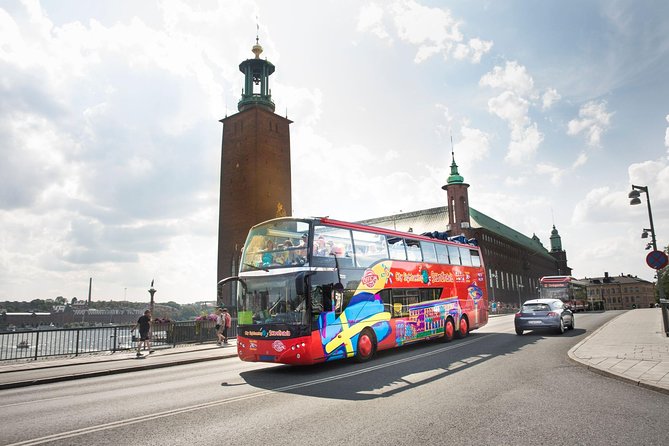
- A loop that hits the big landmarks fast: Gamla Stan, the Royal Palace, Vasa Museum, ABBA Museum, and Skansen.
- Self-paced sightseeing: stay on for the full ride or hop off only where you want to spend time.
- Audio in 11 languages with free headphones so you can follow along without reading signs the whole way.
- Wi-Fi onboard + wheelchair accessibility, handy for families and anyone moving carefully around the city.
- Cruise-ship friendly: cruise terminal stops appear on cruise days, extending the loop when docked.
- Red and green buses are not the same: make sure you’re boarding the correct service for your ticket.
Why This Hop-On Hop-Off Loop Works in Stockholm
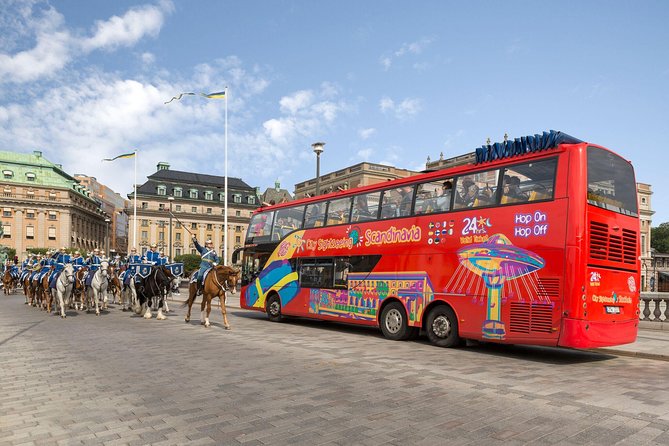
If you want one simple way to get your bearings, this is it. Stockholm’s geography can be a little mind-bending at first: water everywhere, neighborhoods spread out, and a lot of walking unless you plan routes ahead. This bus creates a clear spine through the city, so you can sample multiple areas in a single day without committing to a packed tour schedule.
I also like the mindset behind the service. You’re not being rushed from stop to stop every few minutes. Instead, you choose when to stay on and when to step off, using the bus as your moving connector between sights like the Old Town and the museums on Djurgården.
You can also read our reviews of more city tours in Stockholm



Price Check: What You Really Get for $40.85

At $40.85 per person, this isn’t a “cheap and cheerful” sightseeing trick. It’s more like buying time and convenience. You’re paying for transport between key districts plus an onboard audio guide, not for admission to the attractions themselves.
Entry fees are not included, so plan to budget separately for the museums or experiences you want to go inside. The value shows up when you’re hitting more than one major site—like Vasa Museum plus ABBA Museum plus something in the Old Town—because otherwise you might just use one or two city walks and miss the point.
If you’re unsure, think like this: if your day includes several top stops with some “I’ll decide after I see it” flexibility, the hop-on setup usually makes sense. If you only want one attraction, a single-entry ticket plus local transport may fit better.
Tickets, Timing, and How to Not Get Stranded

You can redeem both mobile and printed paper vouchers at any of the stops along the route. That flexibility helps if you arrive late, get rerouted by weather, or need to start from the closest convenient stop rather than the first one.
Hours matter. The first departure from Stop 1 is 10am and the last departure from Stop 1 is 5pm. Since buses run every 30 minutes, you might expect a steady rhythm—but it’s smart to treat the interval as a guideline, not a promise. Stockholm can get busy, and if you’re waiting at a popular stop, give yourself a buffer.
Also watch the bus color. The buses are red and green, and you should make sure you board the correct service. If you’re standing at a stop that looks like it should be yours, still double-check the details before the doors close.
The loop is about 60 minutes when it’s running without the cruise terminal extensions. If the route includes cruise terminal stops while a ship is docked, expect around 90 to 120 minutes and treat that as a cue to plan your day with less rushing.
Route Walkthrough: From Stromgatan to Old Town and Into Djurgården
This route is built around three big zones: the city center sights near the Opera and Palace area, the Gamla Stan / Old Town stretch, and then the museum-and-park peninsula of Djurgården.
Here’s how the stops line up in a way that’s useful for planning your day.
Stop 1: Karl XII’s torg (Stromgatan / The Royal Opera)
This is a good starting anchor. You’ll be positioned near major central streets and the Royal Opera area, which helps if you want to get oriented quickly before you commit to a museum plan. If jet lag hits, this is also where you can start calm and decide later.
Stop 2: Lovely Cruises (The Royal Palace)
The Royal Palace stop is a core “must see” node. From here, you can choose to jump off for Palace-area walking and then continue onward for Old Town vibes or museum time.
Stop 3: Stockholm Slussen kajen (Old Town)
This is where the trip starts to feel more atmospheric. Old Town, with its maze-like streets and classic Stockholm feel, is the kind of place where hopping off and wandering beats rushing.
Stop 4: Kungsträdgårdsgatan 13 (Kungsträdgården)
This stop is useful when you want parks and open-air strolling between big attractions. It’s also a handy place to break up your day so you’re not stuck doing only indoor sites.
Stop 5: Styrmansgatan (Strandvägen)
Strandvägen is one of those “you’re in Stockholm” streets—views, water, and the city’s elegant feel. It’s a good mid-route pause for photos and a quick reset.
Stop 6: Djurgårdsvägen 13 (The Vasa Museum / Nordiska Museum)
This is the start of Djurgården’s museum cluster. If Vasa Museum or Nordiska museet is on your list, this is where you should pay attention, because it’s a major time investment. Getting off here also sets you up for a full afternoon style plan.
Stop 7: Grona Lund Tivoli (ABBA The Museum)
If ABBA is part of your Stockholm story, this stop makes it straightforward. It’s also close to the family-friendly side of Djurgården, so it works well even if not everyone in your group wants the same type of museum.
Stop 8: Djurgårdsslätten 78 (Skansen)
Skansen is a big cultural stop, and this is the place to use the bus as your shortcut between neighborhoods and sights. It’s a logical “one more stop, then slow down” option.
Stop 9: Liljevalchs / Grona Lund (ABBA The Museum / Grona Lund Tivoli)
This is another way to access the Djurgården attractions cluster. It’s helpful if you want to mix art spaces with amusement-park energy without backtracking across the city.
Stop 10: Nordiska museet / Vasa Museum (repeat cluster access)
This repeat access is useful because it gives you flexibility. If you miss a timing window, or you want to change your plan mid-day, you can often get back onto the route without feeling like you blew your only chance.
Stop 11: Karlaplan
This is a calmer central stop, good for regrouping. If your legs need a break, you can stay on the bus and let it carry you to the next hotspot.
Stop 12: Stureplan (Entertainment District)
When you want city energy—dining streets and nightlife energy—this is the stop to target. It’s also a nice choice if you’re staying for the evening atmosphere.
Stop 13: Hötorget (Kungsgatan / Hötorget Market)
Markets are where Stockholm feels lived in. If you want local browsing and snack hunting, this is the stop that fits that mood.
Stop 14: Hangövägen 29 (Ice Bar)
This is the quirky option. Even if you don’t go in, it’s a recognizable stop for something different from classic museums.
Stop 15: Stadshuset (City Hall)
City Hall is one of those landmarks that changes your perspective on the city’s identity. It’s an easy “walk up, look around, move on” stop—especially if you want something photogenic without making it a full museum day.
Cruise terminal stops (Cruise days only): Stops 16, 17, and 18
If you’re on a cruise, you’ll see stops at the Frihamnen Cruise Terminal (two versions) and the Stadsgarden Cruise Terminal. This is where the bus becomes especially convenient for passengers with limited time on shore, since it keeps the dock area connected to the route.
The Big Hits: Vasa, ABBA, Skansen, and Gamla Stan
The route is strongest when you use it for the major headline stops. Here’s what each one represents, and how to approach it.
Vasa Museum (Djurgården)
This is one of Stockholm’s signature attractions, and the bus practically places you at the door. You’re told about the perfectly preserved Viking ship within the museum, which sets the expectation: you’re not just looking at a boat in a room. Plan to treat this as your main museum block, not a quick stop.
ABBA The Museum (Djurgården)
ABBA is a Stockholm draw that works across ages. If you like music-driven museums, this stop is your cleanest on-ramp. If you’re traveling with a mix of interests, ABBA is often a team-builder because it’s fun even when someone isn’t deeply into museums.
Skansen (Djurgården)
Skansen is a “slow down and experience culture” kind of stop. With this bus, you can reach it without figuring out local transit logic or walking long distances through neighborhoods that don’t feel connected in a single straight line.
Gamla Stan (Old Town)
Old Town is the part that rewards wandering. The bus gets you there quickly (Stop 3), then you can stay off long enough to enjoy the streets instead of rushing through. This stop is ideal when you want a more personal, less structured Stockholm moment.
The Royal Palace area (Stops 2) also works as a strong pairing with Old Town, because it lets you see two different sides of the city’s public spaces without hopping around by bus-and-walk-and-transit.






Audio Guide Reality: 11 Languages, Headphones, and Sync Issues
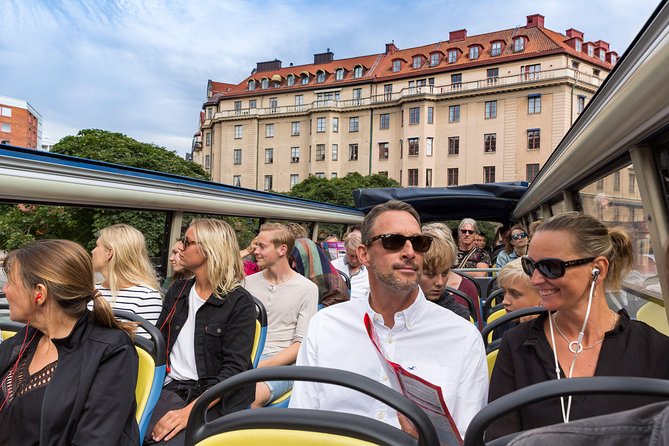
The onboard audio guide is one of the most useful features here. You get commentary in 11 languages, and the system includes free headphones. That means you’re not relying on signage or your own reading in cold weather, and you don’t need to constantly ask strangers what you’re looking at.
That said, audio quality can vary depending on how the system is working that day. I’ve seen firsthand how a small sound issue can make you tune out, especially when you’re on a bus and trying to take photos. So if the audio feels quiet or out of sync, pause and ask the staff at the next stop for a fix rather than just riding on hoping it improves.
Also keep expectations realistic: audio is helpful for orientation, but it’s not a replacement for a museum sign or an on-site guide when you really care about details.
On-Board Comforts: Wi-Fi, Accessibility, and Where to Sit
This service is wheelchair accessible, and buses provide free Wi-Fi. If you’re mapping your next stop, checking opening hours, or just sending messages, Wi-Fi helps keep the day smooth.
For photo-minded sightseeing, the deck and seating position matter. I’d recommend getting to a spot that gives you the clearest line toward where the bus is headed. Stockholm’s water views and skyline angles are good from an upper level, but a photo can still be tricky if the bus turns quickly or if you’re sitting on the wrong side for a particular sight.
For Cruise Passengers: Using the Bus as Your Shore-Day Backbone
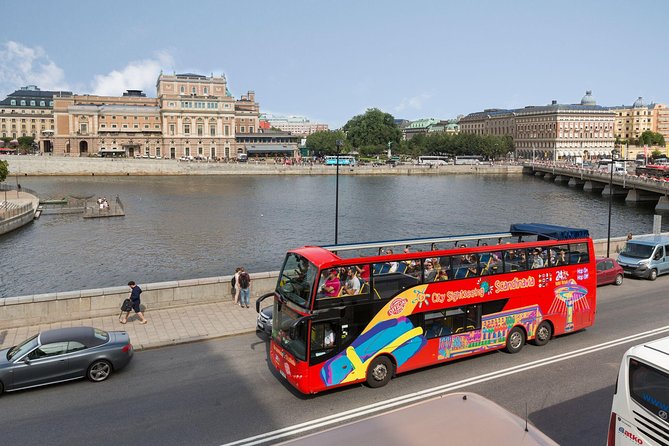
If you’re in Stockholm on a cruise, this is one of the simplest ways to use your limited dock time. The route includes cruise terminal stops on cruise days, and the loop time can stretch to 90 to 120 minutes when those terminal stops are added.
This matters because cruise days often feel like time pressure. When your bus route connects directly back to the port-area terminals, you reduce the risk of being stranded away from the ship pickup point. It also helps if you’re hopping between the central sights and something farther out like Djurgården’s museums.
Just remember: the bus service still ends for the day with the 5pm last departure from Stop 1. If you’re touring later in the day, keep an eye on timing so you’re not gambling on a last ride.
So, Should You Book This Stockholm Hop-On Hop-Off Bus?
Yes—if you’re doing Stockholm for the first time, you want a single, easy way to hit Gamla Stan, the Royal Palace area, and Djurgården museums without heavy planning, and you like the idea of getting off only when something grabs you.
It’s also a solid pick if you’re on a cruise or a short layover, because the stops are designed to connect you to major sights without forcing a tight itinerary. I’d book it especially if you’re pairing Vasa Museum with one or two other headline stops like ABBA or Skansen.
Skip it if you only want one attraction, if you’re expecting a fully guided, deeply detailed museum-style narrative, or if your day is so tight that you can’t handle the occasional delay from crowds and busy stops.
FAQ
What’s the duration of the City Sightseeing Stockholm hop-on hop-off bus loop?
The tour loop is about 60 minutes. If the bus includes cruise terminal stops on cruise days, the duration is around 90 to 120 minutes.
Do I need to choose between a 24-hour and a 72-hour ticket?
Yes. You can choose either a 24- or 72-hour ticket to match your schedule.
Are mobile tickets accepted on this tour?
Yes. Both mobile and printed paper vouchers are accepted, and you can redeem them at any of the stops along the route.
What language is the audio guide offered in?
The tour offers audio commentary in multiple languages, and English is included. The audio guide is provided in 11 languages total.
What attractions are included in the ticket price?
The bus tour includes transport and audio commentary, but entry to attractions is not included.
Is the bus wheelchair accessible?
Yes. The buses are wheelchair accessible.
Can I get a refund if my plans change?
Yes, the tour offers free cancellation. You can cancel up to 24 hours in advance for a full refund.