REVIEW · STOCKHOLM
Walking Tour of Stockholm Old Town
Book on Viator →Operated by Rainbow Tours Stockholm · Bookable on Viator
Old Town Stockholm hits fast on foot. I love how the walk gives you an efficient overview of Gamla Stan and connects sights to the city’s politics and power. I also like that it’s only about 2.5 hours, so you can still do museums later. The main drawback: you move on foot and many big attractions are only quick views since admissions aren’t included for everything.
For around $24.07, it’s a smart first-day plan. You start at Gustav Adolfs torg and end near the heart of Old Town at Stortorget, so the tour naturally sets up the rest of your day. And with a small group size (up to 20), it stays paced for real sightseeing rather than a long human chain.
If the weather turns grim, expect some strain in an outdoor walk. This tour is also listed as needing good weather, so check the day-of forecast and pack layers.
In This Review
- Key things I’d zero in on before booking
- Why walking Gamla Stan is the fastest way to get oriented
- Meeting at Gustav Adolfs torg and finishing near Stortorget
- From Riksdagshuset to the story of Gamla Stan’s beginnings
- German Church in Gamla Stan and Riddarholmen’s church-and-island history
- Järnpojke, Storkyrkan, and the St George dragon scenes
- Nobel Prize Museum and the Royal Palace: culture and crowns without a full museum day
- Stortorget’s key events and Marten Trotzigs gränd’s squeezed-in drama
- Royal Opera House views and the walk ending at Stortorget
- Price and ticket value: what $24.07 buys in real sightseeing
- Weather and your Plan B for a rain-slick Old Town
- Should you book the Walking Tour of Stockholm Old Town?
- FAQ
- Where does the tour start and end?
- How long is the Walking Tour of Stockholm Old Town?
- What time does the tour begin?
- Is the tour in English?
- Is the ticket mobile?
- Are admissions included at the stops?
- How big is the group?
- What if the weather is bad?
- Can I bring a service animal?
Key things I’d zero in on before booking
- A tight 2.5-hour route that covers major Old Town landmarks without swallowing your whole day
- Gamla Stan focus with story-driven stops that explain how the place took shape
- Some admission tickets included on select sights, so you don’t pay for every moment
- A small maximum group size (20) that makes it easier to hear the guide and ask questions
- Old Town orientation built in since the walk starts at Gustav Adolfs torg and finishes at Stortorget
Why walking Gamla Stan is the fastest way to get oriented
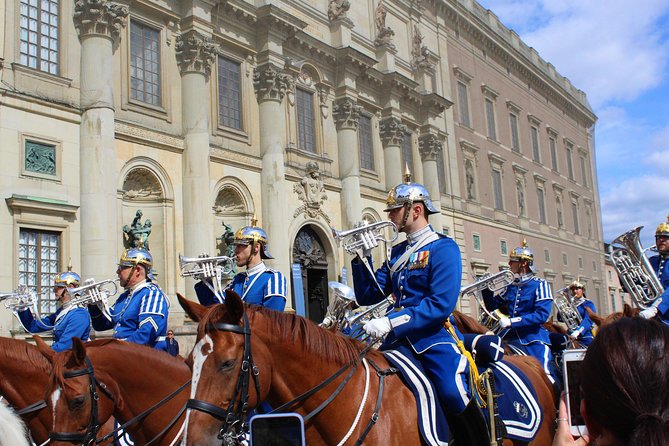
Stockholm’s Old Town, Gamla Stan, is one of those places where everything looks beautiful—and that beauty can trick you into moving without context. A guided walk helps you slow down just enough to notice what matters: where power shows up in buildings, where religious life shaped the city’s identity, and how the street layout still tells a story.
This tour is built for active people who like their sightseeing direct and efficient. You’re outside for most of it, and you’ll hop between key points that connect the dots. If you’re arriving with only a day or two in the city, this style of tour is exactly what I’d do first, because it gives you a map in your head before you start wandering on your own.
It also helps that the route covers both symbolism and everyday corners. You’ll see statues, squares, churches, and the kinds of buildings that signal Stockholm’s long relationship with governance and culture.
You can also read our reviews of more walking tours in Stockholm
Meeting at Gustav Adolfs torg and finishing near Stortorget
You start at Gustav Adolfs torg (near 111 52) at 10:00 am. The tour runs about 2 hours 30 minutes, and it ends at Stortorget (near 111 29). That end point is a gift: it’s central in Gamla Stan, with lots of room to keep exploring right after the last stop.
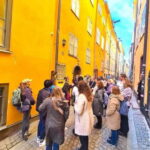
The small group limit (up to 20) matters more than you might think. In Old Town, sidewalks and alleyways can feel tight. A smaller group stays manageable and makes it easier for the guide to steer you through the best angles for photos and landmarks without constantly stopping traffic in your path.
You’ll also want to plan for walking comfort. The “most travelers can participate” note is good, but this is still a walking tour, so bring shoes you can handle on cobblestones and uneven stone.
From Riksdagshuset to the story of Gamla Stan’s beginnings
The first stop is the Parliament Building (Riksdagshuset). It’s a major landmark in its own right, built from 1895 to 1904. This is typically a short stop (around 5 minutes) and you shouldn’t expect a deep interior visit here since admission isn’t included.
What you do get is the political starting point. Stockholm’s Old Town isn’t just pretty streets—it’s tied to how the country organized power and authority over centuries. Seeing the parliament early gives you a useful frame as you move into the older layers of the city.
Next comes Stockholm Old Town, where you’re walking through Gamla Stan to understand how it was founded and how it became what it is today. This segment includes admission, so there’s at least one ticketed element tied to this portion. Even if you’re not a history superfan, this is the part where the guide makes Stockholm feel legible—why buildings are where they are, what the city prioritized, and how different eras left their fingerprints.
If you do only one thing early in Stockholm, do this kind of orientation. You’ll notice more later because you’ve already learned what to look for.
German Church in Gamla Stan and Riddarholmen’s church-and-island history
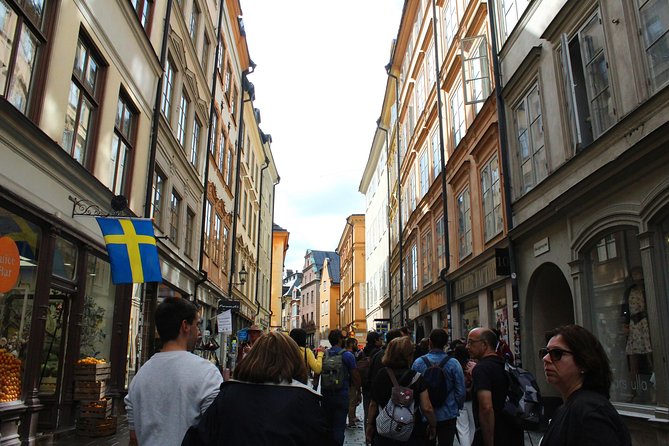
Stop three is the German Church (Esglesia Alemanya) in Gamla Stan. It’s described as having a long history in the area and a neoclassic style. Again, don’t assume a long interior time slot—admission isn’t included and the stop is brief (around 5 minutes). Think of it as a quick, guided moment to connect architecture to community history.
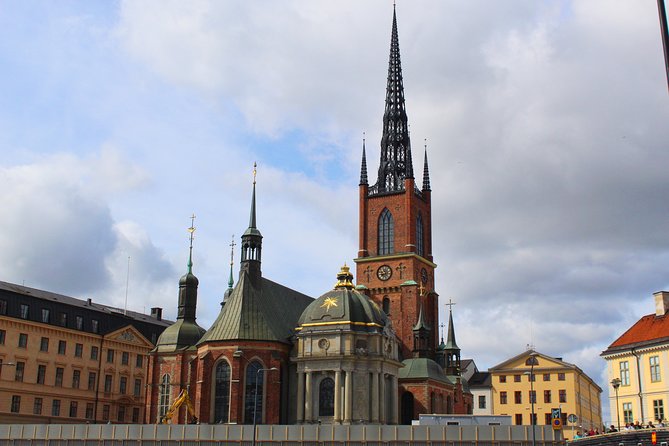
Then you head to Riddarholmen Church, on the Knights Islet. This is where the tour leans into the city’s origin stories. You’ll learn about how Gamla Stan was founded and the island’s historical importance. The church area also includes its own palace context, noted as the first palace in Stockholm.
This is a good pairing: one stop highlights a specific cultural imprint (the German Church), and the next broadens out to where Stockholm’s early power centers clustered. It’s not just sightseeing; it’s a way to understand why Gamla Stan feels layered instead of random.
A practical consideration here: churches and older buildings can be less forgiving in bad weather. If it’s wet or windy, keep your plan flexible and accept that you’re mostly doing quick looks and listening rather than lingering.
Järnpojke, Storkyrkan, and the St George dragon scenes
After the church island, the tour shifts to smaller, memorable sights—exactly the kind that keep Old Town from feeling repetitive.
One of the most fun stops is Järnpojken, described as Stockholm’s smallest statue, built in 1950. It’s also nicknamed the kid looking at the moon, and it’s listed as the most visited statue in Stockholm. The stop runs about 10 minutes, and this is one of the moments where you’ll likely enjoy the light, iconic side of Stockholm—short, sweet, and very photogenic.
Then you hit Storkyrkan (St. Nicholas Church / Cathedral of Stockholm). This stop is short (about 5 minutes) and admission isn’t included. Still, it’s an important stop because it’s associated with Saint George and a famous dragon sculpture.
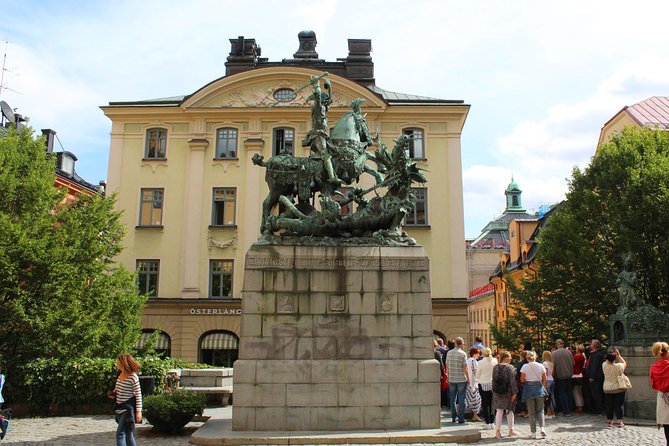
Later, you’ll also see St. George & the Dragon Statue, listed as representing the battle of Brunkeberg in 1471, where Sten Sture defeated the armies of Christian I of Denmark. That’s the kind of story that turns a statue from “just a photo” into a time marker for a major event in Sweden’s past.
One small warning for your expectations: these are landmark stops, not long museum-style visits. If you want to sit quietly inside and read everything, you’ll need follow-up time on your own. But as a guided overview, it works because the tour gives you the headline stories you’d otherwise miss.


Nobel Prize Museum and the Royal Palace: culture and crowns without a full museum day
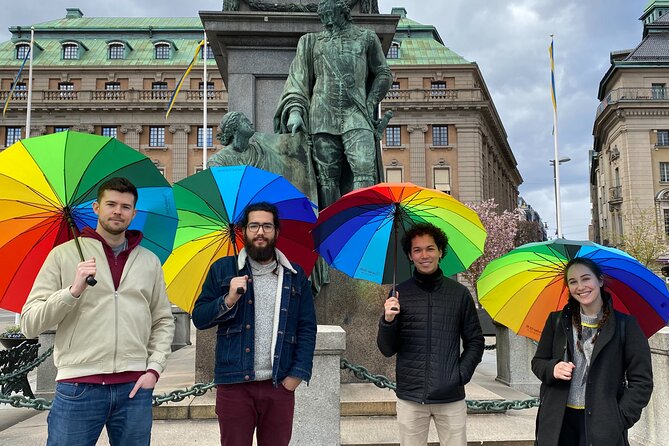
Two of the biggest names on the route are the Nobel Prize Museum and the Royal Palace.
The Nobel Prize Museum stop points you toward the connection between the Swedish Academy and the literature prize decision process. Admission isn’t included, and the stop is about 10 minutes. So what you should expect is a guided orientation to the institution—where it is and why it matters—rather than a full museum experience.
Then comes the Royal Palace of Stockholm, also about 10 minutes, and admission isn’t included. The palace is noted as having four museums, which tells you the scale of what’s there. On this tour, you’re not doing the museums. You’re getting a sense of the setting and the royal presence in the city’s physical layout.
Why does this matter for you? Because it saves your time. Instead of committing to an entire museum block on day one, you get enough context to decide if you’ll return. If royal interiors and award-winning culture are on your list, this tour helps you prioritize.
If you’re short on time, don’t worry about missing interiors here. Use the guided tour to pick what to go inside later.
Stortorget’s key events and Marten Trotzigs gränd’s squeezed-in drama
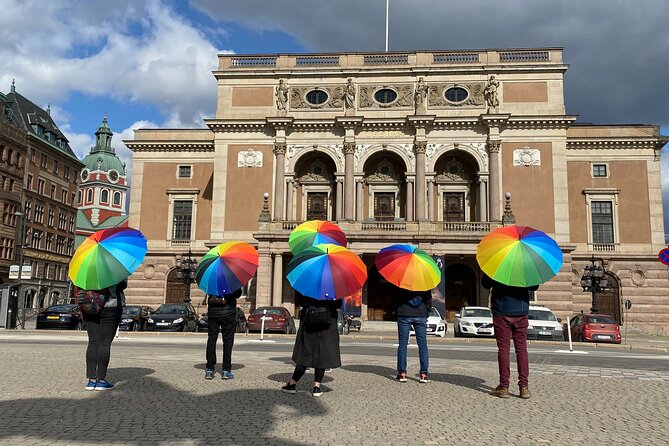
Now you’re in the thick of Gamla Stan’s public life.
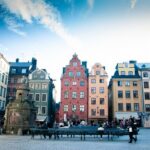
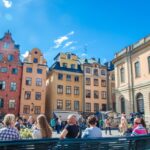
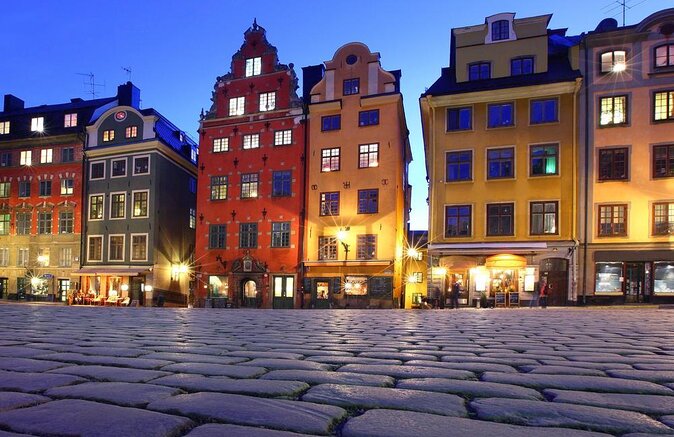
Stop nine is Stortorget, described as the main square of Gamla Stan. This is where important events happened, including the Stockholm bloodbath. The stop lasts about 10 minutes and includes admission. Even though it’s an open square, the included element signals you’ll get something more than simply standing and staring.
Squares are where history gets loud—political decisions, public actions, and citywide events all leave evidence here, even if the events happened long before your shoes hit the stones.
Next comes Marten Trotzigs gränd, known as the narrowest street in the city. The tour notes the street is named after a prominent businessman in Stockholm. This stop is around 5 minutes and includes admission. If you’ve ever wondered how cities compress stories into tiny spaces, this is the kind of place where Stockholm answers with architecture.
A practical tip: the “narrow street” stops can feel crowded if you’re wearing a big bag or have trouble moving in tight spaces. Keep your carry light so you don’t spend time negotiating corners.
Royal Opera House views and the walk ending at Stortorget
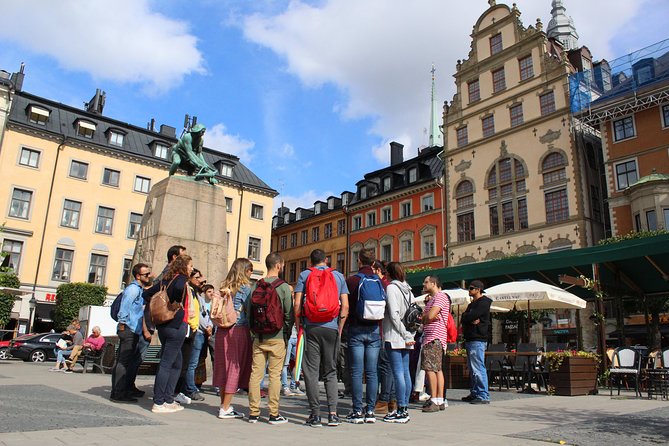
The final stretch includes the Royal Swedish Opera, listed as around 10 minutes. Admission isn’t included. This stop is a change of pace—more formal, more cultural, and a reminder that Old Town isn’t only medieval stone. It also points forward to modern institutions and how Stockholm still organizes life around the arts.
After that, you finish at Stortorget, which is an easy place to regroup. If you want to extend your day, you’ll already be standing in a high-energy area designed for continuing exploration: more streets to branch off, more food options, and more time to soak in the details you’ve now learned to notice.
Price and ticket value: what $24.07 buys in real sightseeing
This tour costs $24.07 per person for about 2 hours 30 minutes. That’s not just cheap-by-tour-standards; it’s cheap compared to what you’d pay for even one major museum entry in many European cities. The big value is how the tour mixes landmarks that would take time to line up on your own.
About tickets: the tour notes that admission is included at several stops, while others explicitly state that admission isn’t included. Practically, that means:
- You’ll have at least a few sights where you don’t have to think about separate entry costs at that exact moment.
- You’ll also see major institutions from the outside when admission isn’t included, so you can decide later if you want to pay for deeper visits.
Don’t treat this as a full museum pass. It’s a guided Old Town overview with selective ticketed moments. If you want maximum interior time, you’ll likely pair this with later self-guided visits to the Royal Palace museums or the Nobel Prize Museum.
Weather and your Plan B for a rain-slick Old Town
This experience is listed as requiring good weather. If it’s canceled due to poor weather, you’re offered a different date or a full refund. That’s a big deal in Stockholm, where drizzle can turn cobblestones into skating practice.
My advice: if rain hits, keep your layers on and expect the tour to be more listening-and-looking than wandering-and-lingering. And if you’re traveling soon, you’ll also want to check your calendar for a possible alternate day so you can still get your Old Town overview.
Should you book the Walking Tour of Stockholm Old Town?
Book it if you want a fast, clear understanding of Gamla Stan without spending the whole day jumping ticket lines. I especially like it for first-time Stockholm visits because it hits parliament, key churches, famous statues, major squares, and cultural institutions in one connected route. The small group cap helps the pacing feel human, not rushed.
Skip it or rethink it if you mainly want long museum stays or deep interior access. This tour is built for movement and context. You’ll leave with a strong mental map, but you may still want follow-up time at places like the Nobel Prize Museum and the Royal Palace if those interiors are your top priorities.
Also: since the tour is strongly dependent on good weather, be willing to walk even if conditions aren’t perfect. If you can do that, you’ll likely get a lot from the price and the tight schedule.
FAQ
Where does the tour start and end?
It starts at Gustav Adolfs torg, 111 52 Stockholm, Sweden and ends at Stortorget, 111 29 Stockholm, Sweden.
How long is the Walking Tour of Stockholm Old Town?
It lasts about 2 hours 30 minutes.
What time does the tour begin?
The start time listed is 10:00 am.
Is the tour in English?
Yes, it’s offered in English.
Is the ticket mobile?
Yes, the tour uses a mobile ticket.
Are admissions included at the stops?
Admission is included at several stops, including parts of Stockholm Old Town, Järnpojken, Stortorget, Marten Trotzigs gränd, and the St. George & The Dragon Statue. Other stops like Riksdagshuset, the German Church, Riddarholmen Church, Storkyrkan, Nobel Prize Museum, and the Royal Palace list admission as not included.
How big is the group?
The group size is capped at a maximum of 20 travelers.
What if the weather is bad?
The experience requires good weather. If it’s canceled due to poor weather, you’ll be offered a different date or a full refund.
Can I bring a service animal?
Yes, service animals are allowed.