REVIEW · STOCKHOLM
Walking Tour of Stockholm’s Old Town, Gamla Stan
Book on Viator →Operated by NORDIC FREEDOM TOURS · Bookable on Viator
Stockholm’s Old Town works best on foot. This 2-hour Gamla Stan walk strings together the small, human-scale sights that make the city feel real, from the tiny luck charm of Järnpojke to the royal church stops around Riddarholmen.
I especially like the value: $13.30 for a guided route with a strong, story-led pace, plus a mobile ticket. You’ll also get a compact orientation that helps you understand where everything sits in the medieval layout.
One heads-up: it is mostly outdoors on cobblestones and can feel windy near the water, with limited places to sit. If you’re visiting in winter or you get cold easily, dress for it and bring warm layers.
In This Review
- Key highlights to know before you go
- Old Town on Foot: A 2-Hour Orientation Through Gamla Stan
- Finding the Start at Mälartorget and Finishing by the Royal Palace
- Järnpojken: The Tiny Bronze Statue You’ll Actually Want to Touch
- Riddarholm Church: Swedish Monarchs, a Real Burial Place
- Prästgatan and Mynttorget: Cobblestones, Squares, and the Shape of Daily Life
- Tyska Brunnen (German Well): A 17th-Century Marker in a Small Town Space
- St. Gertrud’s Church and Storkyrkan: Two Church Stops, One Walkable Timeline
- Marten Trotzigs Gränd: The 90 cm Alleyway Moment
- Nobel Museum Area and Stortorget: Science Meets Street-Level History
- The Royal Palace Area and Finska Kyrkan: Finish With Power and Community
- Price and Value: Why $13.30 Feels Fair for a 2-Hour Route
- Practical Tips for Comfort on Gamla Stan’s Cobblestones
- Who Should Book This Walk (and who might skip it)
- Should you book this Gamla Stan walking tour?
- FAQ
- How long is the Walking Tour of Stockholm’s Old Town, Gamla Stan?
- What is the price per person?
- What language is the tour offered in?
- Is there a mobile ticket?
- Where does the tour start and end?
- Are the main stops free to visit?
- What if the weather is bad?
- How big is the group?
- Is tipping included in the price?
- What is the cancellation policy?
Key highlights to know before you go
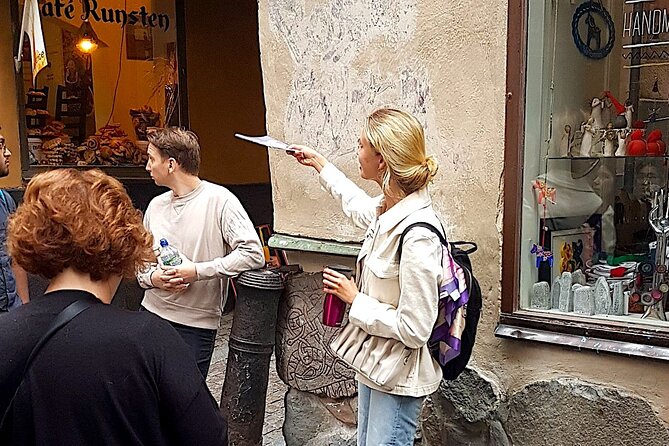
- A tight 2-hour loop through Gamla Stan with big sights in a short window
- Free-to-see stops along the route, including several churches and historic points marked as admission ticket free
- Europe’s narrowest alley moment at Marten Trotzigs Gränd, only about 90 cm wide
- Nobel Museum area + Stortorget pairing: science and street-level history in the same neighborhood
- Guide focus on stories and humor, with several guides praised for clear English and great energy (like Ben, Märta, and Helena)
Old Town on Foot: A 2-Hour Orientation Through Gamla Stan
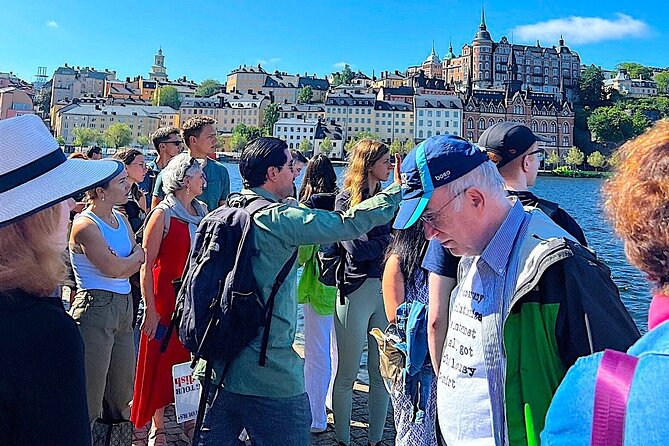
This tour is built for sanity. Instead of bouncing between far-flung stops, you walk through Stockholm’s medieval core at a pace that usually stays comfortable for most people. It’s listed as about 2 hours, and the route design keeps you from feeling like you’re doing a marathon.
I like that the group size is capped at 25. That matters in a place like Gamla Stan where narrow lanes can quickly turn into a bottleneck. With a smaller max, your guide can keep the group together and make sure you actually hear the stories, not just follow a moving blur.
The tour also feels like a true orientation. You get a sense of the city’s shape: water nearby, streets that curve like they grew naturally over centuries, and squares that were built for crowds, markets, and power.
You can also read our reviews of more walking tours in Stockholm

Finding the Start at Mälartorget and Finishing by the Royal Palace
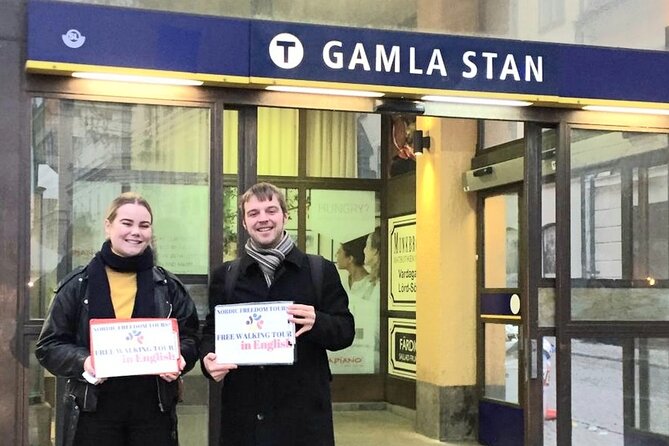
Your tour begins at Mälartorget 4 (111 27 Stockholm). It ends near the Royal Palace (Kungliga slottet) at 107 70 Stockholm. That end point is useful: you’re not left stranded across town. You can keep walking on your own or connect to whatever you planned next.
Also, you’ll have a mobile ticket, so you’re not trying to scramble for printouts right before you meet your guide. The “near public transportation” note is helpful too, since Stockholm is easiest when you mix walking with quick transit hops.
If you’re doing this early in your stay, the payoff is bigger. You’ll start to recognize the main streets and church towers, and later on you’ll feel like you’re navigating with a map in your head instead of guessing.
Järnpojken: The Tiny Bronze Statue You’ll Actually Want to Touch

The first stop is Järnpojken, the small bronze figure nicknamed the Iron Boy, often called the Boy Looking at the Moon. This is one of those moments that sounds silly until you’re standing there. It’s the smallest public statue in Stockholm, and it has turned into a local good-luck tradition.
Here’s what makes it fun for a first-time visit: your guide can turn a tiny statue into a mini-story about how people in Gamla Stan notice and care about everyday landmarks. And yes, there’s a tradition of visitors rubbing the head for luck. It’s simple, quick, and it gives the walk an easy start.
Practical note: since it’s a brief stop, you won’t feel stuck waiting around. This is a “catch your breath and get oriented” moment.
Riddarholm Church: Swedish Monarchs, a Real Burial Place
Next you’re at Riddarholm Church on Riddarholmen Island, not far from the Royal Palace area. This is a burial church with medieval architecture, and it’s also known as the final resting place for Swedish monarchs.
What I like here is contrast. Before you’re looking at streets and everyday spots, now you’re at a landmark that represents power and continuity. Even if you’re not a church-history fanatic, it’s still a strong visual stop because the building sits as a landmark in the skyline and the surrounding waterfront views.
Another plus: this area helps you understand the geography of Old Town. You start linking the church locations with the island-and-palace layout rather than seeing them as random points on a list.
Prästgatan and Mynttorget: Cobblestones, Squares, and the Shape of Daily Life
Then you walk down Prästgatan, a narrow cobblestone street lined with colorful historical buildings. It’s the kind of lane where shops and cafés feel like they belong in the scenery, not pasted on later.
Right after that you reach Mynttorget, a historic square near the Royal Palace area. Squares in Gamla Stan are where history becomes visible. You can look around and picture how people moved, traded, and gathered long before modern streets and signage.
Two ways to use this part of the tour:
- Pay attention to the street angles. They help you predict how you’ll get back out of Old Town later.
- Look at the buildings as you walk, not just at your phone. Your guide’s explanations tend to click faster when you’re literally facing the setting being described.
Drawback to know: cobblestones can be uneven. It’s not dangerous, but it can be tiring if you’re walking slowly or if your feet get cranky.



Tyska Brunnen (German Well): A 17th-Century Marker in a Small Town Space
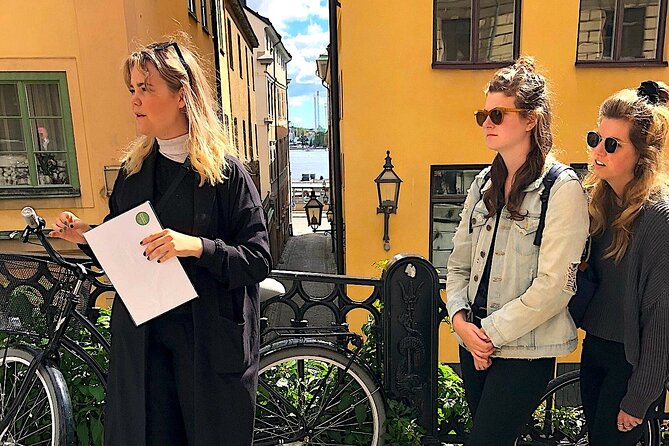
Your route includes the Tyska Brunnen (also referenced on the tour as a historic well). It’s described as originating in the 17th century and as a significant landmark inside Stockholm’s medieval core.
This stop works well because it’s not just a building. A well is practical infrastructure, so it connects everyday life to the bigger stories of the era. It also hints at outside influences in Old Town—your guide can connect the point to broader patterns of trade and community presence.
Since it’s a quick stop, the goal isn’t lingering. It’s more like learning a shortcut in the city’s story: you pass the well, and suddenly you understand a layer of how the neighborhood functioned.
St. Gertrud’s Church and Storkyrkan: Two Church Stops, One Walkable Timeline
The tour includes St. Gertrud’s Church, with origins dating back to the 1300s. You’ll also visit Storkyrkan (St. Nicholas Cathedral), the oldest church in Stockholm’s Old Town, originally built in the 13th century and known for blending Gothic and Baroque architectural styles.
Two church stops might sound repetitive, but it doesn’t feel that way here. Think of it as watching the city’s timeline tighten. Old Town is a layered place, and these churches help you see how different eras left their fingerprints on the same small geographic area.
I’d also watch for how your guide explains details in plain language. Several guides on this route have been praised for humor and engagement, like Märta and Helena, which can make even stone-and-century facts feel less like homework.
This part is where you’ll likely slow down naturally. The churches are visually absorbing, and you’ll want a minute just to look up and around.
Marten Trotzigs Gränd: The 90 cm Alleyway Moment
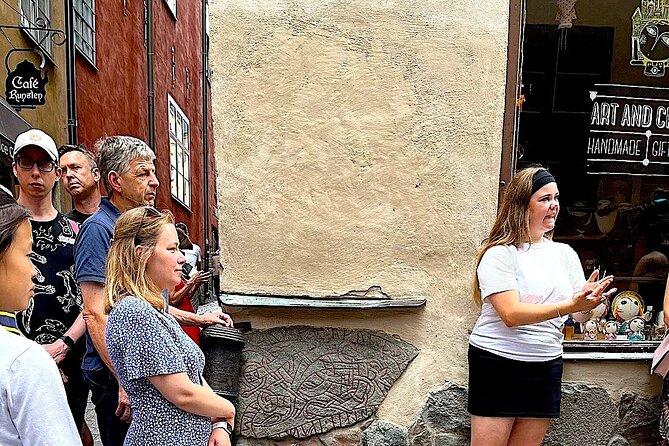
Now comes one of the most memorable physical sensations on the walk: Marten Trotzigs Gränd, described as Europe’s narrowest alleyway. The route information puts it at around 90 cm wide, dating back to the Middle Ages.
This is a great stop because it turns history into a body experience. You don’t need a background lecture. You feel the constraint instantly and then your brain can connect that space to how people lived back then—movement was slower, routes were tighter, and streets had a practical logic.
Practical thought: the alley is narrow, so the guide will manage the group. Don’t expect a bunch of stopping-and-starting here. Go in, look, listen, and move.
Nobel Museum Area and Stortorget: Science Meets Street-Level History
The tour reaches the Nobel Museum, located in the Old Town and established in 2001, in a building dating back to the 18th century. Even if you don’t go inside, the fact that Nobel is housed here adds a modern layer to the medieval setting.
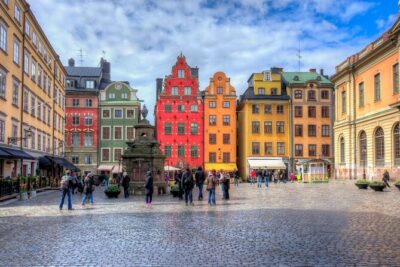
Then you connect with Stortorget, a historic square dating back to the 13th century. It’s described as known for colorful buildings and for proximity to the Nobel Museum.
I like this pairing because it stops the walk from feeling locked in the past. You see how Stockholm honors ideas and institutions now, while still keeping the medieval street grid intact.
If you’re a first-time visitor, this is also where you start understanding Stockholm isn’t just old streets and churches. It’s an active city where modern culture lives within historic walls.
The Royal Palace Area and Finska Kyrkan: Finish With Power and Community
Your tour concludes near the Royal Palace. The palace is described as the official residence of the Swedish monarch, a grand baroque structure with over 600 rooms and several museums. Since the walk ends nearby, you can decide on your own pace whether you want to explore further.
Then the route also includes the Finnish Church (Finska Kyrkan), originally constructed in 1725. It serves the Finnish-speaking community and is described as baroque in style.
This finish is smart. Royal sites can feel intimidating if you’re visiting on a tight schedule. By ending nearby rather than forcing you into a museum ticket, the tour gives you options. And adding Finska Kyrkan adds a human layer—showing how communities shape Old Town, not just monarchs and cathedrals.
Price and Value: Why $13.30 Feels Fair for a 2-Hour Route
At $13.30 per person for about 2 hours, this is the kind of tour you book when you want real orientation without paying boutique prices. The tour includes a guide, with the note that the guide is personalized for the group.
You’ll also see many stops marked as admission ticket free in the route description, especially for the early landmark points like Järnpojken and several churches/squares. That matters because it turns your money into time and storytelling, not just into entries.
The Nobel Museum and Royal Palace are included as major sights on the route, but the guide helps you place them. If you want to go inside later, you’ll likely handle that separately.
Bottom line: this pricing makes sense for a visitor who wants the city’s layout, key landmarks, and the meaning behind what you’re seeing.
Practical Tips for Comfort on Gamla Stan’s Cobblestones
Here’s how to make the walk easier on yourself:
- Wear comfortable shoes. Cobblestones are part of the deal in Gamla Stan.
- Dress in layers. Winter advice from past participants includes bringing hand warmers.
- Expect limited places to sit. This is a walk with short stops, not a sightseeing day with lots of benches.
- Plan for wind. The Old Town water edge can make it feel colder than you expect.
If you move slowly or have mobility challenges, aim for the “steady and careful” approach. Several people have said they could keep up even with older knees, but the walk is still walking, with some hilly spots.
Who Should Book This Walk (and who might skip it)
Book it if you:
- Want a short orientation in Stockholm’s heart
- Like learning how buildings and squares fit into how the city worked
- Prefer walking over hopping from one bus stop to another
- Appreciate a guide who keeps energy up and answers questions
You might skip it if:
- You hate churches or you’re not interested in how medieval Stockholm evolved
- You need lots of frequent seating or a fully flat route
- You’re visiting in weather that is rough enough to disrupt outdoor sightseeing
Should you book this Gamla Stan walking tour?
I’d book it for most first-timers. The route is structured, the time is tight, and the stops cover the kind of places you’ll still recognize later when you’re wandering on your own. Plus, the guide presence is repeatedly praised, including references to Ben for clear British English and Märta and Helena for humor and upbeat storytelling.
If you’re unsure, use this quick decision test: if you have less than half a day and you want to understand Old Town fast, this hits the target.
FAQ
How long is the Walking Tour of Stockholm’s Old Town, Gamla Stan?
The tour is listed as about 2 hours.
What is the price per person?
The price is $13.30 per person.
What language is the tour offered in?
The tour is offered in English.
Is there a mobile ticket?
Yes, it includes a mobile ticket.
Where does the tour start and end?
It starts at Mälartorget 4, 111 27 Stockholm, and it concludes near the Royal Palace (Kungliga slottet), 107 70 Stockholm.
Are the main stops free to visit?
Many of the named stops are marked as admission ticket free in the tour description (for example Järnpojken, Riddarholm Church, and several churches and squares). For places like the Nobel Museum and the Royal Palace, you may need separate entry if you want to go inside.
What if the weather is bad?
The experience requires good weather. If it’s canceled due to poor weather, you’ll be offered a different date or a full refund.
How big is the group?
The tour has a maximum of 25 travelers.
Is tipping included in the price?
Tip is not included.
What is the cancellation policy?
Free cancellation is available up to 24 hours in advance for a full refund. Canceling less than 24 hours before the start time won’t be refunded.