REVIEW · STOCKHOLM
Private Sigtuna Tour from Stockholm – Oldest Town of Sweden
Book on Viator →Operated by Sweden History Tours · Bookable on Viator
A thousand years from Stockholm starts here. This day trip sends you to Sigtuna, Sweden’s oldest surviving town, for a guided walk that connects Viking roots to medieval life, and it’s made easy with hotel pickup. I also like that your guide explains the big story as you walk, not just names of places.
The trade-off is price: at about $628 per person for a roughly 5-hour outing, it’s best when you’ll truly use the guidance and convenience.
You’ll start around 9:30 am (English-speaking), ride in an air-conditioned vehicle, and cover several historic stops with quick, timed breaks. The group stays small (up to 16), which keeps the pacing friendly and question-friendly.
5 key reasons this Sigtuna tour is worth your attention
- Direct context for the Viking and medieval timeline while you’re actually standing in the sites
- Roundtrip pickup from central hotels and cruise ports to cut down your hassle factor
- Mariakyrkan’s medieval brick-and-paint detail, including wall paintings and sculptures
- Sigtuna Radhus, Sweden’s tiniest town hall, with a preserved interior to see how the town governed itself
- Small-group pacing (max 16) that feels focused, not rushed and noisy
In This Review
- Sigtuna: Sweden’s oldest surviving town, right outside Stockholm
- Price and logistics: what you’re actually paying for
- The five-stop flow: a 9:30 am start with a steady pace
- Stop 1 in Sigtuna: the Viking-to-medieval walking story
- Mariakyrkan: the oldest brick church in the Stockholm region
- Sigtuna Radhus: Sweden’s smallest town hall from 1744
- Wenngarn Hotell & Konferens: castle church and gardens
- St Olofs Church ruins: a 12th-century ending point
- What your guide adds (and why it changes everything)
- Lunch, timing, and what to do with your day in between
- Getting there from your base or cruise pier: quick practical notes
- Who this tour fits best
- Should you book this Sigtuna day trip from Stockholm?
- FAQ
- How long is the Sigtuna tour from Stockholm?
- What’s included in the tour price?
- Do I need to pay for entry tickets at the stops?
- Is lunch included?
- What language is the tour offered in?
- How big is the group?
Sigtuna: Sweden’s oldest surviving town, right outside Stockholm
Sigtuna is the kind of Swedish day trip that makes your brain click into a different century. You’re not just taking photos of old streets—you’re learning how this place grew from an early power center into a trading town, with excavations and surviving sites helping explain the story.
In the Viking-era period, Sigtuna is often tied to King Erik the Victorious and a founding date around 980 AD, and that early royal signal still echoes in the town’s layout and the surrounding remains. Then, the medieval layer shows up through churches, stone and brickwork, and the way the town’s spaces formed over time.
What I like most about Sigtuna as a visitor is that it’s compact. You can see a lot in a few hours without feeling like you’re racing through a giant museum complex.
Price and logistics: what you’re actually paying for
At about $628.11 per person, this isn’t a “cheap bus-and-go” outing. You’re paying for three things that add up quickly: door-to-door pickup, a local guide, and a guided structure that saves you from guessing what you’re looking at.
On a self-guided day, you can reach Sigtuna by commuter train and bus, but the travel time can be slow—at least around 90 minutes from Stockholm central station, before you even start walking in town. Here, transport time is built into the plan, and you’re not paying for multiple tickets or timing juggling.
Also, several stops on the schedule list admission as free, so you’re not stacking extra entry costs on top of the tour price. The main “extra” expense is food, since lunch isn’t included.
You can also read our reviews of more private tours in Stockholm



The five-stop flow: a 9:30 am start with a steady pace
This tour runs about 5 hours, beginning around 9:30 am, and it’s designed around short, meaningful site visits plus one longer walking segment in Sigtuna itself.
The day’s pattern is simple:
- You start with the main town walk (the heart of the experience).
- Then you move through specific historic buildings and remains.
- One stop includes a longer stretch (about an hour) for gardens and a church setting.
- The final stop is a quick look at 12th-century ruins.
That structure matters because it keeps you from spending your whole day indoors. You’ll get context from the guide, but you’ll also spend enough time outdoors to actually feel like you’re moving through an old town.
Stop 1 in Sigtuna: the Viking-to-medieval walking story
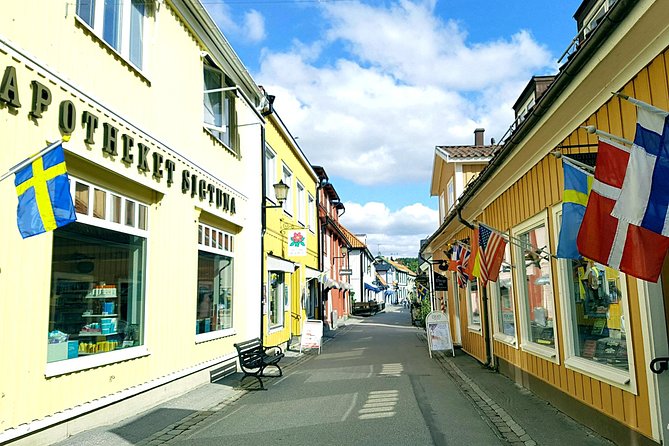
Your first and longest stop is the Sigtuna walking tour, timed at about 1 hour 20 minutes. This is where the guide earns their keep. The point isn’t only that Sigtuna is old—it’s how the town’s story connects Viking-era ambitions to later medieval life.
During the walk, you’ll get explanations about:
- the Viking Age background and why Sigtuna mattered,
- the shift into a medieval setting,
- and how Sigtuna moved into a buzzing trading town role over time.
Sigtuna also has a reputation for runestones placed around the town area, and you’ll see plenty of those kinds of “clues in plain sight” during a guided route. There are also extensive excavations around the town, and the guide uses that evidence to explain what we know and what it means for understanding daily life back then.
A practical tip: bring comfortable shoes. Even though this is not described as a hike, it’s still a town walk with multiple stops, and cobblestones and uneven old surfaces can slow you down if you’re in stiff, slippery footwear.
Mariakyrkan: the oldest brick church in the Stockholm region
Next up is Mariakyrkan, scheduled for about 15 minutes. This short stop is packed with visual pay-off because it’s described as the oldest brick building in the Stockholm region.
You’ll also learn that Mariakyrkan was the former Blackfriars monastery church. That detail matters, because it helps you read the building not just as a pretty church, but as a piece of how religious orders shaped life and architecture in medieval Sweden.
The time window is brief, so don’t expect an in-depth architecture seminar. But if you like medieval art, this is a high-yield moment: the church is known for medieval wall paintings and sculptures.
Sigtuna Radhus: Sweden’s smallest town hall from 1744
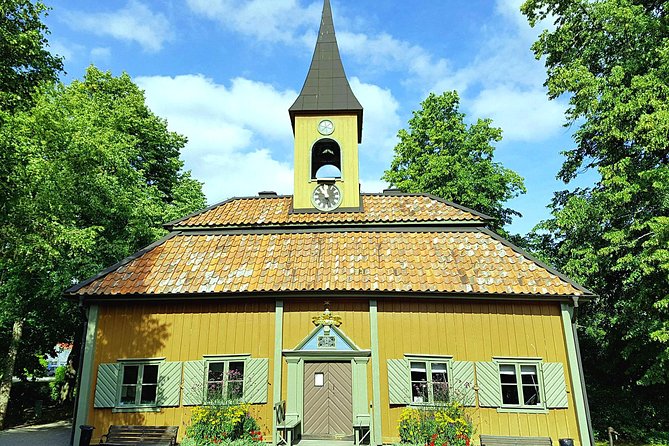
Another quick stop follows: Sigtuna Radhus, also around 15 minutes. This is Sweden’s tiniest town hall, built in 1744, and it’s one of those places that’s easy to overlook if you’re sightseeing alone.
The tour’s angle here is the town’s civic history—how Sigtuna governed itself as it evolved. You’ll be able to watch into a preserved interior of the council house, which is the difference between seeing an exterior and actually grasping the space.
There’s also an intriguing note about the square around it: the town square is said to have been created after severe fires. Archaeological discoveries tied to that period are part of what makes this stop more than a quick photo stop.





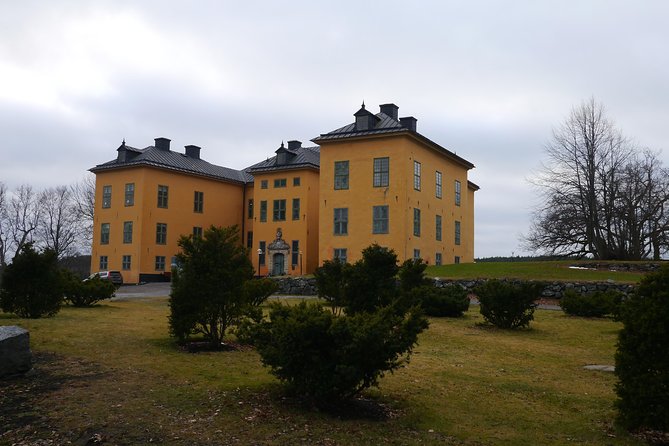
Wenngarn Hotell & Konferens: castle church and gardens
This is the tour’s longer middle segment: about 1 hour at Wenngarn Hotell & Konferens, with a focus on the castle church and gardens. Even though it’s listed as a hotel and conference venue, the draw for you here is the historic setting and the calm garden-like pacing.
This stop can feel like a reset button after the town-center walking. Instead of only scanning buildings for details, you get space to slow down, look at the church setting, and absorb the surroundings at a calmer tempo.
If the weather is changeable, this part of the day is also where the guide can help manage the flow—there are mentions of detours from weather, and the schedule is structured to keep things workable without scrambling.
St Olofs Church ruins: a 12th-century ending point
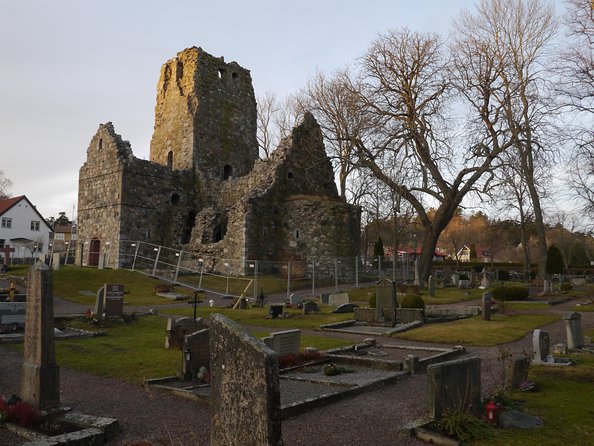
The final stop is at S:t Olofs Church Ruins, about 10 minutes. It’s a 12th-century church ruin, and it works as a closing “bookend” to the story you heard earlier.
Ruins are never as complete as intact churches, but that’s part of the value. You get a contrast: earlier in the tour, you see still-standing medieval religious buildings with paintings and sculpture. Here, you see what time did—and you start understanding why archaeology and excavations are such a big deal in places like Sigtuna.
And because this stop is short, it doesn’t derail your pace. You leave the ruins with a better sense of what parts survived and what didn’t, which makes the whole day feel more coherent.
What your guide adds (and why it changes everything)
A good guided walk can turn an old town from scenery into a story. This tour is built around that idea: the guide provides the Viking-era and medieval context while you move between sites.
In past departures, guides have included people like Karin and Calle, both described as friendly and informative. There’s also praise for Bianca in the driver role, which matters because the day still depends on smooth pickup, smooth transport, and staying on time.
Here’s what you should expect your guide to do for you:
- explain what you’re looking at, not just where it is,
- answer questions during the walk (including practical ones),
- and connect separate stops into one timeline.
One more subtle advantage: if the group is small, you’re more likely to get your question answered without feeling squeezed. This is a max-16 experience, so it’s not “shepherding a crowd.”
Lunch, timing, and what to do with your day in between
Lunch isn’t included, but the tour doesn’t pretend it is. You’ll have your own time to eat something during the day outside of the guided stops—anything from a coffee to a full meal.
That’s not a flaw if you plan smart. If you care about food, look at the options in Sigtuna and choose based on what you want that day—quick fika-style treats or a longer sit-down meal. Sigtuna is known for charming shops and a small-town feel, so you’re not stuck with only one obvious choice.
In general, think of this tour as a history-guided day trip. If you want long downtime built into the schedule, you might prefer a looser itinerary. But if you want good context and efficient site coverage, this works well.
Getting there from your base or cruise pier: quick practical notes
This tour offers pickup from all central hotels, accommodations, cruise ports, and points of interest. That’s a big deal if you don’t want to navigate trains and buses on your own.
If you’re arriving by cruise, pickup depends on which harbor your ship docks at. The guidance is specific:
- For STADSGÅRDEN, you’ll meet the guide near the ship when docking at S165 or S167 (walk a few hundred meters and follow BLUE/GREEN lines).
- For FRIHAMNEN (F638), the guide meets you just outside the sliding doors after you exit the terminal.
- For VÄRTAHAMNEN (V523), walk toward the tourist bus area and meet near the buses.
One exception is important: if your ship arrives at NYNÄSHAMN, pickup isn’t included because it’s about 50 km from central Stockholm. In that case, you’re encouraged to contact the operator to agree on a meeting place in central Stockholm, then use train or cruise bus options into the city.
If you’re unsure which pier is used, it’s worth confirming with your cruise line ahead of time so you don’t end up hunting for the right meetup point.
Who this tour fits best
This tour is a strong match for:
- history-focused travelers who want Viking and medieval context tied to real places,
- couples or small groups who want guided walking without the stress of planning every stop,
- and cruise passengers who want a structured day trip with organized transport.
If you’re traveling with kids, note that children must be accompanied by an adult, and the pace is still guided and stop-based rather than a long self-guided roam.
If you’re the type who likes to learn as you walk—asking questions, comparing buildings and ruins, and using a guide to interpret what you see—this is where the tour price starts to feel more reasonable.
Should you book this Sigtuna day trip from Stockholm?
Book it if you want an efficient, guided history day that turns an old town into a timeline. You’re paying for pickup convenience, a structured route, and an English-speaking guide who can explain why these sites matter—especially the Viking-to-medieval connections in Sigtuna itself.
Skip it (or consider a lighter option) if you mainly want free wandering and don’t care about historical interpretation. Also, if you’re on a tight budget, this price level makes sense most when you’ll value the logistics and the guidance you’d otherwise have to piece together yourself.
For the right traveler, this is one of those Stockholm-area trips that feels small in scale but big in payoff.
FAQ
How long is the Sigtuna tour from Stockholm?
The tour lasts about 5 hours (approx.), starting around 9:30 am.
What’s included in the tour price?
It includes hotel pickup and drop-off (from central locations), local and regional guide services, fuel surcharge, local taxes, transport in an air-conditioned minivan or coach, and port pickup/drop-off where applicable.
Do I need to pay for entry tickets at the stops?
Admission tickets for the listed stops are listed as free, so you generally won’t add entry costs on top during the scheduled visits.
Is lunch included?
No. Lunch is an own-expense item, and you can choose anything from a coffee to a meal during the day.
What language is the tour offered in?
The tour is offered in English.
How big is the group?
The maximum group size is 16 travelers.