REVIEW · STOCKHOLM
Stockholm Syndrome Private Walking Tour
Book on Viator →Operated by OURWAY Tours - Stockholm · Bookable on Viator
Norrmalmstorg explains a modern name for fear. This private 3-hour walking tour connects the origin of the term Stockholm Syndrome to the city’s royal and medieval highlights, then swings into the alternative streets of Södermalm. I really like the insider guide commentary that turns landmarks into stories you’ll actually remember. I also like that walking keeps the pace human, so you get plenty of time to notice details instead of just snapping photos.
One thing to think about: the tour ends on Södermalm (at Cornelisparken), so if you’re staying far from there, you may want to plan a quick transit ride home instead of assuming an easy walk back. A couple of key sights along the route can also have entrances that are not included (Royal Palace and Storkyrkan/Stockholm Cathedral area).
In This Review
- Quick highlights that make this walk work
- Starting in Norrmalmstorg: the Stockholm Syndrome story, on the street
- Royal, governmental, and garden stops you can see without rushing
- The Royal Dramatic Theatre area (Kungliga Dramatiska Teatern)
- Kungsträdgården (Kungsträdgården / Kungsan)
- Swedish Parliament (Riksdagshuset) at Helgeandsholmen
- Royal Palace (Kungliga slottet)
- Gamla Stan and medieval Stockholm: small turns, big meaning
- Stortorget: the Old Town’s main square
- Stockholm Cathedral area (Storkyrkan): the St George and the Dragon statue outside
- Iron Boy (Järnpojken): a quiet, charming landmark
- The St George symbol, plus symbolism around the horse and dragon
- Mårten Trotzigs gränd: the narrow alley you can feel in your shoulders
- Slussen into Södermalm: alternative Stockholm, viewpoints, and your fika break
- Slussen: the city’s water-level logic
- Götgatsbacken and Götgatan: shops, bars, and everyday Stockholm
- Katarinahissen: the viewpoint stop that earns its camera time
- Mosebacke Torg and Södra Teatern square vibe
- Fiskargatan: a writer’s-address kind of stop
- Katarina Kyrka: a churchyard with notable Swedish burials
- Master Mikaels Gata: wooden houses and government care
- Cornelisparken: ending your walk with a viewpoint and a tribute
- The $418.80 price tag: what you’re actually paying for
- Comfort and logistics: cobblestones, weather, and how to finish smart
- Who should book this private Stockholm walk?
- Should you book this Stockholm Syndrome private walking tour?
- FAQ
- Where does the tour start and where does it end?
- How long is the tour?
- Is it private and offered in English?
- What’s included besides the guide?
- Do I need to pay entrance fees at any stops?
- Does the tour run in bad weather?
Quick highlights that make this walk work
- Norrmalmstorg to Stockholm Cathedral to Södermalm in one smooth route, without you doing map math
- Stockholm Syndrome origin explained where it happened, tied to the early-1970s bank robbery and hostage situation
- Gamla Stan highlights without the crowd crush, plus stops like Mårten Trotzigs gränd (the narrow alley)
- Fika break included: coffee or tea plus a pastry, timed so you’re not slogging the whole 3 hours
- Private by design: only your group, in English, with room to customize your interests
Starting in Norrmalmstorg: the Stockholm Syndrome story, on the street
The meeting point is Norrmalmstorg, Stockholm’s Central square area. It’s the place where the term Stockholm Syndrome is strongly linked—named after a bank robbery and hostage situation in the early 1970s. Instead of hearing it as trivia, you hear the context right in the neighborhood where it took place, which makes the phrase feel less like a headline and more like real history tied to a real city block.
Why this matters for you on a first visit: Stockholm can feel like it’s all about water views and pretty buildings. This opening gives you something different—a human story, a sudden change of events, and a phrase that traveled far beyond Sweden. You’ll also get your bearings fast. The route starts where you can naturally fan out into major sights later.
Small consideration: the start area is in the central city core, so dress for comfort and be ready for normal city sidewalks. Also, the tour is in all weather, so bring a jacket that you don’t mind wearing for a while.
You can also read our reviews of more walking tours in Stockholm
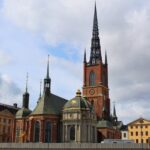
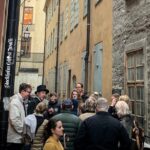
Royal, governmental, and garden stops you can see without rushing
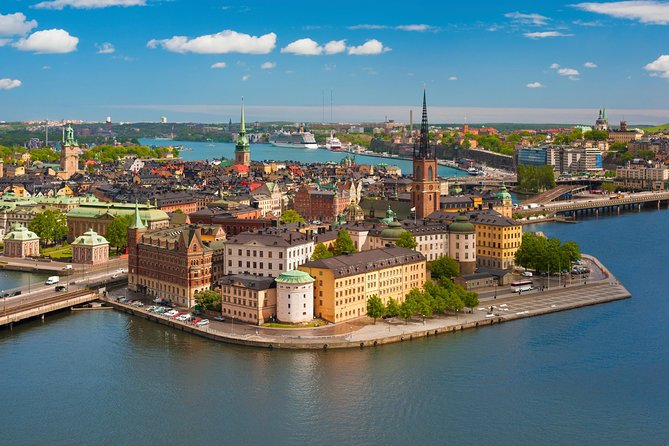
After Norrmalmstorg, the tour keeps moving through classic central Stockholm scenery.
The Royal Dramatic Theatre area (Kungliga Dramatiska Teatern)
You’ll pass the Royal Dramatic Theatre at Nybroplan. It’s Sweden’s national stage for spoken drama, and the route frames it as a cultural landmark rather than just another façade. If you like theatre history, this is a nice early moment because it reminds you Stockholm isn’t only medieval and royal—it’s also very modern arts.
What to watch for: the building setting around Nybroplan, where the city feels structured and central.
Possible drawback: this is a short pass-by stop, so don’t expect a deep inside visit. If you want more, save the theatre for a separate outing.
Kungsträdgården (Kungsträdgården / Kungsan)
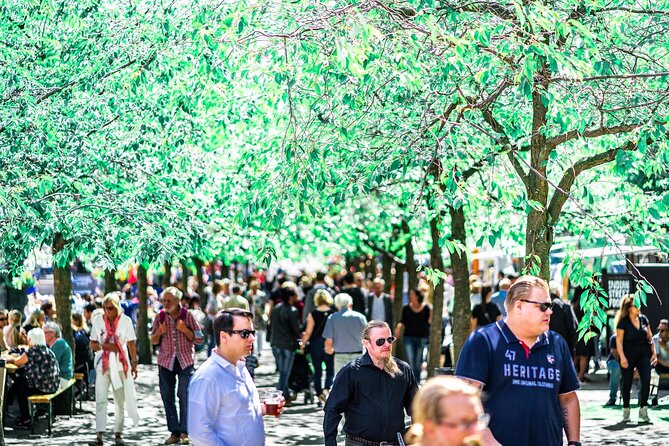
Next is Kungsträdgården, one of the city’s main meeting points. It dates back to the 1400s and started as the king’s kitchen garden, then shifted to being handed over to the people in the 1700s. The tour highlights how that change still shows up today in the way locals use the space.
Season note: in summer you’ll see concerts and festivals; in winter there’s ice skating; spring can bring cherry blossoms; autumn brings fall color. Even if you’re there in one season only, the guide uses those contrasts to help you understand what kind of public space this has been.
Small consideration: it’s popular as a meeting point, so you may see groups gathering even if you’re not overwhelmed by crowds.
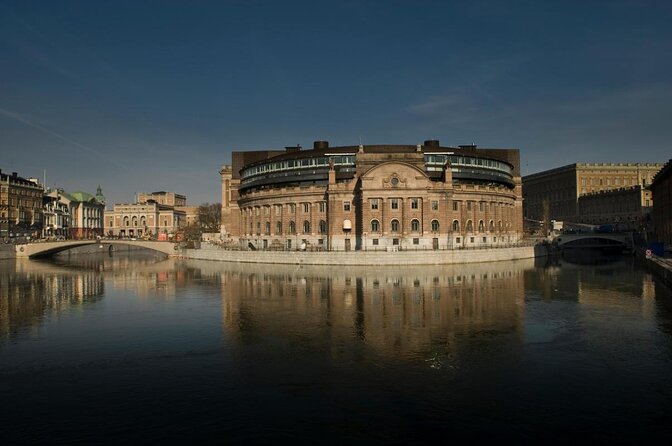
Swedish Parliament (Riksdagshuset) at Helgeandsholmen
The Swedish Parliament sits on its own island, Helgeandsholmen. The stop gives you a clear sense of how the government and geography connect—public power in a very visible setting, separate water boundaries, and a serious architectural presence.
Why it’s valuable: Stockholm’s street level can look calm and simple, but this stop shows the framework behind that calm. You’ll leave with a clearer picture of where the nation’s decision-making happens and what kind of symbolism the buildings carry.
Possible drawback: this is a view-and-photo type stop. If you want interiors, plan a separate visit.
You can also read our reviews of more private tours in Stockholm

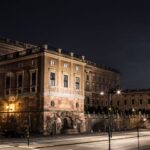




Royal Palace (Kungliga slottet)
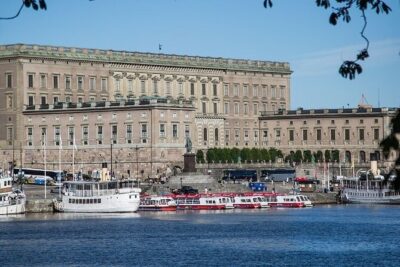
The tour includes a Royal Palace viewpoint stop. It’s described as one of Europe’s largest royal residences and also the king’s official residence where monarchy representation takes place. For first-timers, this works because the palace is hard to ignore even from outside.
Important practical note: the Royal Palace admission is not included in the tour, so if you want to go inside, you’ll need to pay separately.
Tip: use this stop to decide if you want more. The exterior can be enough for some people; others will want the extra time indoors.
Gamla Stan and medieval Stockholm: small turns, big meaning
Now the tour moves into the Old Town world of medieval streets and story-rich squares. This is where Stockholm starts to feel like a scene from a history book, but you still get it in a walking format you can control.
Stortorget: the Old Town’s main square
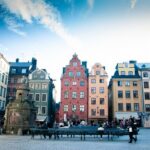
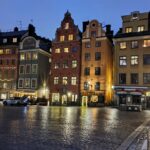
Stortorget is Stockholm’s Old Town heart and the best place to start exploring further on your own afterward. The guide connects it with major moments: the first town hall, today’s Nobel Museum area, and the Stockholm Bloodbath. That last point often lands hard for visitors because it flips the square’s cozy look into something darker.
Why you’ll enjoy this stop: a square is where stories repeat. Even short stops here can change how you read the whole Old Town.
Possible drawback: depending on the time of day, the square can get busy. The advantage of a private walk is that you can pause longer when you want to, and keep moving when you’d rather.
Stockholm Cathedral area (Storkyrkan): the St George and the Dragon statue outside
You’ll reach the Stockholm Cathedral area to see the exterior statue of St. George and the Dragon. The guide frames the statue and points you to why it matters—King Carl XVI Gustav and Queen Silvia’s wedding moment is part of why it’s famous, and the statue itself dates to the 1470s. The tour also notes the statue was made after the first battle between Denmark and Sweden during the Kalmar Union.
Practical note: the cathedral entrance fee is not included for this stop, so plan on paying if you want inside time.
Why it’s worth it even from the outside: the statue is tied to political history, not just fantasy. That’s how you get meaning from a short sightseeing moment.
Iron Boy (Järnpojken): a quiet, charming landmark
Next comes the Iron Boy, also known as the Boy looking at the Moon. The guide tells you it’s partly based on sculptor Liss Eriksson’s childhood memory—couldn’t sleep, looked through the window at the moon.
This stop is small, but it’s the kind of detail you’ll remember on the flight home. It also gives the tour a human scale after the big royal and political stops.
Possible drawback: it’s quick. If you hate photo stops, keep your expectations simple.
The St George symbol, plus symbolism around the horse and dragon
The Statue of St. George stop ties symbolism to Sweden and Denmark: St. George represents Sweden and the dragon represents Denmark. It’s also linked to King Kristian I of the Kalmar Union and Sten Sture the elder. If you’ve ever wondered why so many Stockholm landmarks look like they’re telling secret stories, this is the moment where the guide turns those visuals into meaning.
Mårten Trotzigs gränd: the narrow alley you can feel in your shoulders
This is the narrowest alley stop on the route. At its narrowest point it’s about 90 cm wide, and the tour notes guidebooks sometimes claim it’s the narrowest alley in Europe. It also gently corrects that by mentioning there’s a narrower one in Prague at 60 cm.
Here’s why it’s fun even if it’s not the absolute record: you can stand there and instantly understand what it means to build a city where space is tight and daily movement squeezes through very small gaps. It’s history you can physically sense.
Small consideration: it can be awkward if you’re with bulky bags or in a crowded time window. Keep your pace and your personal space in mind.
Slussen into Södermalm: alternative Stockholm, viewpoints, and your fika break
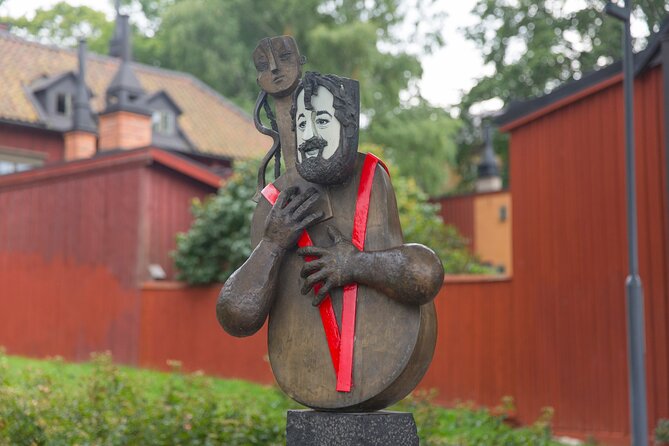
After the Old Town feel, the tour shifts toward the districts that give Stockholm its more relaxed, artsy, everyday vibe.
Slussen: the city’s water-level logic
Slussen translates to the lock. The guide explains why the name matters: Lake Mälaren and the Baltic Sea sit at different water levels—about 70 cm difference. The stop connects “urban design” to “natural geography,” and it helps you understand why Stockholm’s movement and building patterns look the way they do.
Possible drawback: this stop is more about explanation than scenery, so if you prefer purely photogenic stops, you might want to keep listening time balanced with photo time.
Götgatsbacken and Götgatan: shops, bars, and everyday Stockholm
You’ll move through the pedestrian-friendly shopping area around Götgatsbacken and Götgatan. The tour notes modern brand shopping and also vintage and thrift-style options. There are also bars and pubs aimed at a more laid-back, not overly formal nightlife mood.
Why this matters: it shows you that Stockholm isn’t locked inside the museum boxes. You get a feel for where people actually spend time.
Small consideration: this part depends on the day and time. If you go during a busier window, expect more foot traffic.
Katarinahissen: the viewpoint stop that earns its camera time
The Katarina Elevator used to replace climbing the stairs on the Södermalm cliffs. Today, it’s a picture-perfect viewpoint/photo stop with great views.
Even if you don’t ride anything, you’ll get a perspective that makes the city look like the geography it is: water, bridges, and hills.
Possible drawback: it’s a viewpoint, so it can get windy. Bring a layer and keep your camera hand stable.
Mosebacke Torg and Södra Teatern square vibe
Mosebackestorg is a quieter square near Södra Teatern. In summer the Biergarten there is noted as popular, and the stop also mentions a sculpture called The Sisters.
This is a good breathing space in the route. After a lot of walking and historic sites, you’ll appreciate a pause that still feels local.
Small consideration: the “summer” appeal is seasonal, so in colder months it may feel calmer than you expect.
Fiskargatan: a writer’s-address kind of stop
Fiskargatan is tied to Stieg Larsson’s Millennium series and the way a character is pictured living there in one of the books. The tour uses it to connect Stockholm to literature, not just architecture.
If you’re into Scandinavian crime fiction, this one adds extra fun. If you’re not, it still works because it shows how Stockholm appears in popular culture.
Possible drawback: it’s not a major sight you’ll need a ticket for. Don’t plan on a museum moment—think of it as story location.
Katarina Kyrka: a churchyard with notable Swedish burials
At Katarina Kyrka, you’ll learn about famous Swedes buried around the church. The tour specifically mentions Anna Lindh and also Per Anders Fogelström and Cornelis Vreeswijk.
Why it’s meaningful: this is where Stockholm’s “everyday sacred space” includes public memory. Even outside the building, it gives context for national stories.
Possible drawback: this is another short stop. If you want to linger in the churchyard, you may need to ask your guide for extra time.
Master Mikaels Gata: wooden houses and government care
Master Mikaels Gata is described as a charming little street with old, colorful wooden houses. It’s named after Mikael Reissuer, executor of Stockholm for 15 years in the 1600s. The tour also notes that many wooden houses are owned by AB Stadsholmen, a real estate company owned by the government, focused on cultural heritage.
This is a “how the city maintains itself” stop. It helps you see that Stockholm’s beauty doesn’t appear by accident—it’s protected and managed.
Possible drawback: wooden-house streets are smaller and slower. If your energy is running low, this is still worth it, but don’t expect the biggest wide-open views.
Cornelisparken: ending your walk with a viewpoint and a tribute
The final stop is Cornelisparken, inaugurated in 2000 and dedicated to Cornelis Vreeswijk. The guide points out its breathtaking views.
This is where the tour ends, in the heart of Södermalm, near Cornelisparken at the address listed as Cornelis park 116 20, Stockholm. Finish here means you can keep exploring on your own from one of Stockholm’s more interesting neighborhoods.
A key consideration (based on how the walk feels): since the endpoint is on Södermalm, don’t treat this like a straight line back to where you started. One of the main complaints people have about this kind of route is ending far from the start and having to do a longer walk back. If your hotel is closer to Norrmalmstorg, plan a quick transit option.
The $418.80 price tag: what you’re actually paying for
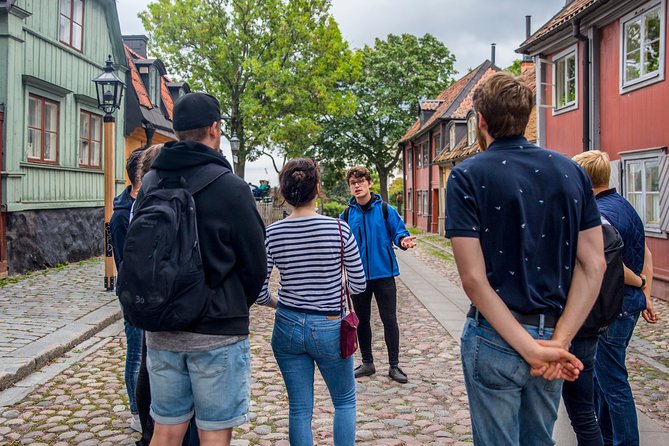
Yes, $418.80 per person sounds high for a 3-hour walk. But with private tours, the math changes. You’re not just paying for “someone to point at buildings.” You’re paying for a professional guide, a customized approach, and time spent moving through multiple districts without needing a plan.
Here’s how the value adds up from what’s included:
- Professional guide for the full 3 hours, in English
- Fika included (coffee or tea plus a pastry)
- Many stops don’t require paid admission for the viewing points, which keeps your day from turning into a ticket-collection project
- Private format means your group controls the pace and focus, and you can tell the guide what you care about
Also, average booking time is about 9 days in advance. That usually signals demand, and it means it’s smart to lock in early if your dates are fixed.
Practical truth: if you’re traveling as a solo adventurer who can move fast and doesn’t need a human narrator, you might feel the price more than a group would. If you’re the kind of person who wants to ask questions and get the “why” behind places, private guiding is one of the best ways to convert a short time window into real understanding.
Comfort and logistics: cobblestones, weather, and how to finish smart
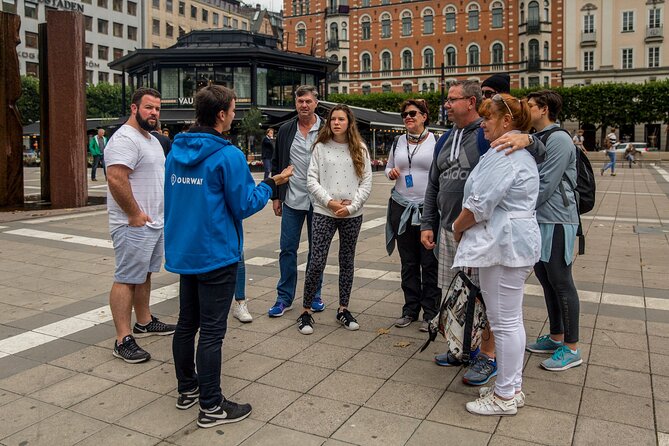
This tour has a moderate physical fitness level. Part of it includes walking on cobblestones, and the route lasts about 3 hours depending on weather, pace, and your interests.
My practical advice:
- Wear shoes you can handle on cobblestones. If you hate uneven surfaces, you’ll enjoy the old streets less.
- Bring a weather-ready layer. The tour operates in all weather conditions.
- Since it ends at Cornelisparken on Södermalm, plan your next step. Either build extra sightseeing time into Södermalm or line up an easy return plan from there.
One more small tip: because it’s private, you can negotiate where you want to finish. If you’re tired or you’d rather be nearer a transit hub, talk to your guide and agree on an adjusted endpoint.
Who should book this private Stockholm walk?
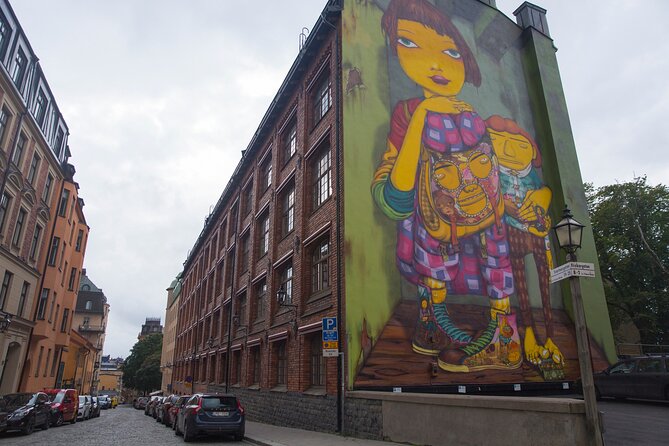
This tour fits best if you want:
- A first-time Stockholm overview that still feels personal
- Stories that connect big-name landmarks to the people and events behind them
- A mix of royal/gov sites, medieval Old Town, and Södermalm’s more lived-in vibe
- A guide who can answer questions while you walk (and help you pick what to do next)
It might be less ideal if:
- You only want maximum time inside paid attractions and you dislike exterior-only stops
- You’re uncomfortable with uneven ground like cobblestones
- You prefer a tour that ends where you started (this one finishes in Södermalm)
Should you book this Stockholm Syndrome private walking tour?
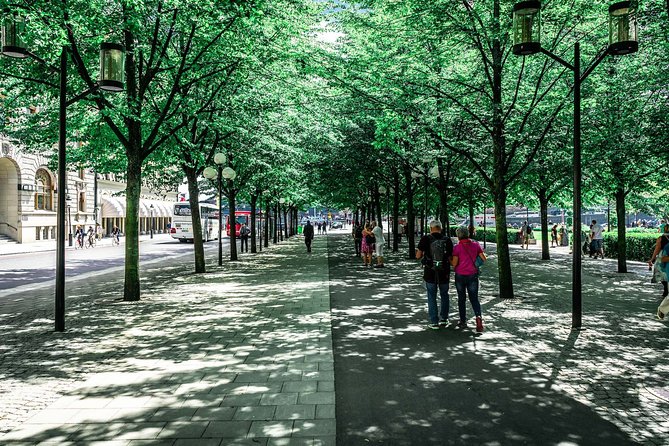
If you like history that feels human and you want your Stockholm day to start with solid orientation, I’d book it. The format is efficient: you get the Stockholm Syndrome origin at the source location, you see the royal and parliamentary core, you get key Old Town stops like Stortorget and the narrow Mårten Trotzigs gränd, and you finish with viewpoints and Södermalm flavor.
I’d especially recommend it if you’re traveling on limited time and you’d rather spend your energy asking questions than trying to build an itinerary from scratch. Just plan for the ending location on Södermalm, so you don’t end the day feeling like you need to “recover” with a long walk.
FAQ
Where does the tour start and where does it end?
The tour starts at Norrmalmstorg in Stockholm, Sweden. It ends at Cornelisparken in Södermalm (listed as Cornelis park 116 20 Stockholm).
How long is the tour?
The walking tour is about 3 hours.
Is it private and offered in English?
Yes, it’s a private tour/activity where only your group participates, and it’s offered in English.
What’s included besides the guide?
The tour includes coffee or tea fika (coffee/tea plus a pastry).
Do I need to pay entrance fees at any stops?
Some stops are free to view, but Royal Palace and the Stockholm Cathedral area have admission that is not included. The tour notes a small entrance fee for the cathedral; church services are free.
Does the tour run in bad weather?
Yes, it operates in all weather conditions. You’re advised to dress comfortably and appropriately, and part of the route includes cobblestones.