REVIEW · STOCKHOLM
3-4h Viking History Short Day Tour from Stockholm
Book on Viator →Operated by Sweden History Tours · Bookable on Viator
Viking runes in the Swedish countryside. This short day tour takes you from central Stockholm into places that feel startlingly close to the Viking era, with stops built around runestones, law, and everyday life. I especially like how the guide work turns carved stone into stories you can picture, and how pickup makes the trip easy even if you are short on time, with guides like Jonathan bringing details such as Old Norse reading into the mix. One possible drawback: since it is only 3–4 hours, each stop is time-boxed, so if you want long, slow museum-style wandering, you may feel rushed.
The route is designed for maximum Viking context without needing a car. You will hit big-name sites you would struggle to reach neatly on your own, while still seeing real sites in their rural setting. Expect a small group (up to 16), English commentary, and a pace that focuses on key things you can actually retain.
In This Review
- Key Viking Sites Packed Into One Short Day
- Why This 3–4 Hour Viking Trip Feels Like a Shortcut to the Real Past
- Pickup, Timing, and Getting Into the Right Place Smoothly
- Broby Viking Graveyard: A Woman’s Skeleton and What It Changes for the Story
- Jarlabanke Runestones and the Viking Causeway: Where Stone Becomes a Message
- Såstaholms allé: Runestones, a Burial Site, and Estrid’s Presence
- Arkils tingstad: Viking Assembly, Viking Law, and Ships by the Lake
- Vallentuna Church (Since 1190): The Pagan to Christian Turn You Can See
- What You Get for the Price, and What You Still Need
- The Real Make-or-Break: Guides and Pacing
- Who Should Book This Tour (and Who Might Want Something Longer)
- Should You Book This Viking History Short Day Tour from Stockholm?
- FAQ
- How long is the Viking History short day tour?
- What time does the tour start?
- Is hotel pickup included?
- Do you pick up from cruise ports?
- Is the tour in English?
- Are entrance fees included?
- Is lunch included in the price?
- What is the maximum group size?
- Can I cancel for a full refund?
Key Viking Sites Packed Into One Short Day
- Central pickup that actually saves time: hotel or port pickup within the stated zone, then drop-off back in town
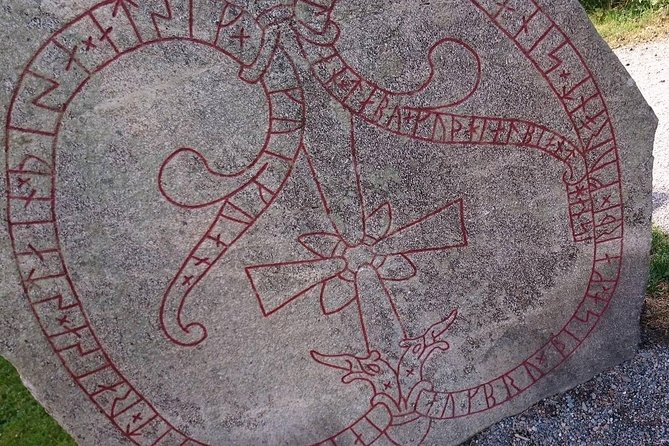
- Runestones you can read the context of: not just photos, but who carved them and what they meant
- Law and society, not only warriors: Viking assembly place themes show how order worked
- The Viking-to-Christian shift in one stop: a 1190 church with runic details tied to cultural change
- Small-group size: room to ask questions without feeling like you are in a crowd
Why This 3–4 Hour Viking Trip Feels Like a Shortcut to the Real Past
This is the kind of tour that makes sense when you are in Stockholm for only a day or two. You get transportation out to the countryside and a guided story thread that links the sites together. Instead of bouncing between random rune fields, you follow themes: people and memory, community rules, travel by water, and the big religious shift that reshaped Scandinavia.
I like that it is not just about monuments. The stops are chosen to show how Vikings marked land, negotiated status, and built social life around places like assembly sites and church walls. When guides like Olof or Angus can connect details to what you are standing on, it turns a quick outing into a real understanding, not just sightseeing.
The timing also matters. With a start time of 9:30 am, you get a chunk of daylight in the countryside and still return to central Stockholm for the rest of your day.
You can also read our reviews of more historical tours in Stockholm

Pickup, Timing, and Getting Into the Right Place Smoothly
Logistics are half the battle in Stockholm, and this tour handles most of it. Pickup is offered at central Stockholm hotels and cruise ports, plus other accommodations within 3 km of Stockholm central station. If you are staying in Old Town, where cars cannot easily enter, you might have to walk a few minutes to a nearby pickup point.
Pickup usually starts 30–60 minutes before departure, and the final start time is sent to you two days in advance. That flexibility helps the operator manage traffic and reservation counts, but you should plan to be ready a bit early.
If you are arriving by cruise ship, pickup depends on the specific pier. The tour includes guidance for several Stockholm harbor options, with a consistent meeting pattern: the guide waits holding a sign marked Viking Tours near the right terminal area. The one big exception is Nynäshamn, where pickup is not included because it is far from Stockholm central station; in that case, you will be directed to a simpler meeting option in central Stockholm.
Tip for peace of mind: have your phone available during pickup. The tour explicitly recommends that, especially for cruise days when timing can be tight.
Broby Viking Graveyard: A Woman’s Skeleton and What It Changes for the Story
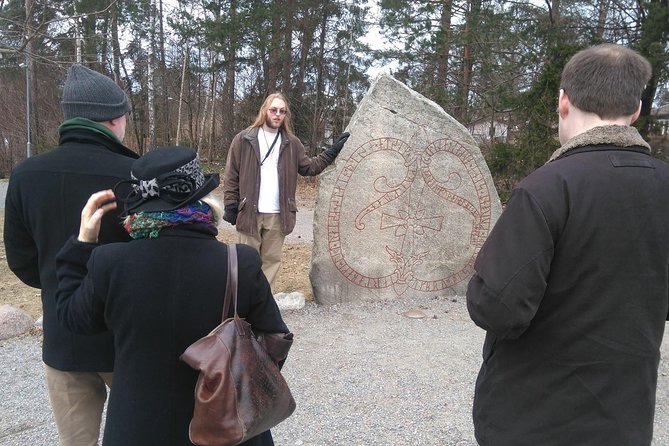
The day begins with a stop at Broby, a Viking graveyard. The standout detail here is not just that it is old, but what has been identified: it is linked to the only identified Viking woman’s skeleton in Sweden. Standing near a site like this changes how you think about Viking life, because it makes the story less about distant legends and more about real individuals and families.
You can expect the guide to frame this in terms of status and remembrance, and how archaeological finds can reshape the wider narrative. A lot of Viking history talk centers on men, raids, and ships. A graveyard stop like this forces the conversation back toward everyday humanity: who mattered enough to be buried here, and what we can and cannot know from what survives.
Practical note: this is outdoor walking. Wear shoes you trust on uneven ground, and bring a layer since weather around lakes can change fast.
Jarlabanke Runestones and the Viking Causeway: Where Stone Becomes a Message
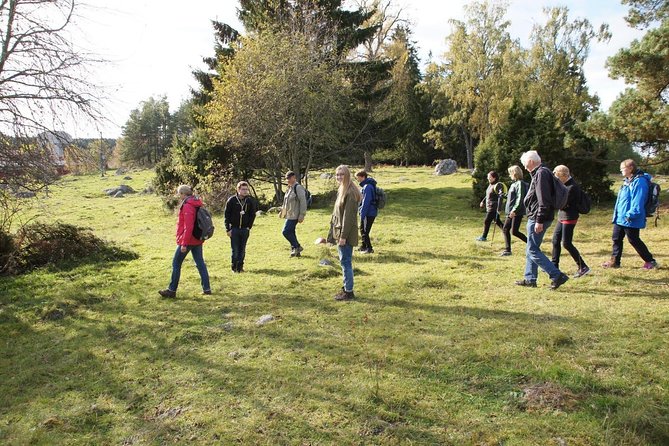
After Broby, the tour moves into the Jarlabanke area. You will cross Jarlabanke’s bridge (about 150 meters / 495 feet) and learn about its deep Viking-era roots. The bridge theme is a great opener because it reminds you that Vikings did not just leave artifacts behind, they built connections across land and water.
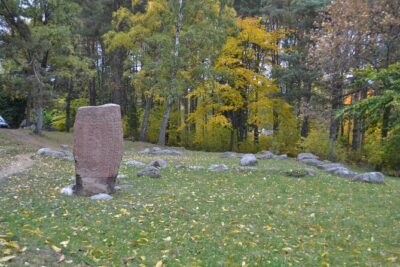
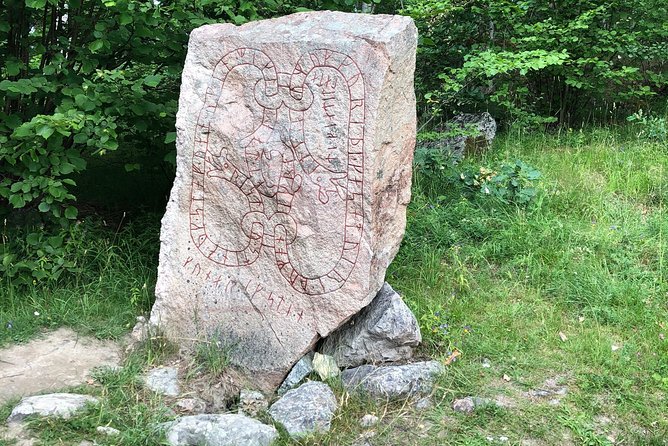
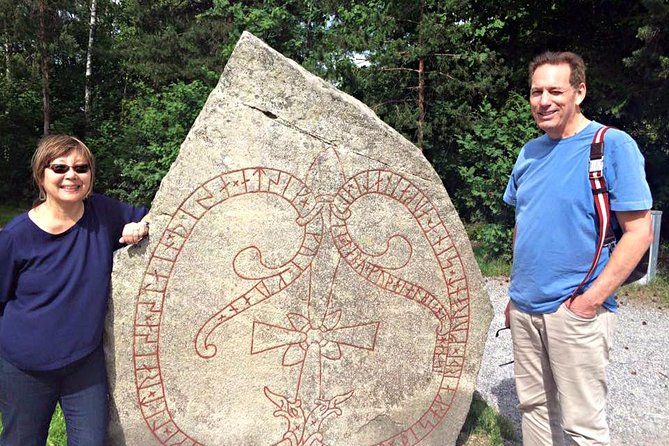
Then comes the runestone-focused core. At the Jarlabanke runestones, you walk along the viking causeway, hear what the runestones say, and get the bigger picture behind the carved messages—who the important lords were and why they bothered to record their names in stone.
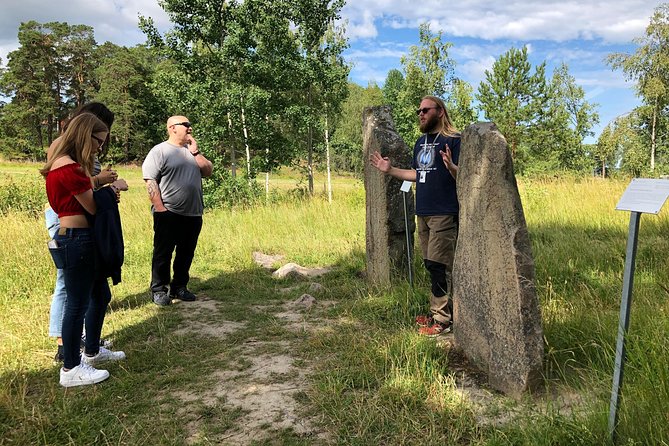
One of the most praised parts of this tour is exactly this guided stone reading. People talked about guides like Jonathan who can read Old Norse directly from the stones. Even if you are not going to read runes yourself, hearing the language and the structure of the inscriptions helps your brain click the meaning into place. The difference between seeing a rune in a photo and understanding it in context is huge.
You will also likely see that the tour treats runes as documents, not decorations. That is what makes this stop feel worth the short time window.
Såstaholms allé: Runestones, a Burial Site, and Estrid’s Presence
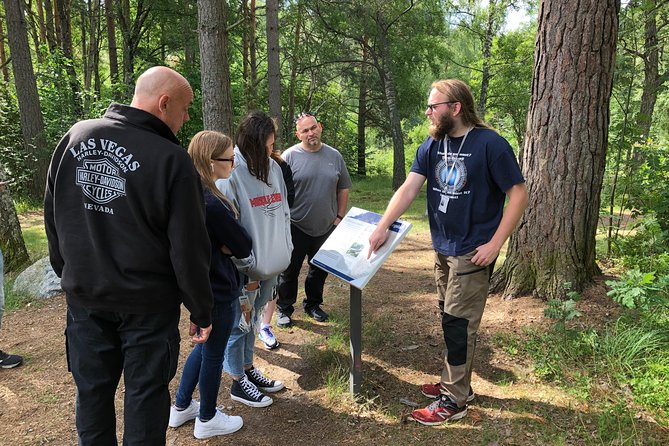
Next is Såstaholms allé, with a focus on runestones and a Viking burial site. The tour here leans into the physical feeling of history: walking on the same soil the Vikings walked. You are not just looking at “a thing from the past,” you are moving through the setting that gave those stones their meaning.
A key character in this stop is Estrid, described as an influential Viking woman who lived at this location. When a tour adds a person you can name and tie to specific places, the history becomes more concrete. It also makes the cemetery and runestones feel less like random dots on a map and more like parts of one social world.
What I like about this stop: it balances the “big men” narrative you often get with Vikings. You are reminded that influence could take many forms, and not all of them were military.
Possible drawback to consider: you only spend about 30 minutes at this stop. If you want extra time to linger at each stone or take a ton of photos without a schedule, you might want to plan your own longer day somewhere else too. But as a short-day highlight, it works.

Arkils tingstad: Viking Assembly, Viking Law, and Ships by the Lake
At Arkils tingstad, the tour shifts from monuments to governance and social order. This is presented as a Viking assembly place where law and decisions were maintained. Instead of asking only who fought, you start asking how communities stayed organized.
The guide also connects this setting to Viking social culture and law, which is a refreshing change from tours that only cover battles. Think of it as learning how power worked on a local level—who had a voice, how disagreements played out, and how communities kept functioning.
Then the tour adds a water-and-travel angle. You go down to the shore of a lake and learn about Viking ships and travel. That makes sense because Scandinavia’s geography forced movement by water for trade, politics, and family connections.
If you care about real-world context, this pairing is strong: governance on land, then movement and ships at the water’s edge. It helps you connect myths to practical life.
Time on this stop is about 30 minutes, so the guide will keep it focused. If you like broad explanations plus a few key takeaways, that is ideal. If you want a lot of quiet time at the shoreline, you may wish the schedule had an extra buffer.
Vallentuna Church (Since 1190): The Pagan to Christian Turn You Can See
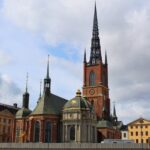
The final major stop is Vallentuna, centered on a medieval church dating to 1190 AD. This is where the story turns from Viking identity into the next chapter of Swedish history.
You will visit the interior to see what a Swedish church looks like and explore runic details, including a runic inscription on the wall. The guide also explains how Vikings changed from paganism to Christianity, and you should come away with a clearer sense that religious change was not instant. It was gradual, tied to power, contact, and local choices.
Why this stop is a big deal for history nerds: it shows continuity and change in the same region. Vikings carved messages into stone in one era, and later communities built a church that still carries runic traces. That overlap helps you avoid the oversimplified idea that everything Viking-related ended in a single dramatic moment.
Time here is about 30 minutes. Again, it is short, but it is long enough for a quick orientation plus the main points.
What You Get for the Price, and What You Still Need
The price is $143.91 per person for a 3–4 hour experience. For that money, you are paying for more than talking: you are paying for transportation out of Stockholm, guided interpretation, and the structure that strings the sites together.
Here is the value equation as I see it:
- You get round-trip transportation via pickup and drop-off in central Stockholm (and cruise ports, except Nynäshamn). That alone saves you time and hassle.
- The tour is small-group sized, which keeps questions possible.
- Stops listed on the schedule show admission ticket free for the runestone and assembly-related visits.
- Lunch is not included, so you are expected to plan your food timing.
What to plan on your end: bring water and a snack if you need it. Since lunch is not part of the package, you will either eat after the drop-off or grab something before you leave.
Also note: the tour provides a mobile ticket. That reduces stress when you are matching your group and moving between pickup points.
The Real Make-or-Break: Guides and Pacing
This tour lives or dies by the guide’s ability to connect stone, place, and story. The feedback patterns around the guides are consistent: people praised guides like Angus, Olof, Olaf, Gustav, Calle, and Erik for clear explanations and for answering questions while keeping a steady pace.
A small but meaningful detail from one experience: umbrellas were ready when weather turned. That is not a guarantee across every day, but it suggests the operator pays attention to practical comfort.
One pacing consideration to keep in mind: because this is a short day tour, the time at each stop is limited. That means you get key highlights, not a long-form slow tour. If you want to study one runestone for 30 minutes on your own, you probably will not have that kind of time here.
Who Should Book This Tour (and Who Might Want Something Longer)
This tour is ideal if:
- You are a Viking fan who wants a concentrated story outside the city
- You want to see runestones and assembly sites without renting a car
- You have only half a day or a short window and want it to count
- You prefer a small group with room to ask questions, not a large bus tour
It might not fit if:
- You want long stays at each site, museum-style wandering, or multiple churches beyond the single medieval stop
- You are prone to frustration with tight schedules when weather shifts
If you are torn, I usually suggest this tour as the best first step. It gives you Viking context you can use later when you revisit museums or read inscriptions on your own.
Should You Book This Viking History Short Day Tour from Stockholm?
I would book it if your goal is to get outside Stockholm and still come back with real context, not just photos. The combination of pickup convenience, free-feeling site access (as listed), and theme-based stops makes it a strong value for the time you have.
If you are price sensitive, compare what you would spend on transport and planning for several separate destinations. Here you are buying a structured day that links runes, law, and religious change in a manageable window.
My final check before you book: if short stops sound good, and you want a guided story thread more than slow independent exploring, this is a smart pick. If you crave deep, unhurried time at each stone or building, you may prefer a longer tour option instead.
FAQ
How long is the Viking History short day tour?
It runs about 3 to 4 hours in total.
What time does the tour start?
Most tours start at 9:30 am.
Is hotel pickup included?
Yes, pickup is offered for accommodations in central Stockholm within 3 km of Stockholm central station, and you will also be dropped off back in central Stockholm.
Do you pick up from cruise ports?
Pickup is included for cruise ports, with instructions provided for specific piers. Pickup is not included for Nynäshamn.
Is the tour in English?
Yes, the tour is offered in English.
Are entrance fees included?
For the main stops listed on the itinerary, the admission ticket is marked as free.
Is lunch included in the price?
No, lunch is not included.
What is the maximum group size?
The tour is described as a small-group experience with a maximum of 16 guests.
Can I cancel for a full refund?
You can cancel up to 24 hours in advance for a full refund.