REVIEW · STOCKHOLM
Stockholm Old Town and the Viking Museum, a Small Group Walking Tour
Book on Viator →Operated by Stockholm DriveAndGuide · Bookable on Viator
Vikings and royal history, on foot.
This small-group walking tour turns famous Stockholm sights into a story you can follow, from early settlements on the islands to the political power that shaped modern Sweden. I especially like how the guide connects street-level landmarks to the big turning points, so the Royal Palace area and the Viking Museum feel linked, not like two separate stops.
My favorite part is the guide quality. When I’m paying for a walking tour, I want explanations that are clear and useful, and this one shines with an experienced English-speaking host—Bengt Nykvist is one of the names you may encounter, and the delivery is described as both knowledgeable and friendly.
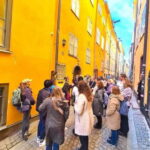
There is one practical consideration: you’re on your feet for about 3 hours, with a moderate physical fitness level recommended. If you’re hoping for a mostly sit-down experience, or you move slowly, plan for some steady walking and brief stops.
In This Review
- Key highlights you’ll feel right away
- Where the walk starts: Gamla Stan Metro, Riddarholmen, and a first sense of Stockholm
- Birger Jarl, founder stories, and why statues matter on the street
- Gustav Vasa and the power shifts you can point to
- Vasabron, the Vasa ship, and kings who shaped the Baltic
- The Riksdagshuset lesson: how Sweden’s voting system took shape
- Lejonbacken and the Royal Palace area: Karl XII, Peter the Great, and Gustav III
- Jarnpojken, Stortorget, and a detour into Nobel-era Sweden
- Stockholm’s modern story at street level: Bernadottes, peace, and welfare-state roots
- Skeppsbron to Djurgården: the included ferry ride that makes the museum part easier
- Inside the Viking Museum: what the included visit actually gives you
- Price and group size: where the $118.96 feels worth it (and where it might not)
- Who should book this tour, and who should choose something else
- Should you book Stockholm Old Town and the Viking Museum?
- FAQ
- How long is the tour?
- What language is the tour offered in?
- Is entry to the Viking Museum included?
- How many people are in the group?
- Where does the tour start and end?
- Does the tour include a ferry ride?
- What fitness level do I need?
Key highlights you’ll feel right away
- Max 10 people means more personal attention than big-bus touring
- Viking Museum admission included so you skip ticket-line friction
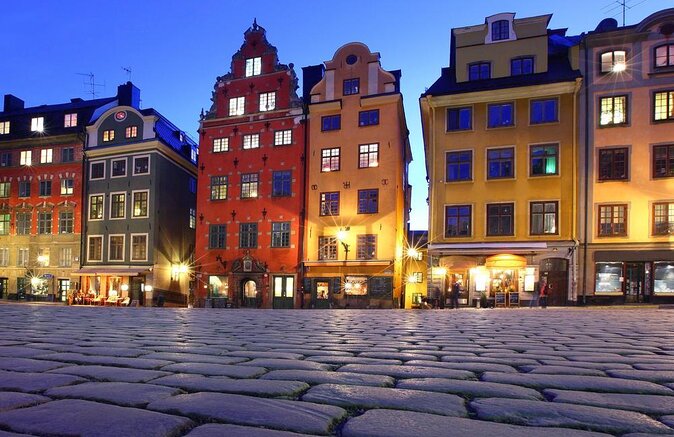
- Old Town landmarks in order, from Mälaren views to the Royal Palace area
- Ferry to Djurgården is included (Djurgårdsfärjan), so you get the “island” feel
- Guide context at every stop, including statues and what they symbolize
- You can stay after the museum tour, instead of being rushed out
Where the walk starts: Gamla Stan Metro, Riddarholmen, and a first sense of Stockholm
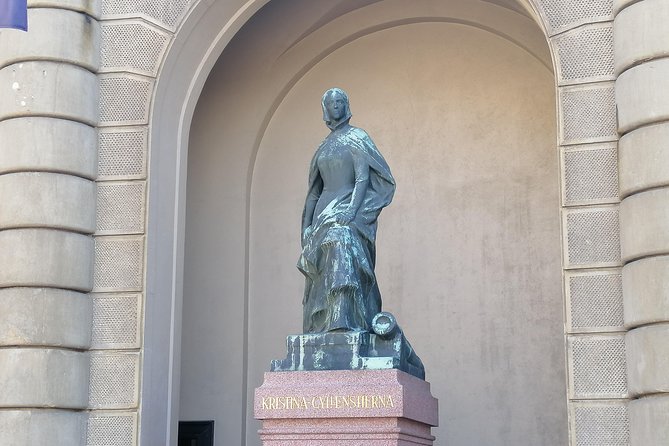
The tour starts in the city center area near Gamla Stan Metro. You meet at the location indicated for the experience (Munkbrogatan 8 is listed), and the walk begins at Gamla Stan Metro station in the underground area, in front of the Pressbyrån kiosk. If you like starting strong—before crowds fully thicken—that setup helps you get your bearings fast.
From there, the tone is set with early Stockholm context. The guide starts with the deep-time story: from the ice age and the shaping of the islands to the first settlements people developed there. Even if you’ve heard bits of Nordic prehistory before, it’s useful to hear it in a timeline that flows toward the medieval city you’re standing in.
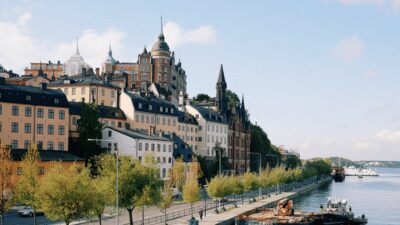
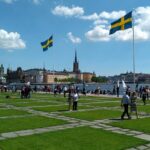
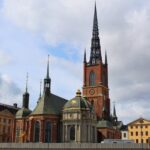
Then you get an immediate payoff: Riddarholmen and the viewpoint over Lake Mälaren toward key landmarks, including Stockholm City Hall. This isn’t just a photo moment. The guide frames what you’re looking at—how water routes and islands mattered to who controlled what, and why this part of town became central.
Practical tip: wear shoes with grip. Old Town streets can be uneven in places, and you’ll want comfort for an extended walk even if the stop times are short.
You can also read our reviews of more walking tours in Stockholm
Birger Jarl, founder stories, and why statues matter on the street
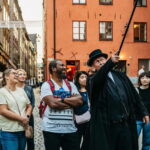
Riddarholmen continues the story with a landmark connection to Stockholm’s founding era. Outside Riddarholmen Church, you’ll be oriented to the presumed founder figure, Birger Jarl—either through the man himself in local tradition or, more realistically, through the statue representation you’ll see there.
What I like about this stop is how the guide uses a specific anchor: 1252, the year when the name Stockholm first appears in a preserved written text. Hearing that kind of precise detail makes the place feel less like a postcard and more like a documented beginning.
You also learn why these founder narratives get repeated in public spaces. When you stand in front of a church and a commemorative statue, you’re seeing how a modern city chooses what to remember. It’s one of those small tourism lessons that actually improves the rest of your sightseeing—because you start noticing what’s emphasized (and what’s missing).
Gustav Vasa and the power shifts you can point to
Next up is Riddarhuset, the House of Nobility area, with a statue of Gustav Vasa, described as the father of Sweden. This is one of those stops where the guide’s explanations make the city’s political symbolism feel concrete.
You’ll hear that Gustav Vasa’s era matters because he helped shape Sweden into a sovereign state after the political upheavals of the early 1500s. The guide also connects a darker local event—the bloodshed around the Bloodbath of Stockholm—with an uprising against a southern neighbor that had taken control of Sweden.
Then comes another clear, teachable point: Gustav Vasa’s role in changing Sweden’s religion from Catholicism to Lutheran Protestantism. That’s not the kind of detail you’d pick up from a quick glance at a building. But with a guide, it becomes the “why” behind the monuments and the later political institutions you’ll see on the walk.
If you enjoy history that’s tied to what you can actually see in front of you, this stretch is a highlight.
Vasabron, the Vasa ship, and kings who shaped the Baltic
A short walk brings you to Vasabron, where the story shifts from earlier founders and religious change to military power and the Baltic region. The guide connects Gustav II Adolf (noted as one of Sweden’s greatest warrior kings) to the idea that the Baltic sea became more like an inland sea surrounded by Swedish possessions during his reign.
What’s smart here is the bridge to something tangible: it’s also during his era that the Vasa ship was built. Even if you don’t plan to visit the Vasa Museum later, this gives you a reason to care about the famous ship story when you encounter it elsewhere around Stockholm.
Drawback to keep in mind: because the tour keeps moving, you get brief stops at each landmark. You’ll leave the “touring history” phase with a strong overview, but if you want deep detail on any one era, you’ll likely want to do a little follow-up reading or revisit one site later.
The Riksdagshuset lesson: how Sweden’s voting system took shape
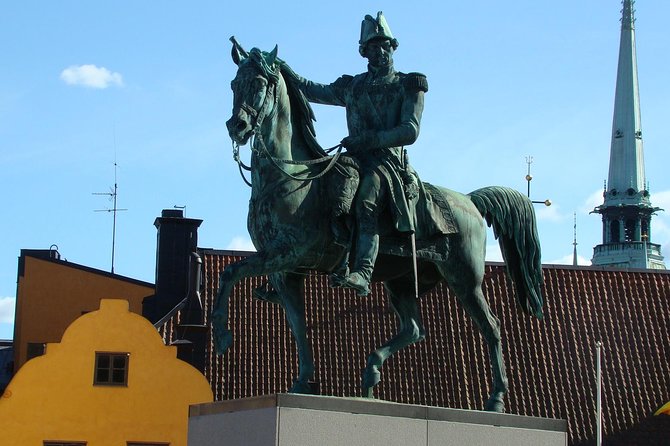
At Parliament Building (Riksdagshuset), you’ll get a clear lesson in how representation evolved. The guide describes the earlier structure as the Riksdag of the Estates (Ståndsriksdagen), where Nobility, Clergy, Burghers, and Peasants met separately before coming together with the king at the palace.
This is a useful stop even if your history interest is casual. The guide explains the political logic: separate orders, separate discussions, and a system where full equal voting rights weren’t part of the picture until much later.
You’ll also hear key timeline points: the dissolution of this system in 1866, the introduction of a two-chamber parliament still without equal voting rights for all citizens, and then the step toward general suffrage in 1921 after political struggle involving liberals and socialists.
For me, this is where the tour earns its price. A lot of walking tours in old districts show you buildings. This one teaches you what those buildings were for.
You can also read our reviews of more museum experiences in Stockholm



Lejonbacken and the Royal Palace area: Karl XII, Peter the Great, and Gustav III
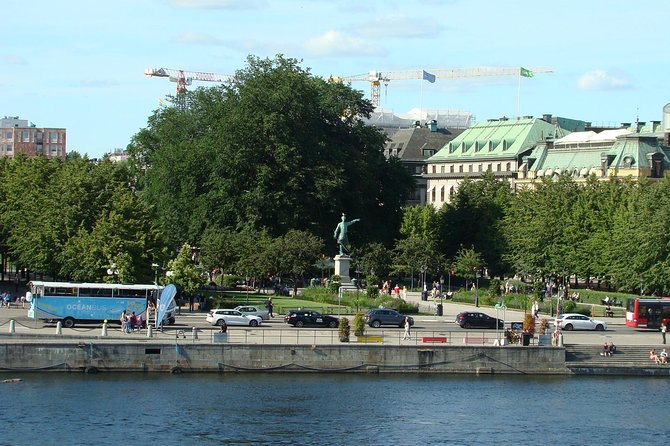
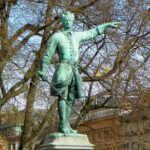
Then you head to the Royal Palace area, specifically the Lejonbacken north side approach. This section is less about architectural sightseeing and more about “read what the statues are pointing at,” which I love because it turns the Royal Palace area into a map of ideas.
You’ll hear about Peter the Great of Russia ending Sweden’s dreams of great power in Northern Europe. The story includes Karl XII, described as the last of the warrior kings, whose statue points east. The guide links that direction to major early victories of Karl XII and his forces (the Caroleans), and to the eventual defeat in Poltava in 1709.
After that, the tour shifts from warfare to arts and science in the age of enlightenment. You’ll hear about Gustav III, an enlightened ruler with strong interest in theatre, and how that influenced Sweden’s cultural life.
This is a good segment for travelers who think they aren’t “history people.” If you want to learn without drowning in names, the guide’s approach keeps things tied to visible monuments and clear cause-and-effect.
Jarnpojken, Stortorget, and a detour into Nobel-era Sweden
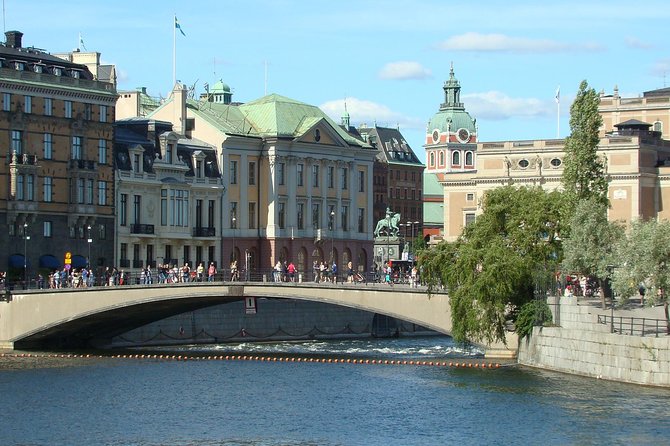
A brief stop at Jarnpojken follows. The guide describes it as the smallest and nicest statue in Sweden. This short pause is actually a nice reset. You’ll go from large-scale power stories to something that feels more playful and human-scale, which helps the walking day stay enjoyable.
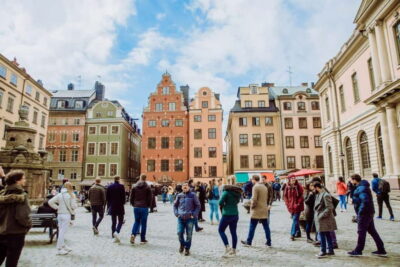
Then the tour heads to Stortorget, where the Nobel Price Museum is located. The guide ties this to the Swedish Royal Academies, which designate winners of the most prestigious prices in science and art. It’s a clever ending note before you move toward the museum part of the day: Sweden’s public identity isn’t only royal and political. It’s also cultural and intellectual.
Stockholm’s modern story at street level: Bernadottes, peace, and welfare-state roots
Back in Stockholm Old Town, the guide talks through how Sweden’s more recent national story took shape. You’ll hear about Carl XIV Johan of the Bernadottes, described as the king brought to Sweden from France in the early 19th century to regain what Sweden lost to the Russians.
Instead of focusing on war, the guide emphasizes diplomacy and infrastructure, plus education efforts. There’s also a note about 2014 and the celebration of 200 years of peace in Sweden.
Then comes the economic bridge: the industrial revolution, natural resources, and Swedish inventions are described as helping lay the foundation for a welfare state. The guide connects that to continued development into the 20th and 21st centuries by entrepreneurs.
Why this matters: it prevents the day from feeling like a loop stuck in medieval time. You leave with a sense of where today’s Sweden comes from, not just what the old stones represent.
Skeppsbron to Djurgården: the included ferry ride that makes the museum part easier
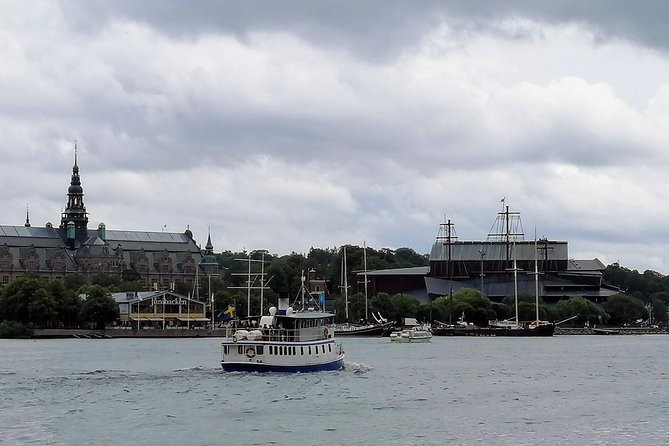
At Skeppsbron 26, the group takes the included ferry Djurgårdsfärjan to Djurgården. This matters more than it sounds. In a walking tour, the ferry gives you a breather and—importantly—adds the Stockholm water-and-islands feel you don’t get from land alone.
Also, having the ferry included reduces your decision fatigue. When you’re done walking, the last thing you want is figuring out transport timing in a place you’re visiting for the first time.
Even if you’re short on time, you’ll appreciate that the tour doesn’t end abruptly. It transitions smoothly from city streets into the island museum area.
Inside the Viking Museum: what the included visit actually gives you
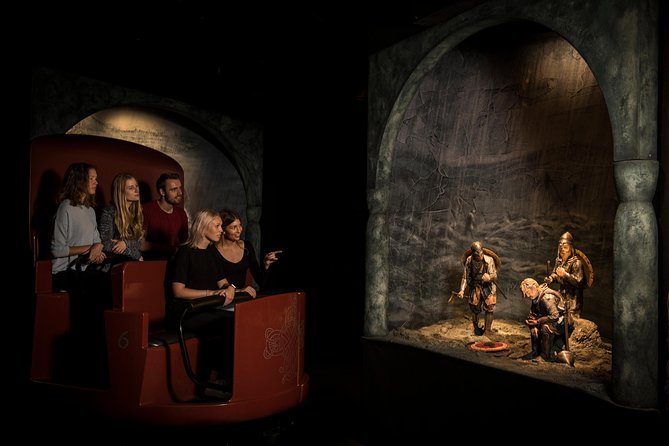
The tour ends at the Viking Museum (Djurgårdsstrand 15), where admission is included. That’s a real value point. The guide also introduces the museum and shows you key attractions, so you’re not wandering in with no plan.
One detail I found especially compelling is how the museum is described: a small-scale place offering a unique combination of thrilling experiences and historical facts. The guide frames it as resulting from cooperation between professionals in performing arts and Sweden’s respected historical scientists. In practice, that means the presentation style is likely to feel more experiential than purely academic.
You’re not locked into a hard stop either. The guided portion ends, but you’re welcome to stay and continue exploring after the tour finishes. So even though your group time is limited, you can extend your visit if the museum grabs you.
Time note: the museum segment is about 30 minutes within the tour flow. That’s enough for orientation, but if you’re a true Viking-history fan, you’ll likely want to use the “stay longer” permission to go deeper.
Price and group size: where the $118.96 feels worth it (and where it might not)
At $118.96 per person for about 3 hours, this tour isn’t a bargain-basement option. The value comes from the combination of:
- Small group size (max 10), which typically improves the quality of Q&A and attention
- Included Viking Museum admission, which removes the hassle of ticket lines and planning
- A guided walk that strings together Old Town political history with museum context
The trade-off is your time. If you’re the kind of visitor who wants long museum wandering and minimal walking, this format may feel a bit scheduled. But if you like guided structure and you want your time in Stockholm to feel efficient without feeling rushed, it’s a good deal.
Also, the tour is offered in English with a mobile ticket. That makes life easier when you’re moving between transit stops and ferry boarding areas.
Who should book this tour, and who should choose something else
This tour fits you best if:
- You enjoy walking tours and want a guided story through Old Town
- You want Viking Museum context without having to plan it all yourself
- You like history explained through visible monuments—statues, churches, and major civic buildings
Consider passing or pairing it with other time on your own if:
- You need long museum time right away (this tour gives a guided introduction, not an all-day museum session)
- You have very limited mobility or want a mostly seated experience, since moderate fitness is recommended
It’s also a smart pick for first-timers. Stockholm Old Town can feel like a beautiful maze, but the guide’s timeline keeps it organized.
Should you book Stockholm Old Town and the Viking Museum?
Yes, if you want the best kind of “two worlds in one day”: Old Town history you can see, plus an included museum introduction you can build on. The most praised aspect is the guide’s ability to share deep knowledge in an enjoyable way—especially with names like Bengt Nykvist mentioned for friendly, clear English delivery.
Book this tour if you:
- Want no-ticket-line pressure for the Viking Museum
- Like a small-group pace rather than a crowd shuffle
- Prefer learning that connects the city’s monuments to what they meant
Skip it if you’re already a museum super-planner and you’d rather handle transport and admissions on your own. But if you’d like your Stockholm day to run smoothly with a story that keeps you oriented, this one is a strong choice.
FAQ
How long is the tour?
The tour is about 3 hours (approximately).
What language is the tour offered in?
The experience is offered in English.
Is entry to the Viking Museum included?
Yes. Admission to the Viking Museum is included, and a guide introduces you to the museum during the visit.
How many people are in the group?
The tour has a maximum of 10 travelers.
Where does the tour start and end?
It starts in Stockholm at the listed meeting location near Munkbrogatan 8, and the walk begins at Gamla Stan Metro station in the underground area in front of the Pressbyrån kiosk. It ends at the Viking Museum, Djurgårdsstrand 15.
Does the tour include a ferry ride?
Yes. At Skeppsbron 26, you take the ferry Djurgårdsfärjan to Djurgården.
What fitness level do I need?
The tour recommends travelers have a moderate physical fitness level.