REVIEW · STOCKHOLM
Stockholm: Old Town Walking Tour, stories and secrets
Book on GetYourGuide →Operated by FikaTech · Bookable on GetYourGuide
Stockholm’s Old Town hits fast. In just two hours, you get a guided walk through Gamla Stan that turns famous buildings into people-sized stories. I especially like the way the route mixes big moments (monarch politics) with everyday details, and how the guide’s storytelling makes you notice things you’d otherwise miss. One consideration: it’s a walking tour on older streets, so if your feet don’t love cobblestones and uneven ground, you’ll want to plan accordingly.
You’ll meet your guide at the Postal Museum (Postmuseum), Lilla Nygatan 6, right by the entrance, and then slowly stitch together how this city grew, fought, and reinvented itself. The walk ends near Mynttorget, a place tied to freedom of speech and assembly, so the final stop lands with meaning—not just photos.
Key reasons this tour works:
- Postmuseum meeting point makes it easy to find and sets the tone right away
- Story-first guiding links monarchs and wars to real daily life
- Gamla Stan photo stops help you slow down at the big sights without feeling rushed
- Backstreets and alleys (including a famous narrow lane) show the old-town texture
- Mynttorget finish connects history to ideas still discussed today
- Sara-style guiding (clear, funny, and question-friendly) keeps the group moving and thinking
In This Review
- Entering Gamla Stan at Postmuseum: a smooth start in the heart of Old Town
- Runestone to Stortorget: how old stones explain old power
- Royal Palace and Stockholm Cathedral: big photo moments, with points worth noticing
- Iron Boy, St George, and Mårten Trotzigs Gränd: small legends, strong atmosphere
- Österlånggatan, Järntorget, and Västerlånggatan: the old-town street grid in plain language
- German Church and Riddarholmen: water views and faith sites you can’t ignore
- Mynttorget finish: a place where ideas still matter
- Price and time value: what $16 buys in two hours
- Who this walking tour fits best (and who should skip it)
- Getting the most out of your guide (and why Sara stands out)
- Should you book this Old Town walking tour?
- FAQ
- Where does the tour start?
- What is the nearest subway station to the meeting point?
- How long is the Old Town walking tour?
- How much does the tour cost?
- Is the tour in English?
- Is there a private group option?
- Where does the tour end?
- What should I bring?
- Is the tour suitable for wheelchair users?
- Do I need to tip the guide?
- What is the cancellation policy?
Entering Gamla Stan at Postmuseum: a smooth start in the heart of Old Town
If you want a quick start in Stockholm, this meeting point is a smart one. You line up outside the Postmuseum on Lilla Nygatan 6, and it’s near the Gamla Stan subway station. That matters because Old Town can feel like a maze your first day. Getting oriented early means your later self-guided wandering feels less like guessing.
From the first minutes, the tour moves at a human pace. You’re not staring at a map; you’re walking and learning. And because the guide sets up the story before each landmark, you end up seeing the streets as part of the plot, not just a backdrop.
Practical note: the tour starts promptly at the scheduled time. If you’re the kind of person who’s always “almost there,” build in buffer time so you’re not sprinting in dress shoes and regret.
Runestone to Stortorget: how old stones explain old power
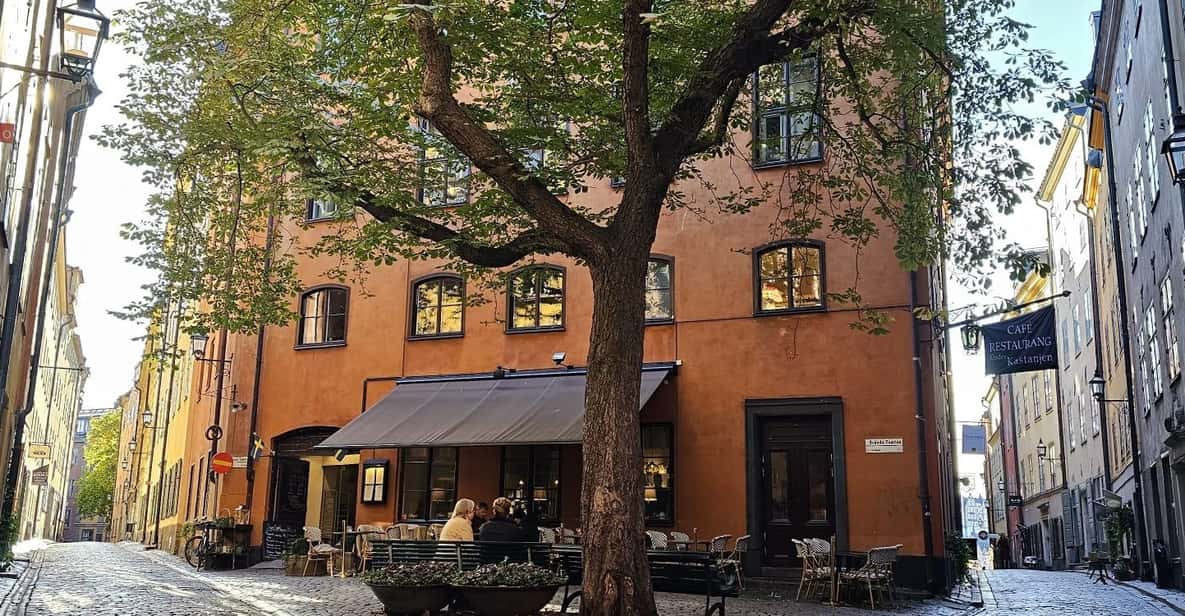
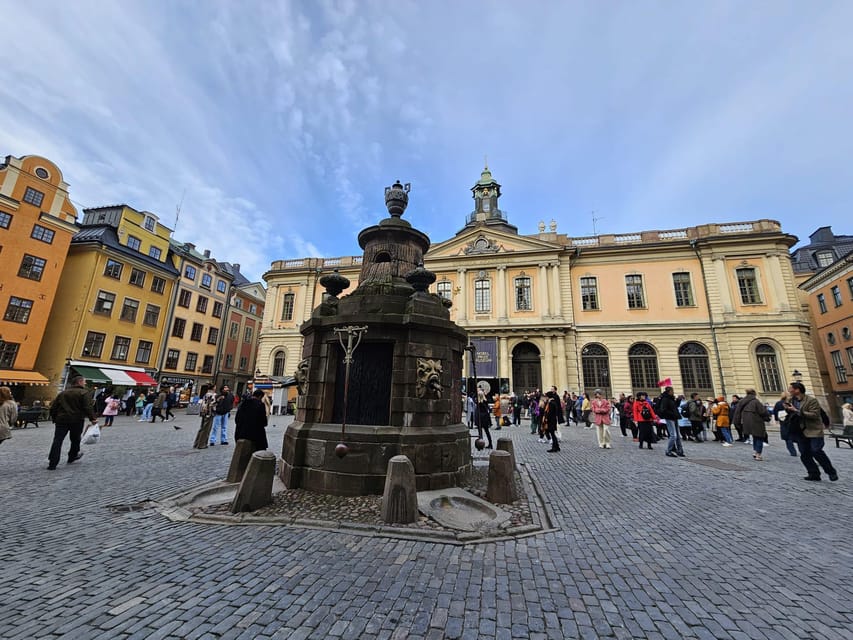
The first stretch takes you from the Runestone stop to Stortorget, the classic old-town square. This is where the walk begins doing its best trick: turning objects into context.
A runestone is more than a relic. It helps show that this area has held meaning for centuries, and that communication—who speaks, what gets remembered—matters in this city. Then you step into Stortorget, where squares like this one were built for crowd life: announcements, markets, and public moments. You start to feel how Stockholm’s civic space worked.
What I like here: you get your bearings without spending the whole tour doing “name-and-date” history. The guide keeps tying details to why they mattered to regular people, not just rulers.
If you’re hoping for a fully quiet experience, lower your expectations. Old Town is lively, and you’re walking through the parts that still function like a city, not a museum set.
You can also read our reviews of more walking tours in Stockholm
Royal Palace and Stockholm Cathedral: big photo moments, with points worth noticing
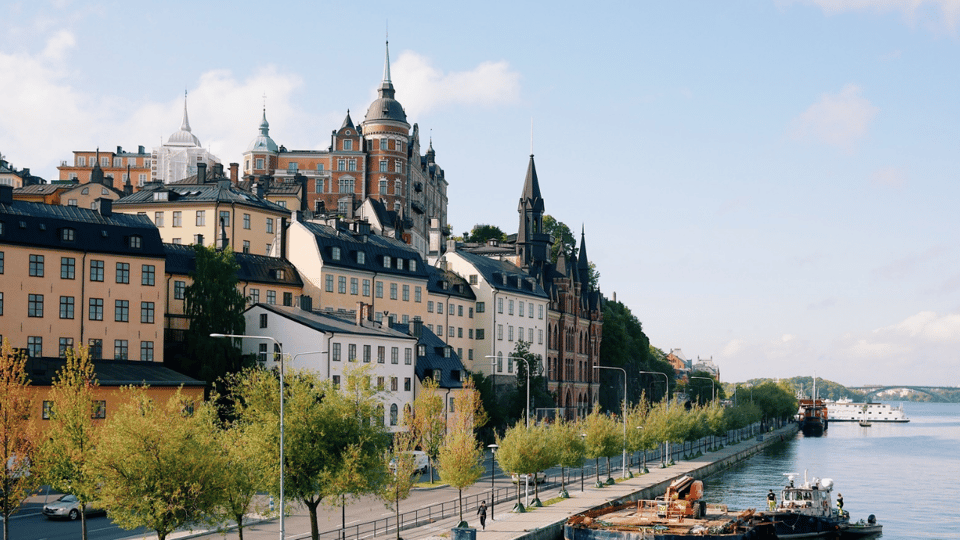
You pass the Royal Palace for a photo stop. You don’t linger long, but the quick look is useful because the palace dominates the skyline and you’ll see it again later as you roam. Knowing what you’re looking at helps you understand why it sits where it does and why it shaped the area around it.
Then you head toward Stockholm Cathedral, with a couple of stops that let you pause and look carefully. The cathedral is one of those places that feels “important” even before someone explains it. The tour’s value is that it slows your attention down: you’re not just snapping pictures, you’re learning what makes the building significant and how it fits into the city’s timeline.
The guide also keeps the pace rolling. There are no long lectures from start to finish—just enough context to make the next street make sense.
Downside to consider: if you’re expecting inside access and a long sit-down visit, this isn’t pitched that way. The stops are part guided and part sightseeing, with lots of walking.
Iron Boy, St George, and Mårten Trotzigs Gränd: small legends, strong atmosphere
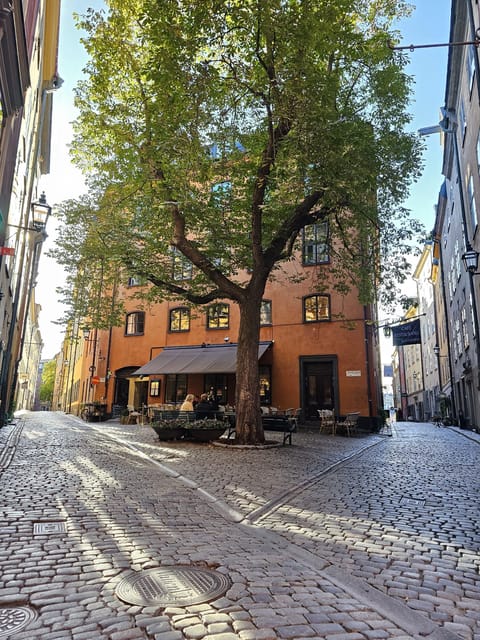
This is where Old Town starts feeling like a story you could keep telling after you go home.
You’ll spot Iron Boy—the Boy who watches the moon—and it’s the kind of quirky landmark that makes Stockholm feel human. It’s easy to think of old cities as stiff and ceremonial. This stop reminds you that daily life includes play, public art, and humor.
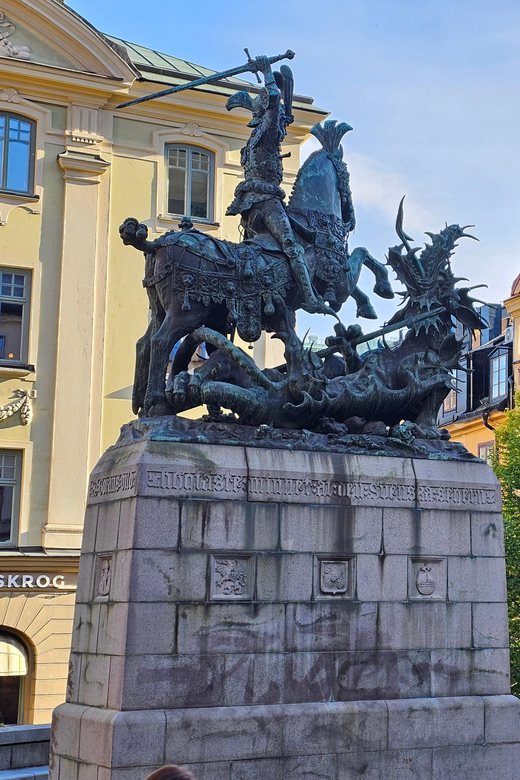
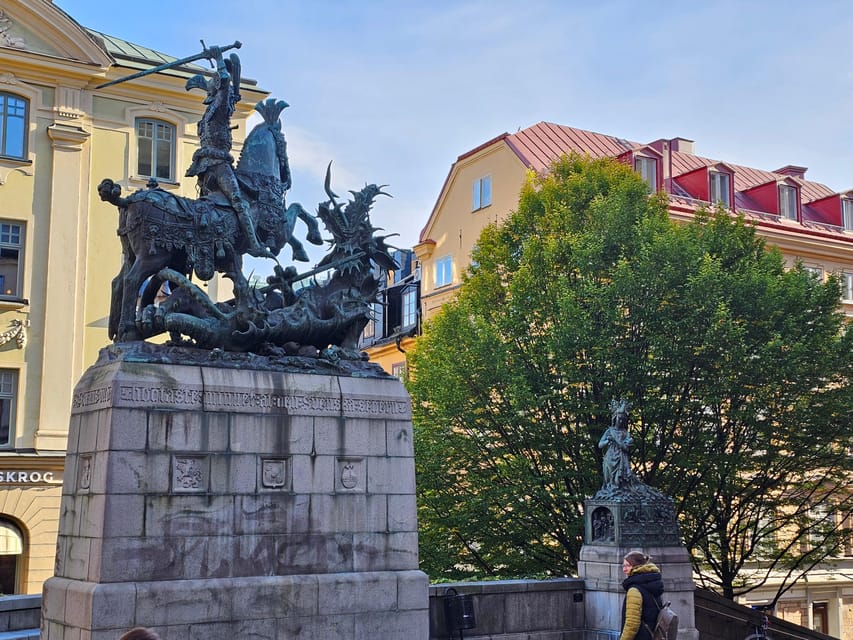
Next is St George and the Dragon Statue, another moment where myth meets street level. It’s a good pause because statues like this one aren’t just decoration; they connect to how a city handles symbolism in public space.
Then you walk through Mårten Trotzigs Gränd, famous for being narrow—one of those lanes that makes you feel the medieval scale immediately. It’s short, but it changes your perspective. Suddenly the city stops looking like “sights” and starts looking like lived-in passageways where people moved, traded, escaped, and socialized.
Bring a camera. Not for every corner, but for the lanes where the angle surprises you.
Österlånggatan, Järntorget, and Västerlånggatan: the old-town street grid in plain language
After the dramatic stops, the tour shifts toward streets that show daily rhythm. Österlånggatan is a key old main street, and Järntorget gives you another square-like viewpoint before you head on.
Then comes Västerlånggatan, another street that helps you connect the earlier landmarks to the broader walkability of Gamla Stan. These are the places where you start understanding how people likely moved between civic space, churches, and the bits in between.
What makes this part work is that the guide’s storytelling keeps landing on everyday themes. You’re learning about monarchs and conflicts, sure—but you’re also getting how power affected housing, work, and community life.
A realistic note: this is still a walking tour. Even though the route is well-paced, you’ll spend real time on foot. Comfortable shoes are not optional if you want to enjoy the photos without hobbling afterward.
German Church and Riddarholmen: water views and faith sites you can’t ignore
You pass the German Church and then reach Riddarholmen, including stops and photo moments tied to the waterfront mood. This is where Stockholm’s geography does its job. The walk brings you toward views where the water makes the whole area feel larger than you expect.
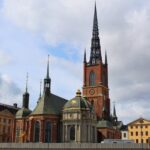
Riddarholmen Church is another photo stop, and it helps close the loop on why churches are positioned where they are. They’re not just religious buildings; they’re markers of what a city chose to emphasize over time.
You’ll also get scenic viewpoints on the way, which is a nice break from the heavy story stops. Think of it as the tour letting you reset your eyes before the final theme-heavy finish.
If you’re coming in with tight time for photos, this is the stretch where you’ll want to keep your camera handy. The water angles can be quick, and Old Town hides good sightlines around bends.



Mynttorget finish: a place where ideas still matter
The tour ends at Mynttorget, described as a symbol of freedom of speech and assembly. That’s a strong closing note because it pulls you out of pure nostalgia.
Instead of ending with a monument that only signals the past, the finish ties history to a civic idea that still has weight. It also gives you a practical benefit: Mynttorget is a natural launching point for your next wander, so you don’t feel stranded at the far end of Old Town.
One more detail worth knowing: the activity is listed as ending back at the meeting point. So treat the Mynttorget finish as your final story stop, and be ready for the tour’s wrap-up to bring you back toward the starting area.
Price and time value: what $16 buys in two hours
At $16 per person for about two hours, the value is the guide time. In a city like Stockholm, you can easily burn half a day trying to piece together context. This format gives you a compact orientation: you get a tour structure, you get explanations on the move, and you get a route that hits the places you’d want to see anyway.
The bigger value isn’t only the sights. It’s how the story approach helps you understand why the street plan, squares, and churches matter. You’ll leave with a mental map that’s more than “I saw a palace and a cathedral.” You understand how monarch power and public life threaded together.
And yes, the tour operates with a tip-based reality. The fee covers operational costs, and guides mainly rely on tips. If you found the stories funny, clear, and helpful, plan to tip at the end.
Who this walking tour fits best (and who should skip it)
This tour is a good match if you:
- Want a first-day Old Town plan that gives quick direction.
- Like learning through street-level stories, not just plaques.
- Enjoy question time and conversational guiding.
- Are comfortable walking at a steady pace for a couple of hours.
It’s not a good match if:
- You have mobility impairments or need wheelchair-friendly routes. The tour is listed as not suitable for wheelchair users.
- You’re sensitive to uneven ground and cobblestones.
If you’re traveling with kids or teens, it can still work, but you’ll want to keep an eye on energy levels. The tour is story-driven and engaging, but it’s still a continuous walk.
Getting the most out of your guide (and why Sara stands out)
A key reason this tour earns a top rating is the guiding style. Many guests highlight how Sara keeps things moving, answers questions, and tells stories in a way that holds attention. That’s not a small thing. On walking tours, the difference between a good day and a “nice but forgettable” day often comes down to the guide’s energy and pacing.
I’d use three tactics to get more out of it:
- Ask one real question when something catches your interest. If the guide is good (Sara clearly is), your question will shape what you notice next.
- Use the photo stops wisely. Look for the small details the guide points out, not only the big postcard angles.
- Take the local suggestions seriously. Guests note Sara often shares nearby food ideas and other things to do, including a mention of a local dish like flatbread sausage.
If you do that, you’ll come away with more than photos. You’ll come away with a Stockholm “mindset” for the rest of the trip.
Should you book this Old Town walking tour?
Book it if you want the best use of your first hours in Gamla Stan. For $16 and two hours, you get a structured route through iconic Old Town stops, plus a guide who explains how people lived through monarch drama, street life, and public places—ending at Mynttorget with a civic message.
Skip it if you want a long sit-down museum experience, need wheelchair access, or you hate walking on old city surfaces.
If you’re trying to decide between wandering alone and getting oriented, I’d pick orientation. You can always wander longer later, but you can’t easily buy back time lost trying to figure out where everything fits.
FAQ
Where does the tour start?
You meet your guide in front of the Postal Museum (Postmuseum) entrance at Lilla Nygatan 6, Stockholm, Gamla Stan.
What is the nearest subway station to the meeting point?
The nearest subway station is Gamla Stan.
How long is the Old Town walking tour?
The tour lasts about 2 hours.
How much does the tour cost?
The price is $16 per person.
Is the tour in English?
Yes, it includes an English-speaking live guide.
Is there a private group option?
Yes, private group available is listed.
Where does the tour end?
The tour finishes at Mynttorget. The activity is also listed as ending back at the meeting point.
What should I bring?
Bring comfortable shoes and a camera, plus weather-appropriate clothing.
Is the tour suitable for wheelchair users?
No. It is listed as not suitable for wheelchair users and people with mobility impairments.
Do I need to tip the guide?
The information provided asks you to consider tipping your guide at the end, since guides primarily rely on tips for income.
What is the cancellation policy?
You can cancel up to 24 hours in advance for a full refund.