REVIEW · STOCKHOLM
Stockholm: Modern City Walking Tour with Local Guide
Book on GetYourGuide →Operated by NORDIC FREEDOM TOURS · Bookable on GetYourGuide
Stockholm can be overwhelming at first. This two-hour walking tour helps you place the city fast, moving from grand civic buildings to calm park stops. I love the way it pairs modern architecture with major historic landmarks, so you get more than postcard Stockholm. I also like that the tour runs with a local, English-speaking guide and keeps a smaller-group feel. One thing to consider: because it’s a public tour, you’re sharing the walk with others, and on at least one occasion the group was larger than ideal for one guide.
You’ll start at Stockholm Central Station and trace a route through government, royal culture, and public spaces—ending near Stureplan at the Royal Dramatic Theatre. If you want a quick way to understand Stockholm’s layout and priorities (power, culture, and public life), this format is a strong fit. The main drawback is simply crowding risk: if you’re sensitive to noise or want lots of personal attention, a public walk can feel less intimate.
In This Review
- Key Highlights You’ll Feel Immediately
- Central Station Meet-Up: The Easiest Way to Start
- City Hall to Parliament: Power, Progress, and Photo Stops That Make Sense
- Queen Street to Gustav Adolfs torg: Urban Energy With Royal Backdrops
- From St. James Church to King’s Garden: Quiet Spots in the Middle of the City
- Raoul Wallenberg Square and Shore Road: History That Hits a Different Note
- Berzelii Park to China Theatre: The Modern-Cultural Finish You’ll Remember
- Price and Value: What $14 Buys You in Stockholm
- Local-Guide Style and the Small-Group Goal
- Should You Book This Modern City Walking Tour?
- FAQ
- What’s the meeting point for the Stockholm City tour?
- Where does the tour end?
- How long is the walking tour?
- Is the tour in English?
- Is this a private tour?
- Do I need to tip the guide?
- Are alcohol and drugs allowed?
- Can I cancel for a refund?
Key Highlights You’ll Feel Immediately
- Modern-meets-historic route: civic power, royal venues, and newer city lines in one walk
- Local, English-speaking guide: clear, in-the-moment explanations
- Photo-stop pacing: multiple short pauses so you’re not sprinting between sights
- Royal Drama Theatre finish: a strong cultural endpoint near Stureplan
- Smaller groups by design: capped participation for a more conversational experience
- Sustainable tourism focus: built around responsible city visiting
Central Station Meet-Up: The Easiest Way to Start
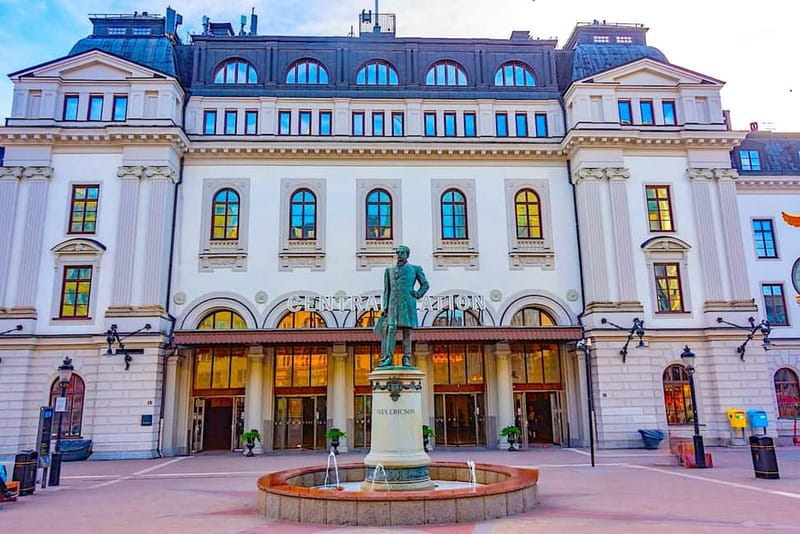
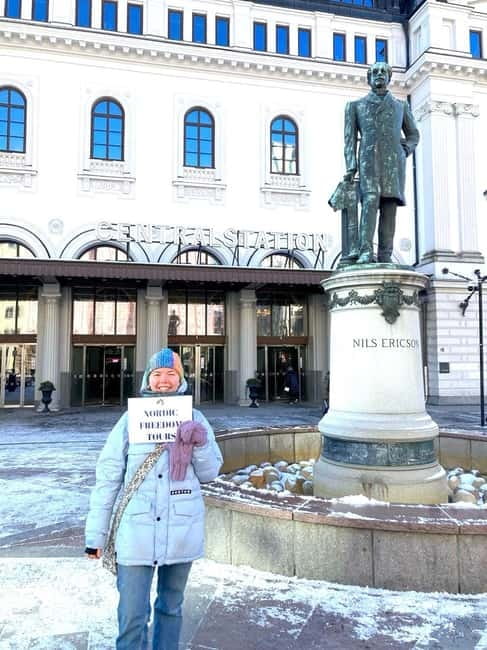
The tour begins right at Stockholms Centralstation, near the statue of Nils Ericson, opposite the rear entrance area of the station. Look for your guide holding an official sign for NORDIC FREEDOM TOURS. That meeting point matters because it puts you in the city’s main transit hub—simple for first-timers and easy to plan around.
The start is also helpful because it gives you momentum. Instead of spending your first hours hunting for where to go, you follow a set line through the city center. Since it’s a 2-hour walking tour, you’ll want to treat this like a timed orientation. In other words: don’t plan to stack another major activity immediately after, unless you’re okay with a tight schedule.
One practical note from real-world experience: if you’re using Stockholm’s underground systems, pay attention to how you navigate to street level near Central Station. The tour start isn’t labeled as an Old Town meeting—so aim straight for the Central Station landmark and the guide’s sign rather than following generic district signage.
You can also read our reviews of more walking tours in Stockholm
City Hall to Parliament: Power, Progress, and Photo Stops That Make Sense
From Central Station, the walk moves toward Stockholm City Hall for a photo stop (around 10 minutes). City Hall is one of those buildings that helps you understand Stockholm’s civic identity. The tour frames it as more than an old landmark—you’ll hear it connected to legacy and momentum, which is a good theme for how the rest of the route is built.
Next up is a parliament/government-area photo stop (about 10 minutes). You’ll pass and look toward the Parliament House surroundings, and the tour route also includes government offices in the same general zone (the Rosenbad area is mentioned as part of the walk). Even if you don’t go inside any buildings, these pauses are valuable: you get a sense of where authority sits relative to daily city life.
Then you’ll continue through a short photo pause sequence as you transition toward the main shopping/urban streets. This is where the tour’s promise—modern city life plus historic landmarks—starts to feel real. You’re not only seeing famous buildings; you’re also walking the corridors where people actually move.
Possible downside here: some public tours feel rushed in major civic zones, but this one uses multiple short pauses. Still, the experience depends on group size. If your group is bigger than planned, the guide’s attention and ability to manage everyone during stop-and-go moments can drop.
Queen Street to Gustav Adolfs torg: Urban Energy With Royal Backdrops
After the civic buildings, the route shifts to Queen Street, described as a hub of city activity. That transition matters. Stockholm isn’t only dramatic scenery; it’s also everyday flow—shops, offices, and movement between neighborhoods. Walking this stretch with guidance helps you understand how the city’s “wow” places sit right inside normal routines.
From there, you reach Gustav Adolfs torg with another photo stop (about 10 minutes). This square gives you a good sense of scale: it’s a landmark setting, but it also functions like a real gathering and route point. The tour’s pacing at these stops is designed so you can take photos without turning it into a race.
The next major cultural marker is the Royal Swedish Opera, again with a photo stop (about 10 minutes). Even without entering, you’ll get context on why this venue is such a focal point for Stockholm’s cultural identity. If you’re the type who likes to know what you’re looking at—even from the outside—this part tends to land well.
From St. James Church to King’s Garden: Quiet Spots in the Middle of the City
One of the smartest choices in this itinerary is that it doesn’t keep you in busy corridors for the entire two hours. After the opera, you move toward religious and public-space landmarks, including St. James’s Church for a photo stop. Churches can feel like “just another stop,” but in a guided format, they often become wayfinding anchors—helping you remember where you are and how the city evolved around key institutions.
Then the tour heads toward King’s Garden, described as a beloved city oasis. Even if you don’t get long lingering time, an oasis stop is a useful contrast. It breaks the “big building” cycle and gives you a chance to reset your eyes and legs before the route turns back toward more landmarks.
You’ll also see stops tied to music culture and learning, including the Royal Swedish Academy of Music legacy. The tour doesn’t just name these places; it positions them within Stockholm’s cultural rhythm. That’s a big value-add for travelers who want to go beyond a checklist and understand what the city considers important.
After that, you pass New Bridge Square (called out in the route description as elegant), and then you continue into green space. Berzelii Park is next, with a photo stop (around the middle of the walk). Parks like this are ideal for a guided tour because they reveal how Stockholm treats public space—there’s room to breathe in the city center, not only at the edges.
Raoul Wallenberg Square and Shore Road: History That Hits a Different Note
One of the stops that gives the tour emotional weight is Raoul Wallenberg Square. The route description directly connects it to reflection, which tells you the guide won’t treat it like a generic sightseeing point. Even if you only get a short photo pause, this kind of stop changes how you read the city. It shifts Stockholm from scenery to meaning.
From there, the route continues along Shore Road. That’s an interesting inclusion because you start feeling Stockholm as a city shaped by its waterfront and edges—not only by streets and squares. Even without a long scenic break, moving along the shore corridor gives you a sense of geography. It’s a reminder that Stockholm’s layout is influenced by water and access, which affects everything from where people gather to where major institutions are placed.
Then the tour moves back toward central landmarks and cultural venues, with additional short photo pauses built into the pacing. If you like structure—exactly where you stand, what matters there, then moving on—this style works well.
You can also read our reviews of more guided tours in Stockholm




Berzelii Park to China Theatre: The Modern-Cultural Finish You’ll Remember
The latter half is where the tour really leans into culture. After Berzelii Park, you pass China Theatre as part of the route. This is a great moment to notice how Stockholm layers eras and aesthetics: you can walk from formal institutions into performance venues that feel distinctly urban and theatrical.
Next comes King’s Royal Stable. This inclusion is a useful stop because it adds another layer to Stockholm’s royal ecosystem beyond the obvious palace imagery people expect. It helps you see the city’s historical roles as practical spaces—supporting services, events, and the machinery behind royal presence.
Finally, the tour ends near Stureplan at the Royal Dramatic Theatre. This is not a random endpoint. It’s a cultural landmark that gives the two-hour walk a clean narrative finish: civic power → royal culture → public spaces → theatres and arts.
If you’re planning your day afterward, this is a good place to regroup. Being near Stureplan means you’re still in the center of things, so you’re not stuck figuring out how to get back on the other side of the city.
Price and Value: What $14 Buys You in Stockholm
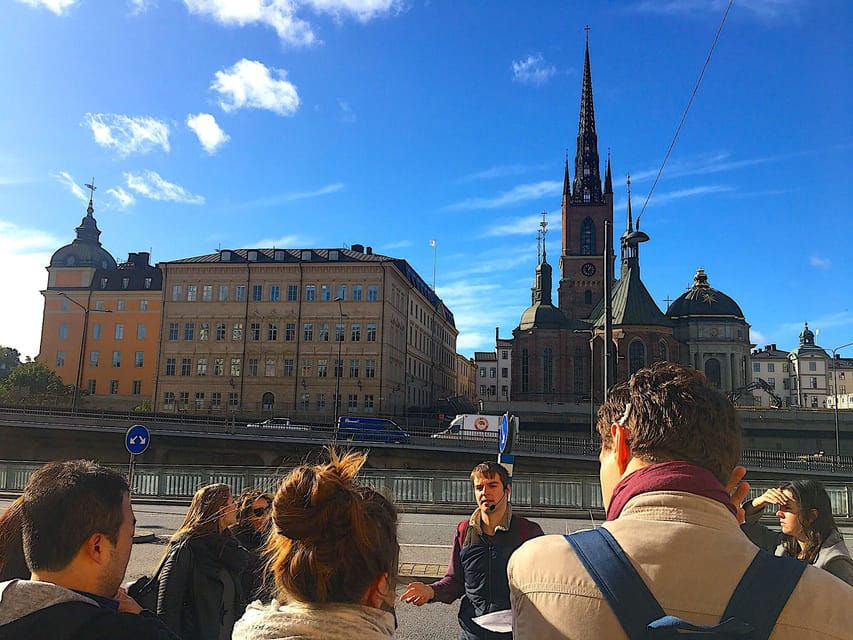
At $14 per person, this tour is positioned as affordable city orientation with a professional English-speaking guide. The biggest value lever is that the stated price is final. It’s explicitly set as a complete cost for your participation, and you’re not expected to add personal payments.
That matters in Europe, where some walking tours blur the line between ticket and “please tip.” Here, the structure is clearer, which makes your budget easier. You can decide to do the walk, knowing the cost upfront and what’s included.
Time value is also strong. In two hours, you get multiple landmark clusters—civic buildings, squares, opera area, garden/pause points, reflection square, and theatre finish. Even if you’re not entering any buildings, the guided route gives you context you’ll miss if you’re just wandering alone.
The one value risk is group size. The tour is capped for intimacy, but if your departure runs with more people than expected, you may not get the same clarity at each stop. One past experience included a larger-than-ideal group (around 20–30) and the absence of a microphone for the guide, which can make hearing harder when everyone bunches up.
Local-Guide Style and the Small-Group Goal
This is a public walking tour, but it’s built around the idea that you can still feel guided rather than “herded.” The operator is described as having professionals since 2015, and the tour emphasizes that the guides are local experts. In practice, what that tends to mean is you’ll get explanations tied to the city’s systems—what these places represent and why they sit where they do.
Language is another strength: the tour is live and English, and a key detail from a guide experience was that one guide spoke loudly, which makes instructions easier to follow. That kind of clarity is underrated on walking tours. When you can hear directions, you spend less time trying to figure out where to stand and more time looking at what you came to see.
The other local-factor is pacing. The route includes multiple photo stops, which gives the guide opportunities to talk without pulling you forward too fast. You’re not just watching buildings; you’re getting short, usable bits of context while you stand in place.
Should You Book This Modern City Walking Tour?
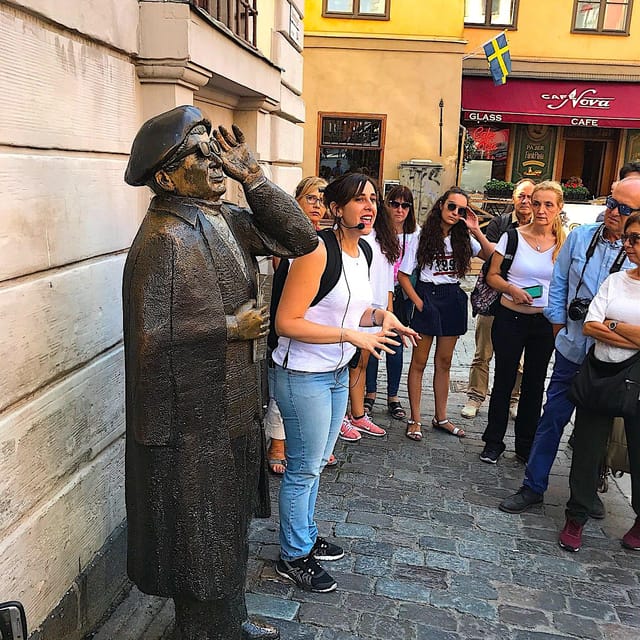
Book it if you want a 2-hour city center orientation with a strong mix of royal venues, cultural stops, and civic buildings. It’s especially a good fit if you like guided walking tours where the route ends at a meaningful landmark—here, the Royal Dramatic Theatre near Stureplan.
Skip it (or keep expectations flexible) if you strongly prefer small groups at all times. Even though the tour aims for limited participation, it’s still public. If you’re sensitive to crowd noise or you hate feeling rushed during photo stops, pick your departure time carefully and be ready for the walk to vary.
Also, this tour is for general sightseeing—not for party groups. If you’re traveling with a group that wants nightlife energy, this isn’t the format.
FAQ
What’s the meeting point for the Stockholm City tour?
The meeting point is near the statue of Nils Ericson, directly opposite the entrance to the rear of Stockholm Central Station. You should look for the guide holding an official sign for NORDIC FREEDOM TOURS.
Where does the tour end?
The tour ends at the Royal Dramatic Theatre.
How long is the walking tour?
It lasts about 2 hours.
Is the tour in English?
Yes, the tour is guided in English.
Is this a private tour?
No. It’s a public walking tour with other participants also present, though the number is strictly limited.
Do I need to tip the guide?
The price you pay is final and covers your participation. The tour states no additional tips or gratuities are required of you personally.
Are alcohol and drugs allowed?
No, alcohol and drugs are not allowed on the tour.
Can I cancel for a refund?
Free cancellation is available up to 24 hours in advance for a full refund.