REVIEW · STOCKHOLM
Private Tour: Swedish History Day Trip to World Heritage Candidate Markim-Orkesta from Stockholm
Book on Viator →Operated by Sweden History Tours · Bookable on Viator
Vikings, runes, and horses in one half-day. What makes this day trip stand out is the way it strings together Markim-Orkesta (a UNESCO World Heritage Candidate), Viking-era sites, and medieval churches into one smooth story you can actually follow. I especially like the private format—your guide can match the pace to your questions—and I enjoy the hands-on feel of seeing artifacts in place, from runestones to stone ruins. One watch-out: the schedule moves, so if you want a long, sit-down lunch, you’ll need to be flexible.
In a small group (max 12) with hotel pickup options in central Stockholm, you’ll likely get a guide who can tailor what you see. Some departures have featured guides such as Felix, Calle, Angus, and Jonathon, and the common thread is clear: they answer questions and adjust the plan when you want more rune-stone detail or more time with the countryside. If you’re traveling on a cruise, plan to meet your guide at the stated pier instructions with the Viking Tours sign; Nynäshamn doesn’t include pickup since it’s farther out.
In This Review
- Key highlights you’ll feel right away
- From Stockholm to Markim-Orkesta: what this day trip really is
- Pickup, timing, and how not to lose time
- Stop 1: Arkils tingstad and the Viking assembly-site feeling
- Vallentuna Church: runestones and the shift from old beliefs to new
- Husbyöhns Islandshästgård: the Icelandic horse farm reset
- Snåttsta gård AB: Inga’s runestones and how power spreads
- Lindholmen ruins: the likely birthplace of King Vasa story
- Orkesta kyrka: rune stones, a local graveyard, and medieval walls
- Lunch timing in Vallentuna: useful break, tight clock
- The horses, the rune stones, and why the pacing works
- Price and value: what you’re paying for at $567.11 per person
- Who should book this Markim-Orkesta private day trip
- Should you book this tour?
- FAQ
- How long is the private day trip?
- Is this a private tour?
- Do you offer hotel pickup in Stockholm?
- What’s included in the price?
- What about lunch and admission tickets?
- What language is the tour in?
Key highlights you’ll feel right away
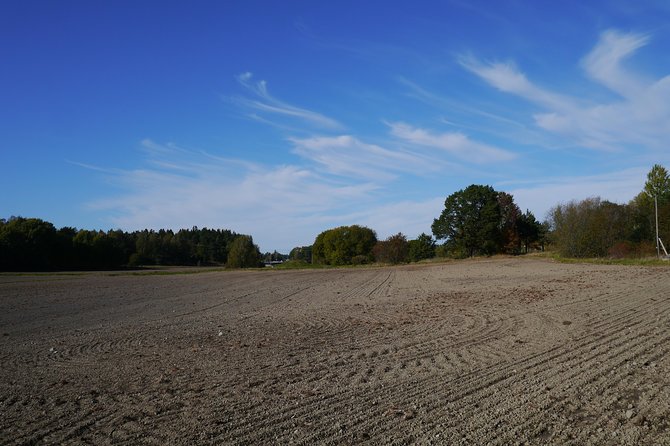
- UNESCO World Heritage Candidate Markim-Orkesta: a concentrated area where multiple eras overlap in real places.
- Viking runestones inside churches and on church grounds: you see the stones where the stories belonged.
- Arkils tingstad by the lakeside: a Viking assembly-site stop that sets the tone early.
- Icelandic horse farm break at Husbyöhns Islandshästgård: horses, a red barn, and a real working farm pause.
- Customization with a private guide: your route can flex around your interests (sometimes including extra stones like Thokal stone U344).
- Admission-free stops: most of the listed sites don’t charge entry, which helps value.
From Stockholm to Markim-Orkesta: what this day trip really is
This is a private Swedish history day out of Stockholm that leans hard into “place-based learning.” Instead of museum walls, you spend the day at farms, churches, ruins, and stone settings where Viking and medieval stories connect to everyday land. The goal isn’t just to name dates—it’s to show how belief systems, power, and burial customs changed over time.
The core geography matters: Markim-Orkesta is presented as an area where two church parishes preserve layers from the Bronze Age, the Viking Age, and later periods. That’s why the tour feels like time travel: you’re not bouncing between faraway stops that barely relate. You’re staying in one historical zone and letting the eras build on each other.
And yes, there’s a horses-and-farm moment. For many people, that’s the relief break that keeps the day from feeling like nonstop “stone and stories.”
You can also read our reviews of more private tours in Stockholm


Pickup, timing, and how not to lose time
The tour starts around 9:30 am and runs about 5 hours. If you’re staying in central Stockholm, pickup is offered for accommodations within 3 km of Stockholm Central Station. There’s no pickup at Nynäshamn harbor, so you’ll need to confirm a central meeting point if you’re coming from there.
If you’re on a cruise, the meeting point is pier-specific. The practical pattern is: follow the local signage, walk out to where you can meet outside restricted areas when required, and look for your guide holding an A4 Viking Tours sign. It’s detailed because it has to be—ports can be maze-like, and guides don’t want to waste your time hunting inside fenced zones.
One smart way to use the day: treat the tour like a guided checklist, but arrive with one or two priorities. If you care most about runestones, say so. If you’d rather have more time in countryside settings (and less switching between sites), ask your guide to shift the balance.
Stop 1: Arkils tingstad and the Viking assembly-site feeling
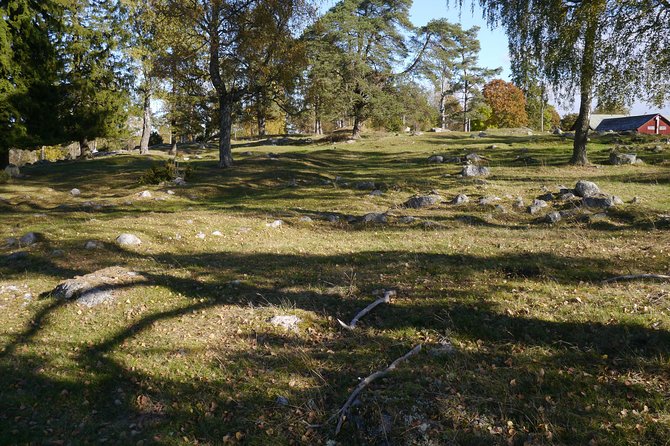
Arkils tingstad is where the day breathes in Viking-age context before you move deeper into churches and burial grounds. You’ll visit a Viking assembly place, learn about the Viking Age and the time period, and get a lakeside setting that makes the stories feel less abstract.
Why this stop works: it sets social context. Many Viking stories get reduced to raids and warriors, but assembly sites help you understand how communities made decisions—who gathered, where, and why location mattered. It’s also a good warm-up for the rune-stone language you’ll hear later. Even if the stone details are the headline, the “how society worked” piece makes the rest click.
Time is about 30 minutes and the admission is listed as free. That’s efficient. The main drawback is the limited time—if you want a slower walk and more lakeside linger, you’ll likely need to rely on guide pacing and your group’s comfort level.
Vallentuna Church: runestones and the shift from old beliefs to new
Next comes Vallentuna Church, described as a 12th-century church with two runestones from the Viking Age. You’ll also see elements of a Reformation church room, and the tone here turns from Viking community life toward how Christianity changed Swedish society.
This is a key stop because it bridges eras in one building. Rune stones don’t belong only to “Viking culture” as a neat timeline ending; they’re often reused, recontextualized, or kept close as later generations build and adapt. Hearing how the church’s world relates to rune traditions helps you see why early Christianity didn’t erase everything overnight—it rewired meanings.
You’ll spend about 30 minutes here with listed free admission. One practical consideration: churches can vary in how much they let you linger inside at your own pace. If you want the full visual slow down—frescoes, stone textures, and small details—ask your guide to prioritize what you care about most.
Husbyöhns Islandshästgård: the Icelandic horse farm reset
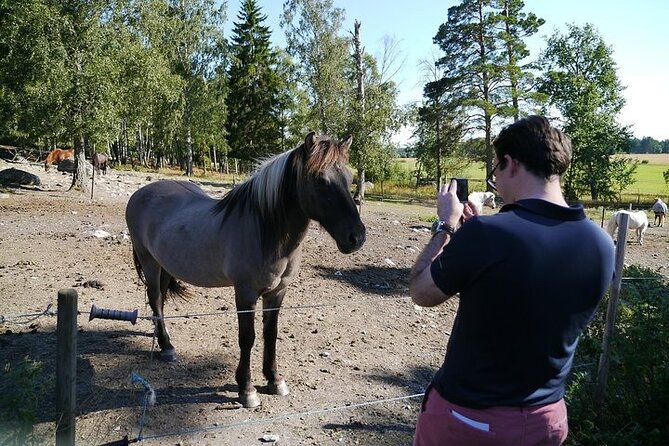
Halfway through, you get a genuine countryside breather: Husbyöhns Islandshästgård, an Icelandic horse farm. You’ll greet horses and the owners if they’re available, and you’ll learn about what a modern farm looks like today.
The tour notes that the farm keeps 40 horse souls, plus a big traditional red barn. That matters because this isn’t just a photo stop. It’s designed as a human-scale pause where you can meet real people running a real place—exactly the kind of stop that keeps “history touring” from becoming heavy.
Time here is about 40 minutes, and the admission is listed as free. The slight drawback is weather sensitivity: if it’s cold or rainy, your experience may be more inside/outside on the fly. Bring layers and treat it as a farm visit first, history second.
You can also read our reviews of more historical tours in Stockholm
Snåttsta gård AB: Inga’s runestones and how power spreads
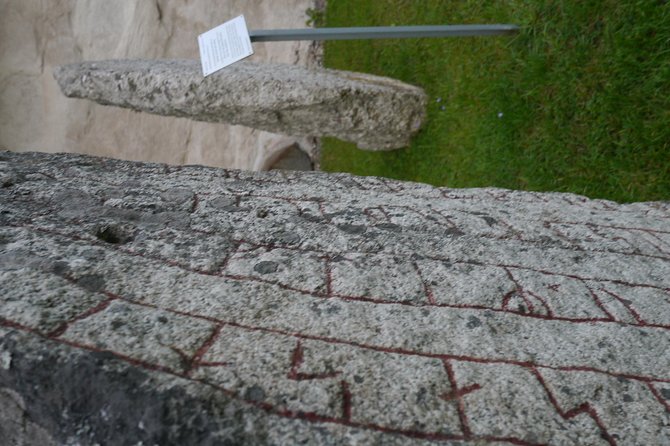
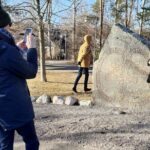
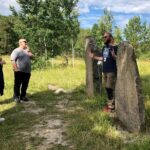
At Snåttsta gård AB, you’ll visit runestones connected to Inga, described as a wealthy Viking woman who raised runestones around her farm and used them to tell stories about how she came to own the land. This is one of the most interesting “who’s speaking in the stone?” stops on the route.
Why it lands: the tour shifts beyond kings and warriors. Inga’s story points to land ownership, status, and personal memory—runestones as public statements, not only memorials. Even if you don’t read runes yourself, the explanation of what the stones were doing socially gives the place weight.
This stop is shorter—around 20 minutes with free admission—so the best move is to ask a question before you reach the limits of the time window. If your mind is focused on one particular story (women in Viking-age society, landholding, or rune meanings), tell your guide. You’ll get better answers in the time you have.
Lindholmen ruins: the likely birthplace of King Vasa story
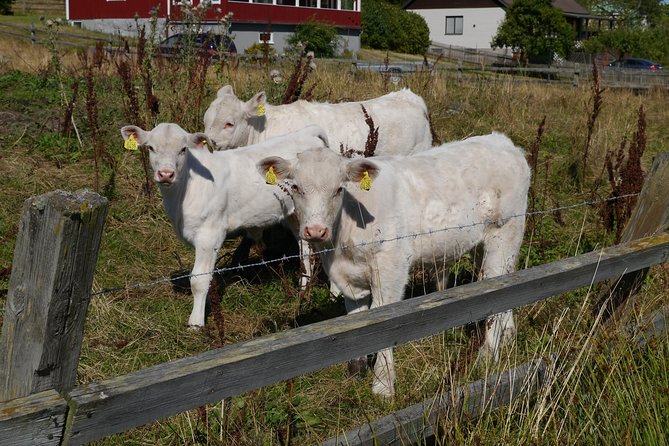
Then you hit Lindholmen, where you’ll see the ruins of what’s described as the very likely birthplace of King Vasa—the man who reformed the Swedish state and church, shifting from Catholicism to Lutheran Protestantism. You’ll hear about his life and his controversial rule.
This is where Swedish history stops being only “Viking and medieval.” The tour connects the Viking Age to later power structures and the big religious change that reshaped daily life. Even if you’ve read about King Gustav Vasa elsewhere, seeing ruins tied to his origins gives it a physical anchor.
Time is 40 minutes, admission listed as free. The drawback is also built in: “ruins” usually mean uneven ground and fewer explanations visible at a glance. Your guide’s narration is what makes the scene understandable, so don’t be shy about asking for the story again in simpler terms.
Orkesta kyrka: rune stones, a local graveyard, and medieval walls
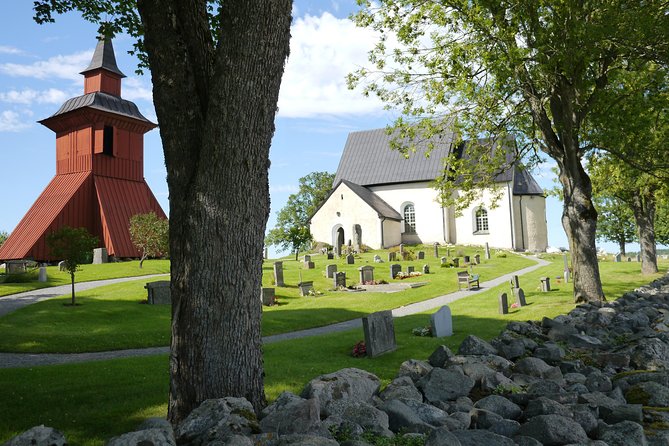
Finally, you reach the heart of the UNESCO candidate area with Orkesta kyrka. Here you’ll visit a local Viking gravefield outside the mapped area, plus a local church with three rune stones outside its preserved Romanesque shape. You’ll also hear the story of Ulv, described as a Viking who plundered England three times.
There’s also a medieval layer: you’ll hear about religious life and feel the atmosphere of medieval stone walls. The tour frames the Viking graveyard part as a window into burial rituals—and the way those rituals faded after Sweden became Christianized.
This stop is about 30 minutes with free admission. It’s also a lot of content in a short time, which is why your questions matter. If you want clarity on the religion timeline (how burial customs changed, what Christianity meant culturally), focus your attention here instead of trying to do everything everywhere.
Lunch timing in Vallentuna: useful break, tight clock
Lunch is scheduled during Vallentuna as a 40-minute break. Lunch isn’t included; you’ll likely eat at a farm restaurant per the tour setup, though your guide may work with you on where to go based on timing and preferences.
This part is the most sensitive to your personal tempo. One recurring thought from guests is that it can feel tight if you want a longer sit-down meal. So if you’re the kind of traveler who likes to order, relax, and linger, treat this as a “good reset” rather than a leisurely midday. If you’re okay with quick service and a short walk, you’ll probably feel satisfied.
The horses, the rune stones, and why the pacing works
A lot of history day trips fail because they stack similar sights and call it variety. This one avoids that by mixing three “modes” across the day:
- Civic and social context (Arkils tingstad)
- Religious transformation and inscriptions (Vallentuna Church, Orkesta kyrka)
- Life and land (Icelandic horse farm, farm runestones around Snåttsta)
That structure helps you keep the stories straight. Viking Age sites and Christian-era sites stop feeling like disconnected chapters, because you keep returning to the same theme: how people recorded identity and belief in stone, land, and ritual.
And the private aspect matters more than you’d think. In a small group, you’re not stuck following a rigid script. You can ask for a repeat of a rune-stone story, request more time at one church corner, or trade a bit of viewing time for questions about Ulv or King Vasa’s controversial rule.
Price and value: what you’re paying for at $567.11 per person
At $567.11 per person, this is not a budget day trip. The value comes from three things that are hard to replicate on your own:
- Private transportation and a local guide for the full half-day. You’re not just paying for “talking”—you’re paying for someone who connects the sites into one timeline you can understand.
- Most listed stops are admission free (based on the tour notes), which protects your total cost from ballooning through entry fees.
- Pickup coverage in central Stockholm within 3 km. That convenience saves time and stress, especially when you’re juggling cruise schedules or limited mobility to get out to the countryside.
Who feels the value most? A couple or small group where you want personalized pacing. If you’re traveling solo and have to join someone else, the math could shift depending on how the tour is priced for your specific booking. But since the tour is private with a minimum of 2 and a max of 12, you’ll generally get the “small group benefits” without the “big bus experience” compromise.
Who should book this Markim-Orkesta private day trip
Book it if you’re the type who likes history you can point to: runestones you can stand near, churches you can walk through, ruins that have a story attached. It’s also a good fit if you want a Viking-and-medieval blend without turning the day into a lecture.
It’s especially worth it if you care about:
- Rune-stone narratives tied to specific people like Inga and Ulv
- Sweden’s Christianization story as something experienced in places, not just on a timeline
- A countryside farm stop that breaks the day into something human
Consider skipping or softening expectations if you know you want long, unhurried downtime at lunch or if you prefer major museum-style interiors over outdoor ruins. The tour is designed for steady movement.
Should you book this tour?
If your goal is a guided, story-driven Swedish history day that actually connects Viking and medieval sites within the Markim-Orkesta area, this is a strong choice. The private format, the rune-stone focus in real church spaces, and the Icelandic horse farm break make it feel both structured and flexible.
If you’re price-sensitive or you hate schedules, plan carefully. The day runs in a tight window, and lunch won’t be a long sit-down. But if you’re ready to lean into the stories and the countryside, this one delivers exactly the kind of off-the-map history day that’s hard to recreate on your own.
FAQ
How long is the private day trip?
It’s listed at about 5 hours (approximately), starting at 9:30 am.
Is this a private tour?
Yes. It’s private, with a minimum of 2 people per booking and a maximum of 12 people per booking.
Do you offer hotel pickup in Stockholm?
Pickup is offered for accommodations within 3 km of Stockholm Central Station. There is no pickup at Nynäshamn harbor.
What’s included in the price?
Included are a local guide/driver-guide, professional guide services, private transportation in an air-conditioned vehicle, all taxes and fees, and mobile ticketing.
What about lunch and admission tickets?
Lunch is not included, and the tour includes a lunch stop in Vallentuna. The listed stops show admission tickets as free.
What language is the tour in?
The tour is offered in English. Confirmation is received at booking time, and service animals are allowed.