REVIEW · STOCKHOLM
Bloody Stockholm 2h – ghosts, horror and Dark Folklore Tour
Book on Viator →Operated by Sweden History Tours · Bookable on Viator
Blood runs through Stockholm’s folklore.
This 1.5-hour dark walk threads execution-era history with Swedish folklore tied to death, danger, and protection, from Stortorget through Gamla Stan to the church area at S:t Jacobs. I like how it feels like a guided tour of the city’s back alleys and doorways, not just a string of spooky legends, and it keeps the story grounded in real places.
I love two things most: first, the way you learn practical “how to stay safe” ideas—like using iron for protection and watching for supernatural threats linked to mist, doors, and baptism. Second, I like the pacing and small-walk format (up to 30 people), which makes it easier to ask questions and get answers that go beyond headlines. The one drawback to consider: it is often more informative stroll than a full-on jump-scare ghost show, so if you want nonstop horror, you may wish for a bit more pure folklore focus.
In This Review
- Key Things You’ll Notice on This Bloody Stockholm Walk
- What This Tour Feels Like: A Dark Stroll Through Real Streets
- Start at Stortorget: Death, Curses, and the Dark Logic of Folklore
- Prästgatan’s Hidden Past: A Street That Used to Mean Hell
- Gamla Stan Door Wisdom: Iron Against Vaesen and Threats at Birth
- Logårdstrappan and the Water Side of the Supernatural
- Kungsträdgården: Huldran, the Undead Child Myrling, and the Forest That Watches
- Outside S:t Jacobs Kyrka: Church Doors, Exorcism, and Punishment
- Guide Style, Q&A Energy, and Group Size Reality Check
- Timing, Comfort, and What to Bring
- Value for Money: A Lot of Stops, No Extra Site Tickets for the Stops
- Who Should Book This Bloody Stockholm Tour
- Should You Book Bloody Stockholm?
- FAQ
- How long is the Bloody Stockholm walk?
- Is it offered in English?
- Where does the tour start?
- Where does it end?
- Is there a mobile ticket?
- What’s included in the tour price?
- How large is the group?
- Are service animals allowed?
- What are the tour’s cancellation rules?
Key Things You’ll Notice on This Bloody Stockholm Walk
- Stortorget’s death-centered folklore, including curses and the symbolic use of the dead
- Prästgatan’s former name tied to Hell, adding a dark layer to a very walkable street
- Door protections in Old Town, including iron charms against vaesen and threats aimed at newborns
- Water spirits from Logårdstrappan, where Näcken–style dangers and other beings lure people under
- Kungsträdgården’s legendary creatures, from Skogsrået/huldran to the undead child Myrling
- S:t Jacobs Church-door rules, including exorcism at baptism and ideas for punishing enemies
What This Tour Feels Like: A Dark Stroll Through Real Streets
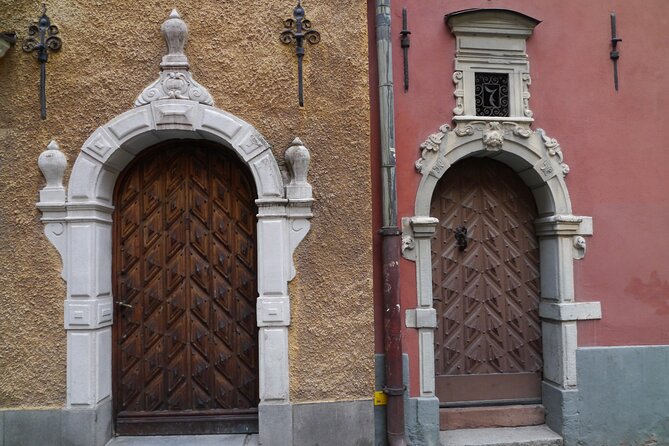
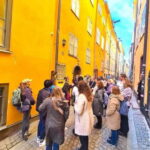
This is a street-walk through central Stockholm, focused on stories linked to specific corners, lanes, and building thresholds. You’ll be moving on foot for about 1.5 hours, and the route is built for listening: frequent story moments, then a short walk to the next place.
What helps is that it doesn’t try to be a Halloween theme park. Instead, it treats folklore like an older version of local knowledge—things people believed, feared, and used to explain what they couldn’t control. That makes the “ghosty” parts more interesting, because they connect to everyday objects like doors, iron, and church rituals.
Also, it’s offered in English, and it runs with a mobile ticket. With up to 30 travelers, you should find a comfortable group size for asking questions without feeling swallowed by a huge crowd.
You can also read our reviews of more tours and experiences in Stockholm


Start at Stortorget: Death, Curses, and the Dark Logic of Folklore
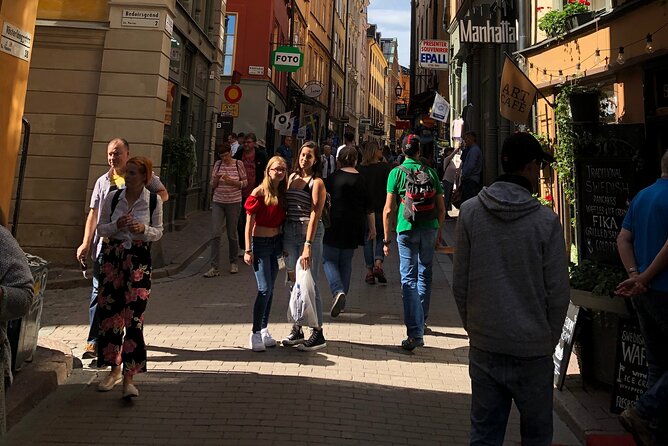
Your walk begins at the Stortorget area (near the Nobel Prize Museum on Stortorget 2). This first stop sets the tone fast: you’ll talk about death in folklore and how people explained danger through symbolic ideas tied to the body.
Here’s what stands out about this stop. You’ll hear about the executions of around 90 souls when the Danish King Kristian took Stockholm. Then the story shifts from documented violence to folklore beliefs—especially the idea that the dead were treated like ingredients for magic. The tour connects those beliefs to curses, and even to the notion that body parts could be used to brew tales or influence outcomes.
If you like history but also like folklore that has teeth, this is the part that delivers. It also helps you understand why the rest of the walk keeps returning to protection and rituals. In other words: you’re not just hearing spooky names. You’re seeing how people thought the world worked.
Prästgatan’s Hidden Past: A Street That Used to Mean Hell
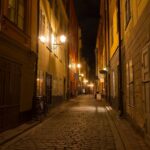
From Stortorget, you move toward Prästgatan, a street that used to be known by a name tied to Hell. Even without a dramatic spectacle, the shift matters. It reframes a normal-looking street into something charged with fear and reputation.
This stop is short, but it does a smart job: it trains you to look at the city as layers, not one straight timeline. A street name can be a clue that the neighborhood once carried a reputation for something grim—whether that was crime, punishment, or just the way people told stories.
That’s a theme you’ll keep seeing: the guide points out how belief turns ordinary locations into meaning-stamped landmarks.
Gamla Stan Door Wisdom: Iron Against Vaesen and Threats at Birth
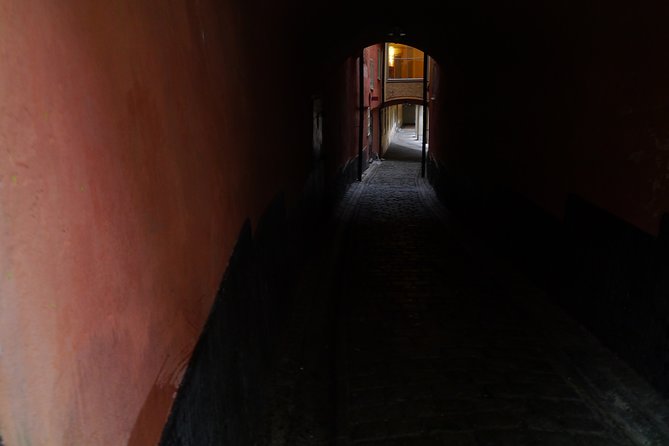
Next, you’ll spend time in Stockholm Old Town around doorways and building entrances—one of the most effective settings for this kind of storytelling. The focus here is protection.
You’ll hear how iron could be used to protect against vaesen. You’ll also learn about elves that come with the mist—described as souls that don’t get rest. And the tour doesn’t treat all threats as the same. Instead, it breaks protection into situations: threats aimed at travelers, threats tied to local supernatural beings, and threats tied to major life moments.
Two moments are especially memorable. You’ll hear about the Swedish Tomte, and you’ll also learn about protection for newborns before baptism, when they were believed to be vulnerable to trolls and even the Devil.
If you’re the kind of traveler who likes to understand how beliefs become habits, you’ll appreciate this. Doorways and thresholds are where daily life happens. Learning that people once believed those spaces could be defended makes the whole walk feel grounded and oddly practical.
Logårdstrappan and the Water Side of the Supernatural
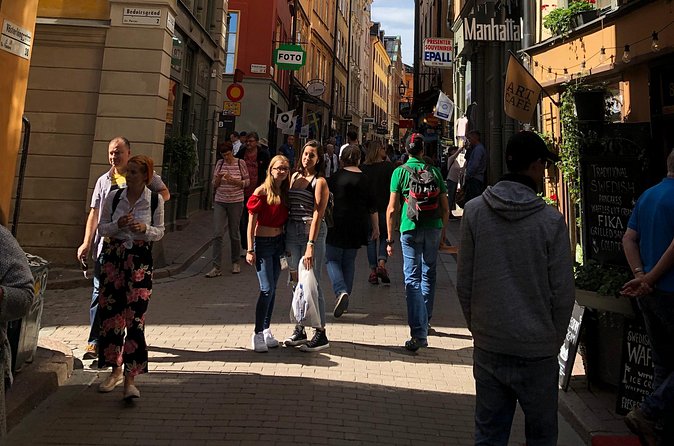
At Logårdstrappan, the tour shifts from the land-based threats to the dangers that live in or near water. This is where the “don’t go too close” vibe comes through strongly, because the beings you’ll hear about are linked to pulling people down—or luring them into deep places.
You’ll hear about Näcken, the bäckahästen (the Swedish version of Kelpie), the Sjörå (sea-rå), and skepps-rå among others. The shared idea is straightforward: these water-related vaesen try to drown people and draw them away from safety.
What I like about placing this at a real stair/landing area is that you can almost see why these stories would stick. Water is beautiful, but it’s also dangerous. Folklore takes that real risk and wraps it in a figure with a name, so people remember to be careful.


Kungsträdgården: Huldran, the Undead Child Myrling, and the Forest That Watches
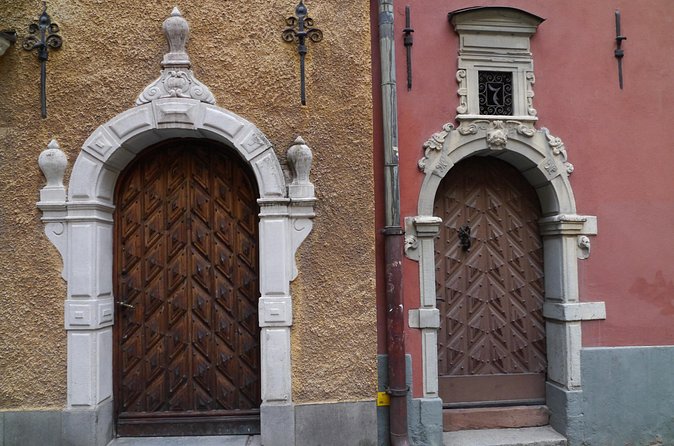
In Kungsträdgården, the mood expands again. You’ll move into a section that covers vaesen tied to places like forests—and also into the darker corner of folklore about the undead.
You’ll hear about the dangerous Skogsrået (also known as huldran). Then the tour turns toward the undead child Myrling, plus other creatures from the older past.
This is a good stop if you want the story to feel broader than one theme. The earlier parts are heavy on death, doors, and water. Here, the threats feel more distributed—living in landscapes and in the spaces between life and death.
It also gives you a useful mental model for Swedish dark folklore: instead of one monster, you get a set of specialized risks, each tied to a specific environment.
Outside S:t Jacobs Kyrka: Church Doors, Exorcism, and Punishment
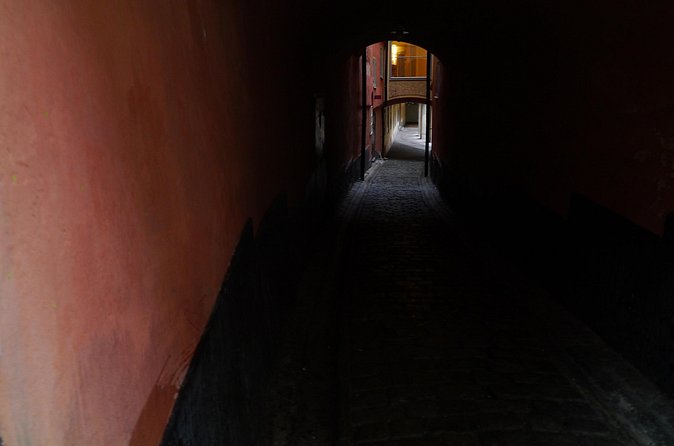
Your walk ends around S:t Jacobs Kyrka (St. Jacob’s Church). The focus stays on thresholds—this time the church door and the “weak points” of the church in the context of folklore.
You’ll hear about the church door, the idea of vulnerabilities, and what to do if you had a worst enemy to punish. The tour also includes exorcism connected with a kid at baptism.
This stop is interesting because it shows how strongly people connected belief to ritual spaces. Even if you don’t think of churches as magical, the stories treat them like protective tools—unless you believe they can be undermined.
And since your tour finishes just outside Old Town on the north side near Kungsträdgården (with a roughly 10-minute walk back toward the start area), you’re leaving with one last piece of context: what people thought you could rely on, and what you had to defend.
Guide Style, Q&A Energy, and Group Size Reality Check
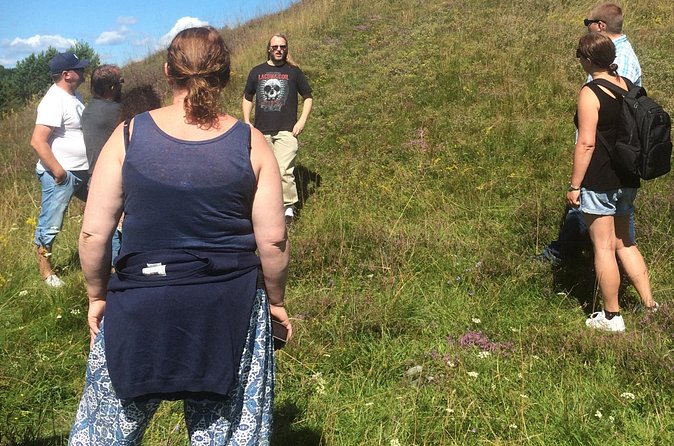
The quality of a tour like this lives or dies by the guide. In the feedback you can see a clear pattern: guides are described as very knowledgeable and strong on details, with humor and openness to questions.
You may also get different guide personalities depending on the day. Names that show up in guide responses include Åsa and Jonathan, and the tone is consistent: lively storytelling, clear explanations, and a willingness to answer what you’re curious about.
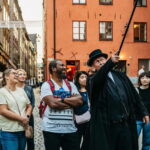
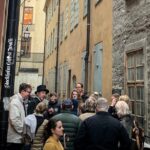
With a maximum group size of 30 travelers, it’s not a whisper-tour, but it’s also not a cattle walk. You should be able to stay close enough to hear the nuances, especially around narrow Old Town lanes and doorways.
Timing, Comfort, and What to Bring
The tour runs about 1 hour 30 minutes and is mostly outdoors. That means weather can change your mood fast, especially in narrow Old Town streets. If it’s chilly or wet, dress for it and consider a small layer you can put on quickly.
Comfort matters too. You’ll be walking between Old Town stops and across uneven surfaces. Wear shoes you trust on cobbles, and keep your phone charged so your mobile ticket is ready when you need it.
Value for Money: A Lot of Stops, No Extra Site Tickets for the Stops
One of the practical upsides is that the tour includes a guide and the stop-by-stop locations don’t list separate paid admissions. That’s helpful because you’re paying for interpretation and time, not a stack of add-on tickets.
This format also gives you variety without forcing you to spread your day across multiple attractions. In about 1.5 hours, you cover:
- execution-era context tied to a key central square
- a street name loaded with dark meaning
- multiple Old Town doorways and protection beliefs
- water-spirits lore in a specific setting
- forest and undead-creature lore
- church-door folklore at the end
If you’re short on time in Stockholm, this kind of focused walk can be a smart use of an evening. If you have more time, it pairs well with a daytime Old Town visit, because you’ll recognize the same streets with a new lens.
Who Should Book This Bloody Stockholm Tour
This tour is a great fit if you:
- enjoy dark folklore and want the stories connected to actual Stockholm locations
- like practical belief details, like protections and rituals tied to places people passed daily
- want a guide-led walk in Old Town that goes beyond typical sightseeing
You might choose something else if you:
- want pure ghost thrills over history-and-belief explanation
- get restless when stories are more about belief systems and symbols than about scares
It’s not just spooky wallpaper. It’s a guided walk that treats the city like a map of fears, safeguards, and local explanations.
Should You Book Bloody Stockholm?
Yes, if you’re spending time in Gamla Stan and you like stories that feel specific to the street you’re standing on. The strongest part is how the tour repeatedly returns to protection—iron, door thresholds, baptism concerns, and how water and landscapes were imagined as risky spaces.
If you’re hoping for a classic haunted-house style experience, temper that expectation. You’ll get plenty of dark material, but it’s presented as folklore and history told in a walkable, understandable way.
If your schedule allows, this is the kind of tour that makes a familiar neighborhood feel new again.
FAQ
How long is the Bloody Stockholm walk?
It runs for about 1 hour 30 minutes.
Is it offered in English?
Yes, the tour is offered in English.
Where does the tour start?
The meeting point is Nobel Prize Museum, Stortorget 2, 103 16 Stockholm, Sweden.
Where does it end?
It ends just outside Saint Jacob’s Church, Västra Trädgårdsgatan 2A, 111 53 Stockholm, Sweden.
Is there a mobile ticket?
Yes, the tour uses a mobile ticket.
What’s included in the tour price?
A guide is included.
How large is the group?
The tour has a maximum of 30 travelers.
Are service animals allowed?
Yes, service animals are allowed.
What are the tour’s cancellation rules?
Free cancellation is available up to 24 hours in advance for a full refund. If you cancel within 24 hours of the start time, the amount paid is not refunded.