
REVIEW · STOCKHOLM
Entrance ticket to The Viking Museum
Book on Viator →Operated by The Viking Museum · Bookable on Viator
Vikings, without the guesswork. The Viking Museum in Stockholm turns the Viking Age into something you can actually track, mixing movies, projections, sound effects, and real archaeological objects so the big picture doesn’t feel vague. I especially like the multilingual audio guide, which keeps the story moving in the language you choose.
My favorite part is Ragnfrid’s saga, an 11-minute, light-and-sound journey that starts at Frösala Farm with Ragnfrid and her husband Harald, then swings from westward plundering to the darker forced slavery trade in the east. One consideration: it’s a small museum with a fair amount of text and an experience-ride style storyline—kids often love it, but some older teens may find parts a little cheesy or not hands-on enough.
In This Review
- Key highlights worth centering your visit on
- The Viking Museum in Stockholm: what you’re paying for
- Ragnfrid’s saga: the 11-minute ride that anchors the whole museum
- Exhibits and artifacts: where the museum balances story with objects
- The guide-led experience: ask questions and slow down
- How long you need (and how to time it in your Stockholm day)
- Cafe, photos, and small extras that make the visit easier
- Who should book the Viking Museum ticket (and who might skip it)
- Should you book the Viking Museum ticket online?
- FAQ
- FAQ
- How long does The Viking Museum visit take?
- Is the experience offered in English?
- Do I need to print anything, or is it a mobile ticket?
- Does the ticket include admission to The Viking Museum?
- What will I see during the visit?
- What is Ragnfrid’s saga?
- Is there a cafe and food to buy?
- Are service animals allowed?
- Can I cancel and get a full refund?
Key highlights worth centering your visit on
- Multilingual audio guide that lets you follow along without guessing
- Ragnfrid’s saga ride (about 11 minutes) with a clear, character-led storyline
- Movies, projections, and sound effects that make the museum feel like a show, not a warehouse
- Archaeological guides in Viking gear who answer questions as you go
- Replicas that you can explore with a more “what was it like” mindset
- A compact visit window that fits neatly into a 1 to 2 hour plan
The Viking Museum in Stockholm: what you’re paying for

The Viking Museum ticket is $22.68 per person, and the visit usually clocks in at about 1 to 2 hours. That price can feel “small-museum” steep at first glance, but the value is in how the museum packages different learning styles: traditional artifacts and panels plus a cinematic, audio-led storytelling section.
If you want a fast win—something you can do between bigger Stockholm hits—this museum is built for that. You’ll walk through a curated set of rooms where you’re guided toward the Vikings as people, not just as raiders. The place also leans into atmosphere: sound effects, projections, and visual scenes help you remember what you learned, even if you’re not the type who enjoys reading every label.
Booking online (including a mobile ticket) is one of the easiest ways to save time once you’re already in Stockholm. And if you like control, it helps you plan around the day you’re actually free, not whatever the next open slot happens to be.
You can also read our reviews of more tours and experiences in Stockholm



Ragnfrid’s saga: the 11-minute ride that anchors the whole museum

The museum’s center of gravity is Ragnfrid’s saga, the part that ties the exhibits together into a single journey. The story begins at Frösala Farm with Ragnfrid and her husband Harald. From there, you follow events that cover raids and movement in the west, then travel to the east where the museum’s telling includes the slave trade.
This is delivered as an immersive sequence with sounds, light, and atmospheric environments. It’s also short, so you don’t feel trapped. For many visitors, that quick pacing is exactly what makes the museum work: you get a story spine, and then the surrounding exhibits make more sense as proof and context.
Why it’s worth your attention:
- The saga structure turns Vikings from a blur of myths into a timeline you can follow.
- The “myth meets truth” approach shows how Norse mythology is woven through what people believed and how stories spread.
- The ride format gives you a break from reading and labels.
A fair heads-up: some visitors love the ride as the fun centerpiece, while others feel the electric-car style experience and storyline don’t justify the ticket price. If you’re visiting mainly for hands-on archaeology, set expectations: the ride is entertainment-plus-history, not a lab.
Exhibits and artifacts: where the museum balances story with objects
After the saga sequence, you’ll circle back to the museum’s core exhibits: Viking raids, journeys, shipbuilding skills, and everyday farm life. The tone stays consistent. Even when you see objects, you’re encouraged to think about daily reality—what people ate, how they lived, and how they traveled—rather than just spotting cool relics.
The museum uses a mix of:
- archaeological objects and artifacts
- projections and scene-setting visuals
- movies that add context and emotion
- replicas that help you picture how life might have worked
One thing I like about this layout is how it helps you separate legend from evidence. Norse mythology appears all over the museum, but it’s framed alongside “what we can actually point to.” That matters because Viking history is full of both. The museum’s approach keeps you from getting stuck in pure fantasy.
Still, it’s not a fully hands-on children’s science center. You’ll see plenty of panels to read. If you’re traveling with people who get restless fast with text, you may want to treat the reading as optional and focus on the key story rooms and artifact areas.
The guide-led experience: ask questions and slow down
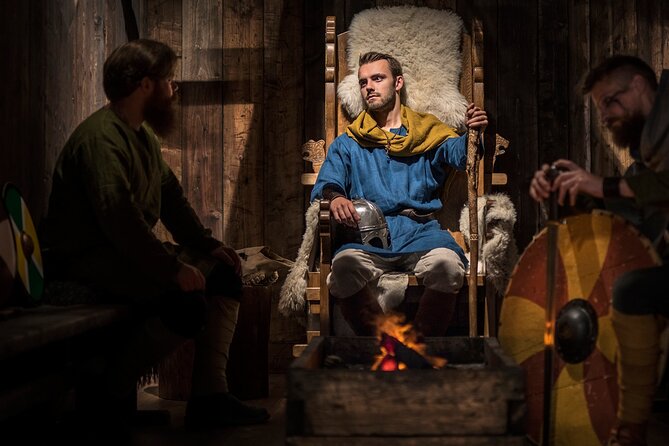
A big part of the museum’s “feel” is its guide-led component. You’ll meet guides dressed for the era and they don’t just recite facts. They’re positioned so you can ask questions freely as you explore.
That question-friendly style is a genuine advantage in Stockholm. Lots of museums have docents, but fewer make it easy to pause and ask real follow-ups. Here, you can push beyond the basics—like how shipbuilding connects to travel and raids, or how farm life fits into the bigger Viking picture.
You also get a more human explanation of things you might otherwise skim. Guides can point out what’s legend versus what’s likely based on evidence, and that turns the museum from “something I walked through” into “something I understood.”
If you’re the type who likes to learn by conversation, this museum plays to your strengths.
How long you need (and how to time it in your Stockholm day)
With a duration of about 1 to 2 hours, the Viking Museum fits into most travel schedules without stealing your whole day. Booked in advance, it also makes sense to pick a time that lines up with when you’ll have energy for a compact indoor experience.
Here’s how I’d plan it:
- If you’re doing it as a shorter stop, treat it like a “story museum” and plan closer to the 1-hour end.
- If you want more conversation time with the guide and time to linger with artifacts, plan for closer to 2 hours.
Also, pay attention to language shows. The experience includes English, but you might be able to catch a free guide show in your language at certain times. If you’re traveling with non-English speakers, this is worth checking when you arrive so everyone gets the most out of the storytelling.
You can also read our reviews of more museum experiences in Stockholm




Cafe, photos, and small extras that make the visit easier
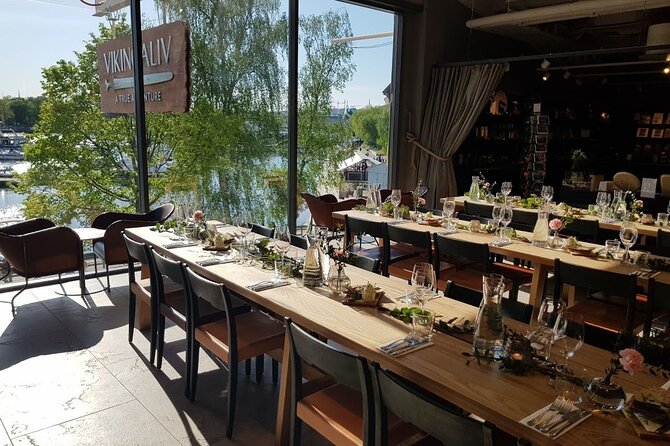
The Viking Museum doesn’t end when you step out of the exhibits. There’s a cafe where you can pause and recharge. One food detail people are excited about: reindeer meatballs. It’s a Swedish-flavored way to keep the day thematic without hunting for another meal right away.
You’ll also get plenty of photo opportunities. The saga spaces, the projection-driven rooms, and the Viking-gear guide moments are all built for pictures. If you care about getting a few nice shots without turning the museum into a photo shoot, arrive with a simple goal: one set of quick photos early, then focus on learning.
And if you want souvenirs, the gift shop carries interesting items. It’s also a good place to browse once you’ve completed the main highlights, so you don’t interrupt your pacing.
Who should book the Viking Museum ticket (and who might skip it)
This museum is a good fit for:
- Viking history fans who want a fast, structured overview
- families with kids who enjoy story-driven, sensory experiences
- travelers who like a mix of real objects and a short cinematic guide section
- visitors who prefer learning in their own language through a multilingual audio guide
It may be less ideal for:
- teenagers who only want hands-on interactive exhibits and find lots of reading boring
- travelers who expect a huge collection of Viking artifacts like a major archaeology museum
- people who strongly dislike ride-style, story-heavy segments (especially if they want pure documentary-style history)
If you’re comparing it to Stockholm’s bigger museum stars, keep in mind that one visitor wished they’d added extra time at the Vasa Museum instead. That doesn’t mean this place is bad—it just means you should think about what you want most: a compact Viking story experience, or a large, world-class single-focus museum.
If your time is limited, you can also make it work by pairing this museum with another “must-do” so you get both atmosphere and depth across different formats.
Should you book the Viking Museum ticket online?
Yes, I’d book ahead if you want a smoother day. Online booking helps you save time once you arrive, and the mobile ticket means fewer logistics headaches when you’re on foot around Stockholm.
Also, booking ahead makes sense because the museum is popular enough that advance planning is normal (on average, tickets are booked about 26 days in advance). Even if you can sometimes find ways to buy tickets later, prebooking is the calmer move.
Do it if:
- you want 1 to 2 hours of structured Viking storytelling
- you’ll benefit from a multilingual audio guide in English
- you’re traveling with kids who enjoy immersive, character-led scenes
Skip booking (or consider another plan) if:
- you’re expecting a huge, artifact-heavy archaeology museum experience
- your group hates reading panels or ride-style narrative formats
- you’d rather put the time into a bigger Stockholm museum with a single deep focus
FAQ
FAQ
How long does The Viking Museum visit take?
Most visits take about 1 to 2 hours, depending on how much time you spend with exhibits and asking questions.
Is the experience offered in English?
Yes. The experience is offered in English, and the museum also uses a multilingual audio guide.
Do I need to print anything, or is it a mobile ticket?
You get a mobile ticket.
Does the ticket include admission to The Viking Museum?
Yes. Admission is included with the ticket.
What will I see during the visit?
You’ll see Viking-related exhibitions that use films, scenery, projections, and sound effects, plus archaeological objects. You’ll also experience Ragnfrid’s saga.
What is Ragnfrid’s saga?
It’s an 11-minute, light-and-sound journey told by Ragnfrid. The story begins at Frösala Farm with Ragnfrid and her husband Harald, then moves through events including plundering in the west and the slave trade in the east.
Is there a cafe and food to buy?
Yes. The museum has a cafe, and the reindeer meatballs are a notable option.
Are service animals allowed?
Yes. Service animals are allowed.
Can I cancel and get a full refund?
Yes. Free cancellation is available up to 24 hours in advance for a full refund.