REVIEW · STOCKHOLM
Walking Tour of Stockholm’s City Center
Book on Viator →Operated by NORDIC FREEDOM TOURS · Bookable on Viator
Stockholm’s center tells stories fast. This two-hour walk is a simple way to get your bearings while seeing how modern Sweden works up close, from Central Station area statues to the opera-and-theater district. I love how many stops are quick, outdoor moments (most are free to look at), and I also like that the guide keeps it practical with an English-speaking group format.
Because it’s a public tour capped at 27, the pace can feel a bit tight, and hearing the guide can depend on mic and street noise.
In This Review
- Key reasons this Stockholm city-center walk works
- Two Hours to See Stockholm’s Modern Core (Without Paying Museum Prices)
- Price and value: $3.55 can still be a smart buy
- Start at Centralplan, End near Dramaten: The Route Logic and Pace
- What the public-group setup means for you
- Stop-by-Stop: From Nils Ericson to Karl XII in a Clean City-Center Loop
- 1) Statue of Nils Ericson: railways as national pride
- 2) Stockholm City Hall: the red-brick symbol of government in motion
- 3) Drottninggatan: the pedestrian spine for shops and cafes
- 4) Parliament House (Riksdagshuset): the big neo-Gothic seat of power
- 5) Gustav II Adolf Statue: war history, read as political power
- 6) The Royal Swedish Opera: performances and the building itself
- 7) S:t Jacobs Kyrka: red church façade, pilgrim symbolism
- 8) Berzelii Park: green pause by statues and theaters
- 9) The Royal Stables: royal equestrian traditions
- 10) Kungsträdgården Opera: a historic performance zone
- 11) Karl XII staty Kungsträdgården: the square as a meeting point
- 12) Royal Dramatic Theatre (Kungliga Dramatiska Teatern): the spoken drama flagship
- Guide Impact: Why Names Like Stefan, Karl, Amon, and Sophia Came Up
- Outdoor-Friendly Stops, Indoor Decisions: What Is Included and What Isn’t
- Practical Tips So You Enjoy It More
- Bring the basics
- Manage sound and visibility
- Ask questions in the right moments
- Who This Tour Fits Best
- Should You Book This Stockholm City Walk?
- FAQ
- FAQ
- How long is the Stockholm city-center walking tour?
- What does the tour cost?
- Where does the tour start and end?
- Is this a private tour?
- How big is the group?
- Are indoor visits included?
- Is there an English-speaking guide?
- Is a mobile ticket used?
- Do I need to pay admission at any stops?
- Can I cancel for free?
- Are service animals allowed?
Key reasons this Stockholm city-center walk works
- A fast orientation loop: you hit civic buildings, shopping streets, and major performance venues in about two hours.
- Mostly outdoor viewing: the tour keeps you outside rather than building a museum day around interiors.
- Many free stops: several landmarks are listed as free at the photo-point level, so your budget stays predictable.
- English guide with room for questions: multiple guides were praised for being clear and responsive.
- A manageable group size: max 27, with reviews noting a small-group feel.
- Mobile ticket on hand: no paper hassle—just show your ticket on your phone.
Two Hours to See Stockholm’s Modern Core (Without Paying Museum Prices)
This is not a deep, all-day itinerary. It’s a city-center sweep designed to help you understand where things are and what they mean. If you’re only here for a short time, that matters.
The biggest win is the mix: infrastructure and rail history near Central Station, then the civic center (City Hall, Parliament), then cultural institutions like the Royal Swedish Opera and the Royal Dramatic Theatre. You also get green space and classic streets, so it doesn’t feel like you’re glued to stone façades.
You can also read our reviews of more walking tours in Stockholm
Price and value: $3.55 can still be a smart buy
At $3.55 per person, you’re paying for the guide’s storytelling and the route planning. That price is low enough that it’s worth assuming the tour experience depends on people showing up ready to walk and listen.
The practical part: several stops have free admission tickets listed, while a few specific venues say admission is not included. So your cost isn’t just the ticket price—you’ll also decide whether you want paid entries at those particular stops.
If you like guided walks that help you make sense of a city quickly, this one is a strong value. If you’re looking for a tour that guarantees lots of indoor time, you may feel slightly constrained because the format is outdoor-focused.
Start at Centralplan, End near Dramaten: The Route Logic and Pace

The tour starts at Centralplan 15 (near Stockholm Central Station) at 11:00 am and typically ends near Royal Dramatic Theatre (Dramaten) on Nybroplan. That end point is convenient: you’ll be right by a major landmark cluster, with public transport nearby.
Timing is also part of the deal: it’s listed as about 2 hours. That means the walking is efficient, and you’ll get short explanations rather than long sit-down stops. One reviewer said a guide moved quickly without idle chatter—so if you’re the type who hates being rushed, keep that in mind.
What the public-group setup means for you
Because it’s public (not private), you’ll share the walk with other people. The upside is energy and convenience. The downside is you can’t expect a whisper-quiet tour.
Also, some reviewers mentioned trouble hearing at times, either from street noise or mic/iPad visibility issues. My practical advice: stand where you can see and hear your guide, and don’t rely on the guide’s visuals if the sun is strong.
Stop-by-Stop: From Nils Ericson to Karl XII in a Clean City-Center Loop
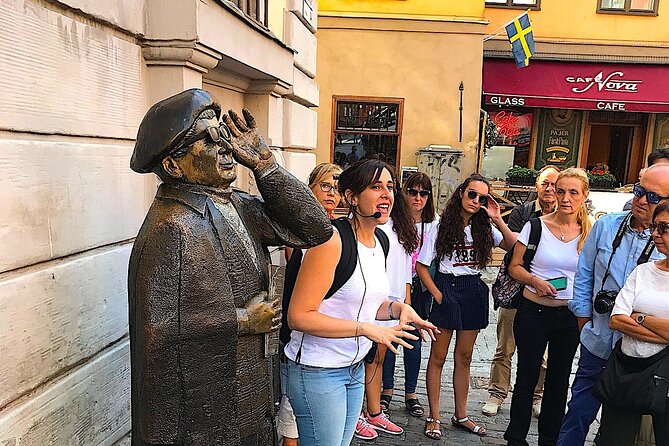
Here’s what you can expect as you move through central Stockholm, and why each stop is worth your attention.
You can also read our reviews of more city tours in Stockholm





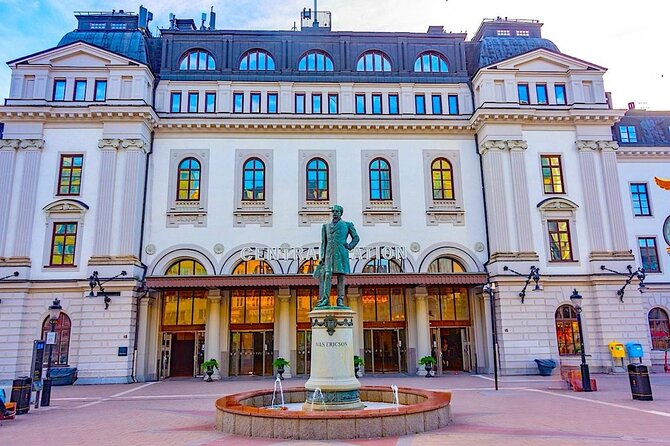
1) Statue of Nils Ericson: railways as national pride
You begin at the Statue of Nils Ericson, outside Stockholm Central Station. The bronze figure honors the Swedish engineer tied to modernizing railways and canals, with the sculptor credited as John Börjeson (1893).
This stop is more than a photo. It’s your early hint that Stockholm’s story isn’t only medieval alleyways—modern Sweden is built on transport, engineering, and systems. If you’re a first-time visitor, it’s a smart place to start because you’re literally standing at the city’s transit hub.
2) Stockholm City Hall: the red-brick symbol of government in motion
Next is Stockholm City Hall, famous for its red-brick look and the Three Crowns spire. Completed in 1923 and designed by Ragnar Östberg, it’s tied to official events and the Nobel Prize banquet.
A practical note: the tour format is outdoor-focused, so you may not get long interior time. Still, even from outside, you can understand why this is a “civic poster” building—big, clear symbolism, and a strong visual identity.
If you want a panoramic view, the City Hall listing mentions the tower with free admission. Just know that your walking tour time is limited, so you’d need to decide on the spot whether that’s a priority.
3) Drottninggatan: the pedestrian spine for shops and cafes
Then you move onto Drottninggatan, Stockholm’s pedestrian shopping street. It runs from Gamla Stan toward Observatorielunden and is lined with boutiques, cafes, and restaurants.
This part of the walk is a breather. You’re not “saving” money here with free sights—you’re using the street to see how locals actually move around and shop. It’s also a good moment to check what direction you’ll want to explore after the tour ends.
4) Parliament House (Riksdagshuset): the big neo-Gothic seat of power
The Parliament Building (Riksdagshuset) sits on Helgeandsholmen Island. The exterior is monumental neo-Gothic, built between 1897 and 1905 and designed by Aron Johansson.
The key detail for your planning: admission is not included here. So you’ll likely focus on the exterior and the setting. If you’re curious about the interior, treat it as a separate decision and not part of the guaranteed walking experience.
This is a stop where the guide’s stories matter. You’ll connect architecture to democratic function—why the building looks the way it does, and what that signals about Sweden’s public life.
5) Gustav II Adolf Statue: war history, read as political power
You get a quick look at the Gustav II Adolf statue in Gustav Adolfs Torg. Unveiled in 1796, it portrays the “Lion of the North” tied to the Thirty Years’ War, and it was created to reflect his commanding role in European history.
It’s one of those stops where a statue can feel like a trivia point—until someone explains how leadership and military identity were used in public monuments. Even if you’re not a history buff, it’s a useful piece of the bigger Stockholm puzzle.
6) The Royal Swedish Opera: performances and the building itself
Next is The Royal Swedish Opera, Sweden’s premier opera stage. Founded in 1773, the current building opened in 1898 with neo-classical elements and French Baroque influences.
Here again: admission is not included. So treat this as a “see why it matters” stop, not a “you must go inside” stop. The exterior and the setting still tell you something: Sweden treats the arts as serious civic culture, not only entertainment.
One reviewer noted the tour can include opera-related areas and garden spaces around the cultural core, which helps make this section feel like a connected district rather than isolated landmarks.
7) S:t Jacobs Kyrka: red church façade, pilgrim symbolism
Sankt Jacobs kyrka (Saint James’s Church) is close to Kungsträdgården near Kungsträdgården and features a striking red façade. It’s described as a Lutheran church with Gothic and Renaissance architectural elements, dating back to the 1600s.
The listing also calls out beautiful interior details like an organ, but the walking format suggests you’ll likely get more exterior time. Still, the church’s placement is useful. It shows how Stockholm layers religious architecture right next to modern city life.
8) Berzelii Park: green pause by statues and theaters
Berzelii Park is your reset button. Established in 1853 and named after chemist Jöns Jacob Berzelius, it’s a small urban oasis in central Stockholm. The park includes monuments, and it sits near the Norrmalm district.
If you’re walking straight through landmarks, parks are what keep the day from feeling like nonstop photos. This stop also gives you a mental map of nearby cultural buildings.
9) The Royal Stables: royal equestrian traditions
At the King’s Royal Stable (H.M. Konungens Hovstall) you’re in royal-world territory. It preserves Sweden’s equestrian traditions and is near Östermalm.
The listing says visitors can explore guided tours showing stables and a carriage museum, plus the role of horse-drawn transport in state ceremonies. Since the tour is outdoor-focused, you may not do the full visit, but the stop is worth it for context—Stockholm still treats old ceremonial customs as part of public heritage.
10) Kungsträdgården Opera: a historic performance zone
Then it’s Kungsträdgården Opera. It’s described as an 18th-century cornerstone of Swedish musical life, with a reputation tied to architectural beauty and acoustics, and hosting major premieres over time.
Even if you don’t go inside, this is a “culture geography” stop. You’ll understand why certain blocks feel like they belong to performance—stone shapes, public squares, and foot traffic that funnels toward venues.
11) Karl XII staty Kungsträdgården: the square as a meeting point
Karl XII’s Square is anchored by the central statue of Charles XII. The statue was erected in 1868 and the square itself is established in 1854.
The practical value here is that squares are Stockholm’s natural meeting rooms. This makes it a good anchor point to understand where you are and where you’ll likely want to re-orient later.
12) Royal Dramatic Theatre (Kungliga Dramatiska Teatern): the spoken drama flagship
Finally, you end at Royal Dramatic Theatre (Dramaten) near Nybroplan. It was established in 1788 and moved into its Art Nouveau building completed in 1908.
Admission is not included for this stop. But that doesn’t reduce the value. It’s the perfect “wrap-up landmark” because spoken drama is another pillar of Swedish culture, just like opera is. One reviewer even praised how some guides kept stories varied enough that it didn’t feel like a textbook.
Guide Impact: Why Names Like Stefan, Karl, Amon, and Sophia Came Up
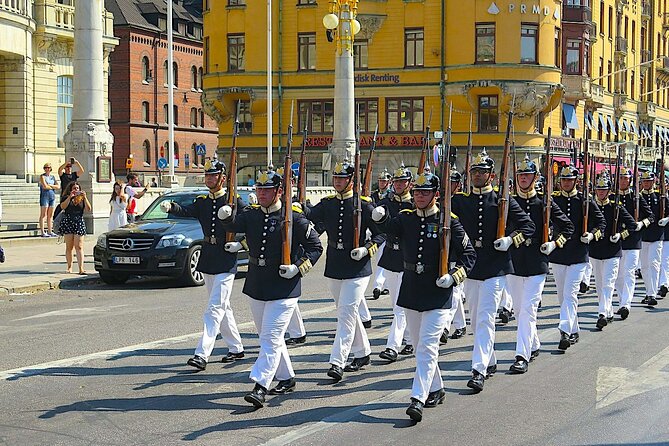
This tour depends on the guide’s delivery. In the experiences I gathered from this kind of walk, a few names kept appearing—Stefan, Karl, Amon, and Sophia, plus guides like Cim. When the guide is confident, you get short, useful stories that connect each building to how Sweden thinks.
A couple of patterns I’d plan for:
- Some guides used visuals like an iPad, but strong sun can make it hard to see.
- Street noise can make listening tougher even when the guide is good.
- Guides can be strict about staying on-topic, which can feel efficient if you like structure.
My tip: arrive ready to focus. If you want casual conversation all the time, this probably won’t feel like that kind of tour.
Outdoor-Friendly Stops, Indoor Decisions: What Is Included and What Isn’t
You’re told the tour does not include indoor visits. That lines up with how the itinerary is laid out: quick park pauses, exterior landmark looks, and short explanations on the move.
That said, your itinerary includes a few places where admission is not included:
- Parliament Building (Riksdagshuset)
- Royal Swedish Opera
- Royal Dramatic Theatre (Dramaten)
So if you love interiors and you’re the type who wants to see a grand hall or a backstage-style world, you’ll need to decide what you want to pay for after the walk (or before, if you plan your day around it).
Practical Tips So You Enjoy It More
A $3.55 tour in Stockholm still works best when you plan like a local walker.
Bring the basics
- Wear comfortable shoes. The pace can feel quick because the schedule is tight.
- Use water and sun protection. One guide experience described a hot day, and outdoor tours can get sweaty.
- Have your mobile ticket ready on your phone.
Manage sound and visibility
If you struggle hearing:
- Don’t stand behind tall groups.
- Watch the guide more than the street.
- If the sun is bright, don’t expect iPad visuals to be readable.
Ask questions in the right moments
Some guides are known for making room for questions. If you want a specific detail—like what to see next in the area—ask it while you’re near the relevant landmark.
Who This Tour Fits Best
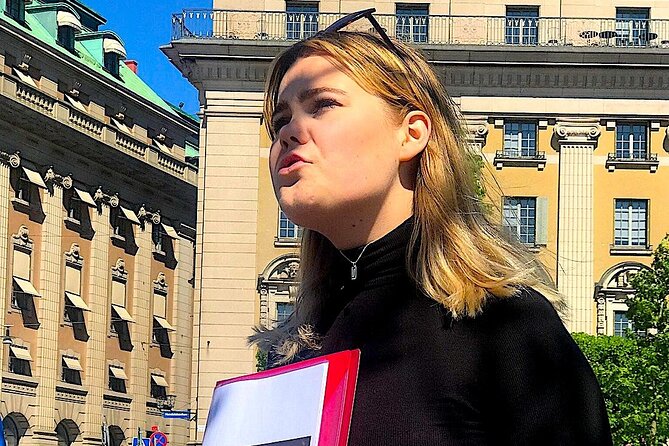
This is a strong fit for:
- First-timers who want a clean overview fast
- People who like city history told through present-day buildings and street life
- Travelers who want a guided walk but not a museum-heavy day
- Anyone who wants an easy starting point for planning later visits near the opera and theater district
It may be less ideal if:
- You need a slow pace due to mobility limits. The tour is still a walk.
- You want lots of indoor time. The format is outdoor-focused, and a few venues require separate admission if you choose to enter.
Should You Book This Stockholm City Walk?
If you’re in Stockholm for the first few days and you want orientation plus culture hits without paying for a stack of entrances, I think this tour makes sense. The low price helps, and the structure helps even more.
I’d skip it only if you’re seeking long indoor visits at every stop, or if you dislike the reality of a public-group walk where hearing can be imperfect on busy streets.
If you want a fast, organized path through the city center—ending near Dramaten so you can keep exploring right after—this is a good choice.
FAQ
FAQ
How long is the Stockholm city-center walking tour?
It’s listed as about 2 hours.
What does the tour cost?
The price is $3.55 per person.
Where does the tour start and end?
It starts at Centralplan 15, 111 20 Stockholm and usually ends near Royal Dramatic Theatre (Dramaten), Nybroplan, 111 47 Stockholm.
Is this a private tour?
No. It’s a public tour with other participants.
How big is the group?
The maximum group size is 27 travelers.
Are indoor visits included?
The tour does not include indoor visits, keeping you in the outdoor city atmosphere.
Is there an English-speaking guide?
Yes, it includes an English-speaking guide tailored for your group.
Is a mobile ticket used?
Yes, the tour uses a mobile ticket.
Do I need to pay admission at any stops?
Some stops list admission as free, while others list admission not included (including the Parliament Building, the Royal Swedish Opera, and the Royal Dramatic Theatre).
Can I cancel for free?
Yes. You can cancel up to 24 hours in advance for a full refund.
Are service animals allowed?
Yes, service animals are allowed.