REVIEW · STOCKHOLM
Stockholm Walking Tour with Audioguide on Your Smartphone
Book on Viator →Operated by TouringBee · Bookable on Viator
Stockholm’s best stories come with footsteps. This self-guided smartphone tour strings together 25 historian-narrated stops, from Stockholm City Hall to the newest-and-oldest parts of the center. I like that you can move at your pace, pausing for photos and side streets without worrying about a human group. You also get an offline map and a route that’s set up for short, focused visits.
What I love most is the mix: grand civic landmarks plus small details like Iron Boy and the patterned floor look at Sergel’s Square. I also appreciate the practical “walk it” format—no transit juggling, and the route brings you back to the start.
One consideration: you’ll need your own headphones and your phone battery may take a hit on an audio + GPS day. Plan for that, and you’ll be happy.
In This Review
- Key points at a glance
- Why this Stockholm walk works so well on your own
- Price and value: what $6.73 buys you (and what it doesn’t)
- Setup tips so your audioguide actually works
- Stockholm City Hall: Golden Hall mosaics and Nobel-era prestige
- Riddarholmen Island: Norstedt Publishers, Birger Jarl, and royal silence
- Norstedt Publishers (Norra Riddarholmshamnen 1)
- Birger Jarl’s Tower
- Wrangel Palace
- Monument to Birger Jarl
- Riddarholmen Church (the royal final resting place)
- Gamla Stan street time: Västerlånggatan, Viking flavor, Iron Boy
- Västerlånggatan
- Aifur Restaurant stop
- Iron Boy (Järnpojke)
- Stortorget and the Nobel Museum: squares, dates, and big names
- Stortorget (oldest public square)
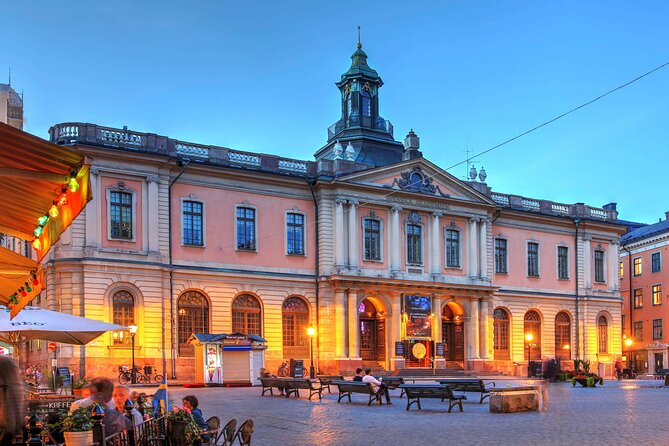
- Nobel Prize Museum
- Royal Palace, Riksdag, and Royal Opera: power buildings in motion
- Royal Palace
- Riksdag (Swedish Parliament)
- Royal Opera House (operas and performances)
- Parks and museums: Kungsträdgården and Hallwyl
- Kungsträdgården Park
- Hallwyl Museum
- Kreditbanken, Sergel’s Square, and the modern-city walk
- Kreditbanken and Stockholm Syndrome term
- Sergel’s Square
- Drottninggatan and Hötorget
- Timing and phone battery: do-able, but plan like an adult
- Who should book this audio tour (and who should skip)
- Should you book it?
- FAQ
- Is there a human guide on this tour?
- How long is the walking route?
- What language is the audio available in?
- Do I need headphones?
- Does it include museum or site entrance tickets?
- Can I cancel for a full refund?
Key points at a glance
- Offline-ready audioguide: 25 recordings from a professional historian, usable via the app on iPhone/Android
- One route, many “types” of Stockholm: royal, political, literary, Viking-themed dining, and modern squares
- Designed for short stops: many sites are paced around quick walkthroughs (often about 10 minutes)
- Low-friction navigation tools: offline map with route, plus GPS navigation if you enable location services
- Great value for the price: includes app access for 1 year in your chosen language
Why this Stockholm walk works so well on your own
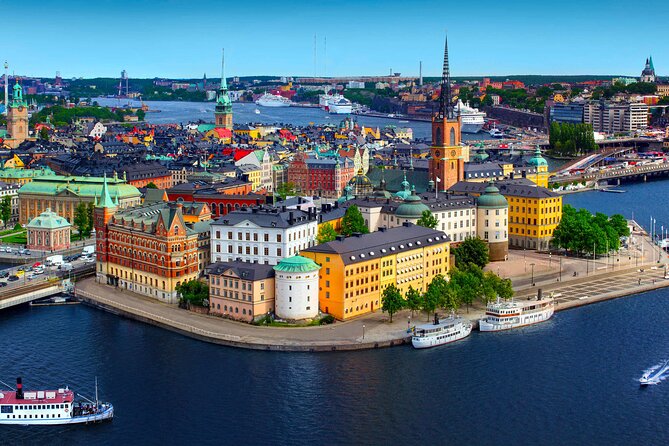
This is the kind of tour that fits real travel life. You start at Klara Mälarstrand, then spend about 2 hours (an estimate) walking through central Stockholm. The best part is that the route is broken into manageable chunks. You’re not stuck waiting for anyone, and you’re free to slow down at the parts you actually care about—architecture, statues, museums, or just wandering Gamla Stan streets.
The route also makes sense geographically. It threads through Riddarholmen and Gamla Stan, then continues toward the center along major streets and squares. Even if you don’t do every optional interior stop, the “outside-to-inside” story still lands. It’s a good first-day “get your bearings fast” plan, especially if you like seeing how the city’s power centers (city hall, palace, parliament) sit right next to everyday streets and markets.
One extra perk: your audio guide can be used at any date and time, and you keep access for 1 year. So if you miss a stop, or you want to repeat a section later, you can.
You can also read our reviews of more walking tours in Stockholm


Price and value: what $6.73 buys you (and what it doesn’t)
At $6.73 per person, the value is mostly in what’s included:
- 25 audio recordings narrated by a professional historian
- Audio guide app for iOS and Android
- Illustrations to help you identify landmarks
- Offline map with the route for GPS navigation
- 1 year access in your chosen language
What you don’t get is a human guide, and you’ll also need your own headphones. Entrance fees are also not included. That matters most at places like Stockholm City Hall or major museums/royal sites where entry might require a ticket. The audio can still tell you what you’re looking at, but if you want to go fully inside specific halls, budget for any entry costs separately.
For the money, this is a solid deal if you’re comfortable with a self-guided format and you don’t mind walking. If you hate tech setup or you get annoyed by GPS quirks, then you’ll feel that more than you’d on a classic guided tour.
Setup tips so your audioguide actually works
This tour runs through a mobile app. You download the app, activate your purchase, and follow the route using the map. The good news: it’s designed for offline use (meaning it should work without constant cell service), as long as you’ve got the content ready.
Here’s what you should do before you leave the hotel:
- Download and open the app once on Wi‑Fi.
- If the tour includes offline content, make sure it’s ready before you start walking.
- Bring your own headphones. They’re not included.
- Charge your phone. Audio + maps can drain battery faster than you expect.
A key practical point: navigation can be easier when you turn on location services. When the GPS position is active, you can match where you are on the route more confidently—especially in older, winding streets in Gamla Stan.
If the map feels confusing, try zooming in. Street names may not show clearly when zoomed out too far, and zooming usually fixes it.
Stockholm City Hall: Golden Hall mosaics and Nobel-era prestige
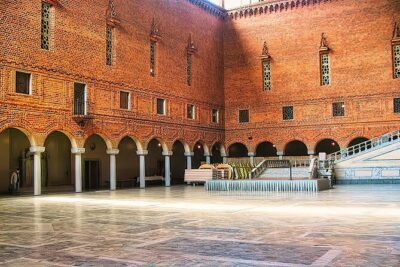
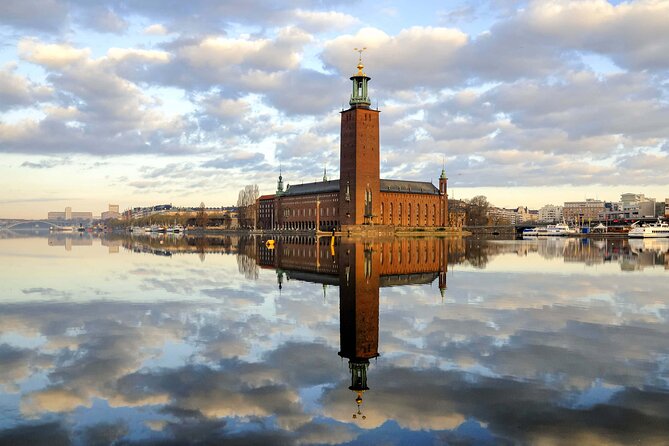
Your walk starts with Stockholm’s headline landmark: Stockholm City Hall. The audio focuses on the building’s role as a symbol of Sweden’s capital and then points you toward what to notice visually.
A few highlights the audio tells you to keep an eye out for:
- The building was completed in 1923, with a brick façade and a prominent tower.
- Inside, you’ll hear about the Golden Hall, covered with 18 million mosaic pieces.
- You’ll also learn about the Blue Hall, tied to the annual Nobel Prize Banquet.
Even if you don’t go inside (or if entry times/tickets don’t match your plan), the City Hall stop is still worth it for the tower views and the sheer “this is the center of power” feeling. It’s also a strong start because it sets tone: Stockholm isn’t just a pretty city—it’s a political and cultural city with real institutions.
Consideration: if you want to see the interiors you’ll hear about, check whether you need entry/tickets for those spaces. The tour price doesn’t include admission.
Riddarholmen Island: Norstedt Publishers, Birger Jarl, and royal silence
After City Hall, the route leans into a quieter, older Stockholm—Riddarholmen island. This is where the walking tour becomes more than just a list of sights. The audio connects authors, founders, and royalty into one continuous feel: ink, stone, and ceremony.
You can also read our reviews of more tours and experiences in Stockholm






Norstedt Publishers (Norra Riddarholmshamnen 1)
You’ll stop at Norstedt Publishers, established in 1823 and described as Sweden’s oldest publishing house. This is a great break from “big monument” sightseeing. The building sits on a picturesque part of the island, and the story is about how Scandinavian literature got shaped and preserved.
Practical note: the audio includes what to look for in the architecture and explains the publishing process. If you like books, you’ll feel like you’re visiting an actual living part of the literary ecosystem.
Birger Jarl’s Tower
Next up is Birger Jarl’s Tower, tied to the city’s founder, Birger Jarl. The tour frames it as a marker of the city’s early defenses, dating back to the 16th century. You get thick-stone, medieval-looking toughness from below—and if you can access the top, you’re pointed toward panoramic waterfront views.
This stop works well because it gives you “origin story” context before you move deeper into Gamla Stan.
Wrangel Palace
At Wrangel Palace, the tour shifts from founder-history to royal residence. Built in the 16th century and expanded later, it served as a royal residence in the 17th century. Today, the palace houses the Svea Court of Appeal, but the audio still lays out the royal and architectural angles so you’re not just standing there wondering what you’re seeing.
Monument to Birger Jarl
Then you’ll reach the Statue of Birger Jarl (erected in 1854 by sculptor Bengt Erland Fogelberg). The audio highlights the medieval attire and the pose with sword and shield. This stop is short, but it’s useful because it turns the tower story into a visible, human-style image.
Riddarholmen Church (the royal final resting place)
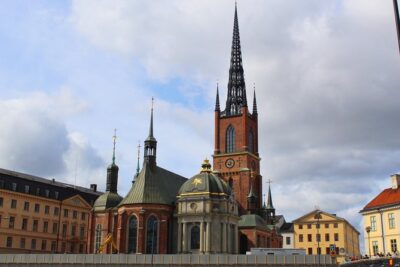
The route ends the island loop at Riddarholmen Church, dating to the late 13th century. The iconic cast iron spire is the visual cue, and the audio points you toward the church’s role as the final resting place of Swedish monarchs.
If you like your history with quiet weight—this is your stop. You’ll walk through with the feeling that you’re in a place built for memory. The audio also encourages you to notice royal tombs and historic coats-of-arms.
Gamla Stan street time: Västerlånggatan, Viking flavor, Iron Boy

From Riddarholmen, you move into the medieval streets of Gamla Stan, where the walking tour changes pace from “institutions” to “street life.”
Västerlånggatan
At Västerlånggatan, the audio is basically saying: walk slowly and look around. This narrow medieval street is lined with historic buildings, shops, and cafés. It’s the moment where Stockholm turns from monuments into “how it feels to live here.”
The practical reason this stop works: if you’re unsure which side streets to take later, this is where you learn the walking rhythm.
Aifur Restaurant stop
Then comes something different: a named dining stop at Aifur Restaurant in Gamla Stan. The audio frames it around a Viking-inspired theme, including period-style décor and medieval music. You’ll hear about traditional Scandinavian dishes using historical recipes like mead, roast meats, and hearty stews.
Even if you don’t eat, it helps to stop here briefly to reset your energy. But if you do eat, you’ll be able to match the audio storytelling to the food in your hands.
Iron Boy (Järnpojke)
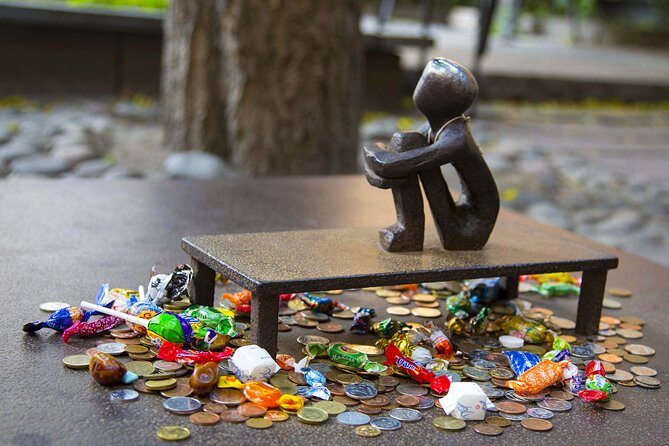
One of the best “small attention payoff” stops is Iron Boy—a 15-centimeter-tall statue in the courtyard of the Finnish Church in Gamla Stan. The audio gives you the key details: created by Liss Eriksson in 1967, depicting a little boy sitting and gazing at the moon.
Here’s where Stockholm turns playful. In winter, locals often dress him in tiny hats and scarves and leave coins for good luck. That’s the kind of detail an audioguide can actually add value to—you would easily walk past this without noticing.
Stortorget and the Nobel Museum: squares, dates, and big names
The next chunk of the route leans into major public spaces.
Stortorget (oldest public square)
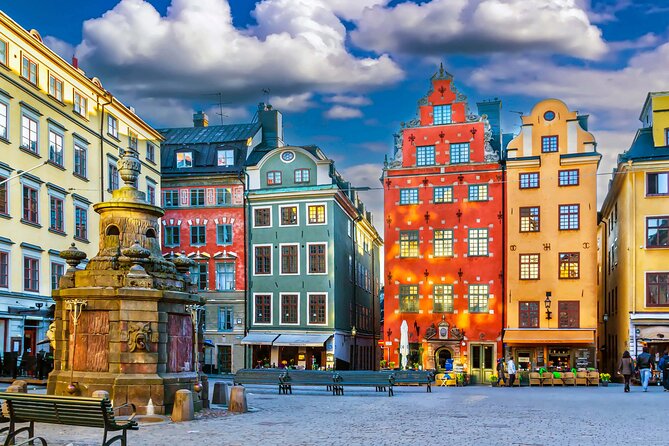
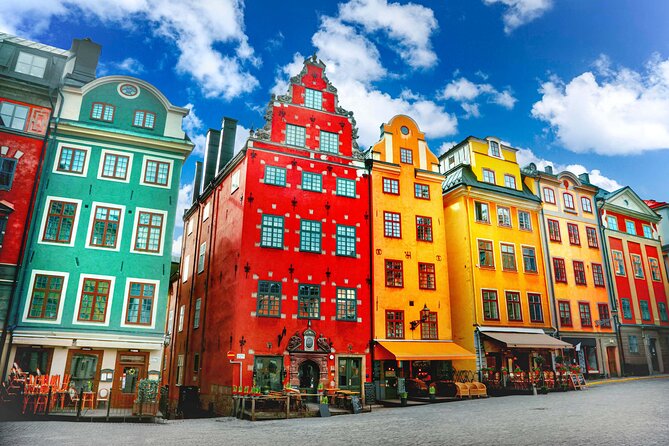
At Stortorget Square, you’re in Gamla Stan at the city’s oldest public square. The audio connects the place to two big threads:
- The Nobel Museum, and the annual Christmas Market
- The Stockholm Bloodbath of 1520
That last detail adds weight to a square that you might otherwise treat like a postcard stop. After you hear what happened there, you’ll notice how “public” these spaces really are—people have gathered here for centuries.
Nobel Prize Museum
Next, the route goes to the Nobel Prize Museum. The audio emphasizes interactive exhibits, personal stories, and artifacts related to Nobel laureates across fields like peace, literature, and science. You’ll also hear about Alfred Nobel’s vision and the impact of his legacy.
If you’re short on time, this stop is a good choice because it uses a structured narrative. You get context without needing to be a specialist in Nobel history.
Consideration: a museum stop can stretch your timing. If you’re trying to finish the full walk in a tight window, keep your museum visit shorter and save deeper time for another day—remember, you have a year of access.
Royal Palace, Riksdag, and Royal Opera: power buildings in motion
Now the route shifts toward Sweden’s institutions and performance culture. This section is very “read the city like a map”—the audio helps you match what you see with what those places do.
Royal Palace
At the Royal Palace, the audio points out Sweden’s official royal residence in Gamla Stan. You’ll hear about:
- The State Apartments
- The Royal Chapel
- The Treasury and the crown jewels
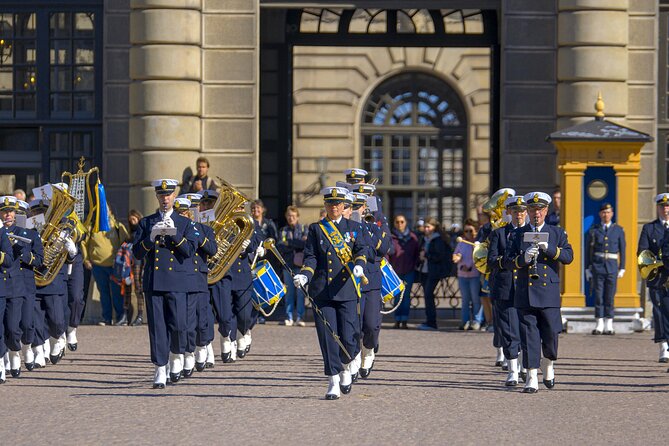
- The daily changing of the guard ceremony
The practical win here is knowing what parts matter most before you wander. That reduces “palace fatigue,” which is real. Even if you don’t tour every room, you’ll still appreciate the scale and purpose.
Riksdag (Swedish Parliament)
Then you reach Riksdag, on Helgeandsholmen island. The audio notes that it was completed in 1905 and describes its mix of neoclassical and baroque revival styles. You’ll also get a quick explanation of the legislative role and the system behind Swedish democracy.
This is a strong stop if you like civic architecture. It also helps you understand why the city layout feels intentional: major decision-makers are part of the public geography.
Royal Opera House (operas and performances)
Finally, the route goes to the Royal Opera House by the Norrström river. The audio includes its origins—established in 1773 by King Gustav III and reconstructed in 1898—and it frames the venue as a place for opera, ballet, and concerts by internationally acclaimed artists.
Even if you don’t attend a performance, the building is a storytelling stop. It explains why Stockholm takes the arts seriously.
Parks and museums: Kungsträdgården and Hallwyl
After the heavy institutional stops, the tour gives you breathing room.
Kungsträdgården Park
At Kungsträdgården Park, you’re in “King’s Garden” territory—dating back to the 15th century. The audio points out cherry trees, fountains, and seasonal events like summer concerts and winter ice skating.
This is a smart reset for your feet. It’s also where you can watch everyday Stockholm life without needing to spend money.
Hallwyl Museum
Then you’ll stop at the Hallwyl Museum, in a late 19th-century palace. The audio emphasizes the Countess Wilhelmina von Hallwyl and her family, and it tells you what to notice: art, antique furnishings, and rare collectibles preserved in their original setting. The number of rooms—over 50—is part of the pitch, and it tells you this is a “living rooms and objects” kind of museum, not only a hallway-and-frames experience.
If you’re museum-curious but not trying to do a full-day museum marathon, this is a nice midpoint.
Kreditbanken, Sergel’s Square, and the modern-city walk
The tour doesn’t only stick to old stone. It also gives you Stockholm in daylight and motion.
Kreditbanken and Stockholm Syndrome term
At Kreditbanken in Norrmalmstorg square, the audio connects the building to the 1973 Norrmalmstorg robbery—an event that helped popularize the term Stockholm Syndrome. The stop is essentially an “urban psychology in concrete form” lesson, since the building still serves as a reminder of that episode.
If you like learning how history leaves markers in everyday places, this is a good stop.
Sergel’s Square
Next is Sergel’s Square, named after sculptor Johan Tobias Sergel. The audio highlights an obelisk and the patterned floor. It also mentions Kulturhuset nearby and frames this as a public gathering hub.
This stop is quick, but it helps you picture Stockholm as a working, modern city, not only a heritage machine.
Drottninggatan and Hötorget
You finish by walking along Drottninggatan, a pedestrian street connecting Old Town to the modern center. The audio points out shops, dining, and a statue of King Charles XII along the way.
Then you reach Hötorget, centered around the blue Concert Hall. The audio notes:
- Open-air market on weekdays for fresh produce, flowers, and local delicacies
- Flea market on Sundays for antiques and vintage finds
If you want a last hit of “real Stockholm errands,” this is a good place to linger for a snack or people-watching.
Timing and phone battery: do-able, but plan like an adult
Because this route covers a lot of ground and includes many short stops, it’s not a shuffle. It’s closer to a focused walk with sightseeing breaks.
A realistic approach:
- If you want the full experience, give yourself 3–4 hours with occasional pauses.
- If you’re short on time, do the outdoor parts first, then come back later for any museum or interior entries you care about.
Battery-wise, you can’t ignore the warning signs. Audio playback uses power, and GPS can add strain. Bring a portable charger if you want a smoother day. Also, keep your screen brightness reasonable so you’re not draining power just checking where you are.
One more tip: if the tour doesn’t load on-site, that usually means the offline content wasn’t ready. Download and confirm it works before you start, and you won’t be stuck staring at a blank map.
Who should book this audio tour (and who should skip)
This tour is a great match if you:
- Want a first-time Stockholm walking route with major highlights
- Like learning from a structured narrative instead of reading plaques one by one
- Prefer moving at your own pace through Gamla Stan, Riddarholmen, and the center
- Don’t mind using your phone for navigation and audio
You might think twice if you:
- Dislike tech setup or don’t want to manage apps on the street
- Hate walking for multiple hours without breaks
- Only want interior museum-style sightseeing with guaranteed entry
Should you book it?
If you want value and flexibility, I’d book it. For a low price, you get professional-historian audio, offline routing, and a route that covers both big architecture and small, memorable details like Iron Boy. The tradeoff is real: you’re responsible for your phone setup, your headphones, and your time on foot.
If your main goal is to see a lot of Stockholm in one go while learning as you walk, this is a smart way to do it—especially if you like ending in modern squares like Sergel’s Square and wandering the pedestrian streets afterward.
FAQ
Is there a human guide on this tour?
No. This is a self-guided audio tour. You use the mobile app, activate your purchase, and follow the route on the map.
How long is the walking route?
It’s listed as about 2 hours (approx.).
What language is the audio available in?
The tour is offered in English.
Do I need headphones?
Yes. Smartphones and headphones are not included, so you’ll need to bring your own.
Does it include museum or site entrance tickets?
Entrance fee/tickets are not included. The audio guide can still help you understand what you’re seeing, but you may need separate tickets for certain interiors.
Can I cancel for a full refund?
Yes. You can cancel for free up to 24 hours in advance for a full refund. If you cancel less than 24 hours before the start time, the amount you paid will not be refunded.