REVIEW · STOCKHOLM
Stockholm Troll Hunt: Self-Guided Old Town Adventure
Book on Viator →Operated by Questo · Bookable on Viator
Old Town, but with trolls? This self-guided mobile quest turns Stockholm’s Gamla Stan landmarks into a story you solve at your own pace, and I love the pause-and-resume flexibility built into the app. The upside is real: you get a private outing (just your group) without booking a live guide. One drawback to keep in mind is that some people struggle with setup time and the clarity of certain translations, so don’t wait until the last minute.
For about $7.21 per person, the value is in what you practice: noticing details you might otherwise walk past. You’ll start at the Royal Swedish Opera and finish at Stortorget, moving stop by stop while the phone gives you challenges tied to legends and history. If you’re the type who likes spontaneity, this format can be great, as long as you arrive with your phone ready.
In This Review
- Key points before you go
- A Troll-Fueled Quest Through Stockholm’s Old Town (Gamla Stan)
- How the Mobile Quest Works in Plain Terms
- Where You Start and Finish: Opera House to Stortorget
- The 12 Challenge Stops: What Each One Teaches You
- Royal Swedish Opera: Why Gustav III Changed Opera in Sweden
- The “First Parliament” Connection: Arboga 1435 and the Four Estates
- The Baroque-Era Palace Prompt: 18th-Century Stir in Europe
- Royal Armoury Artefacts: Ceremonial Weapons and Gustavus Adolphus
- Storkyrkan (Stockholm Cathedral): Oldest Church of Gamla Stan
- The Liss Eriksson Sculpture: Hard to Find, Easy to Notice
- Sten Sture the Elder Statue: Saint George and the Battle of Brunkeberg
- Den Gyldene Freden: Golden Peace and a Café That Stayed Put
- Järntorget: The Trade Square Dating Back to Around 1300
- Storkyrkoskolan and the “Street That Might Be a Square”
- Sankta Gertrud Church: A German-Dominated Neighborhood and Saint Gertrude
- The Palace of the Purse: Swedish Academy and Nobel Museum
- Timing and Pace: Make This Work on Your Schedule
- Price and Value: Why $7.21 Can Be a Bargain
- Who Should Book This Troll Hunt (and Who Might Skip It)?
- Should You Book the Stockholm Troll Hunt?
- FAQ
- Where does the Stockholm Troll Hunt start and end?
- How long does the experience take?
- Is this a private tour?
- What language is available?
- What do I get with the ticket?
- What is not included?
- Can I play it at any time?
- Is service animal access allowed?
- What’s the cancellation policy?
Key points before you go
- 12 interactive puzzle challenges that push you to look around instead of just reading
- Private experience for you and friends, not mixed into a crowd
- Fully virtual pacing with pause and resume when you want
- Gamla Stan route built around major landmarks like Storkyrkan and Den Gyldene Freden
- Family-friendly “hunt” style that turns history into something you solve together
A Troll-Fueled Quest Through Stockholm’s Old Town (Gamla Stan)
This “Troll Hunt” is basically a walking story game for Stockholm’s Old Town, Gamla Stan. Instead of following a guide’s script, you follow prompts on your phone and hunt for answers right there in front of the buildings. It’s a smart twist: you get history without the usual lecture vibe, and you also get a reason to slow down.
What makes this work well is that each stage is tied to a specific place. You’re not doing random puzzles; you’re being asked to connect what you see with what you learn—like the founding-era church in Gamla Stan, or the long-running café culture of Den Gyldene Freden.
The “private” part matters, too. You and your friends can move at the speed of your group—pause for photos, split up briefly if that’s your style, and regroup without worrying about holding up strangers.
You can also read our reviews of more guided tours in Stockholm


How the Mobile Quest Works in Plain Terms
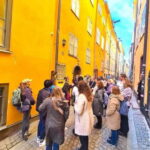
You’ll use a mobile access code and play through 12 interactive puzzle challenges. The experience is described as fully virtual and flexible, meaning you can start when you’re ready and stop whenever you want. The app content is built around Stockholm legends and history, with questions that nudge you to physically look at the site.
Because it’s self-guided, the best way to enjoy it is to treat your phone as the conductor, not the driver. Walk up to each stop, read what it’s asking, and then spend a couple of minutes scanning your surroundings. If something feels unclear, don’t force it for too long—move on and come back if you can, because the whole setup is designed for your pace.
One practical caution: some visitors have reported that setup and translation clarity weren’t great at the start. So I’d recommend you do a quick test run before you begin the walk. Even a few minutes can save you from losing momentum halfway through.
Where You Start and Finish: Opera House to Stortorget
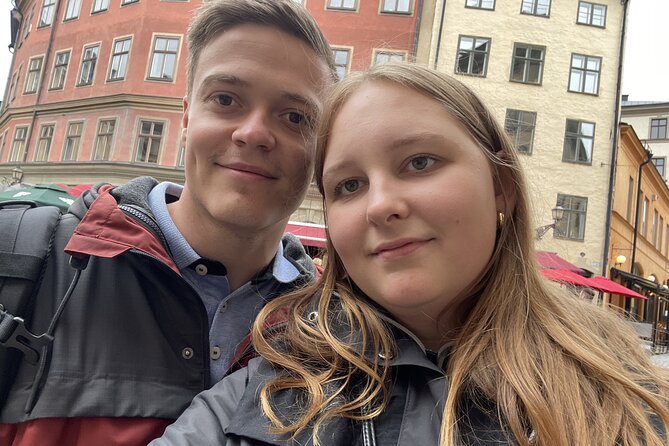
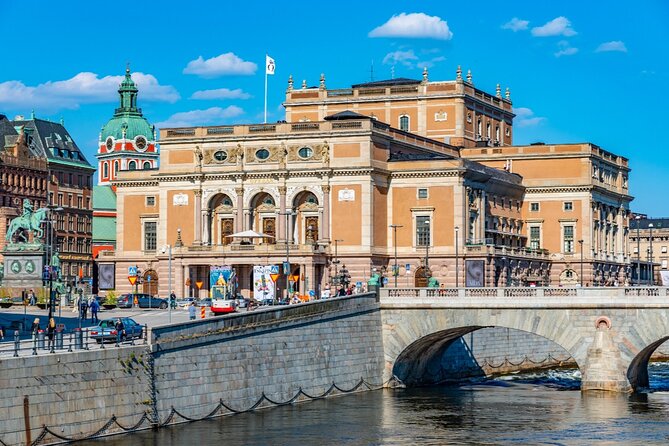
The hunt begins at the Royal Swedish Opera (Kungliga Operan), Gustav Adolfs torg 2 and ends at Stortorget 7. Expect a total walking time of about 50 minutes to 1 hour 15 minutes depending on how often you stop and solve.
The operating window listed for this experience runs 5:00 AM to 9:00 PM daily, which is handy for a city tour. If you like quieter streets, you can aim for earlier. If you prefer daylight and energy, late morning works too.
Also, you’re in central Stockholm, so you’ll likely reach the start by public transport. Gamla Stan is compact, and the route between big landmarks makes navigation simple even if you step away from your phone briefly.
The 12 Challenge Stops: What Each One Teaches You
Think of this as an Old Town scavenger walk where the answers live in the architecture and street details. Each stop is built around a concrete story moment, so you’ll know why you’re standing there.
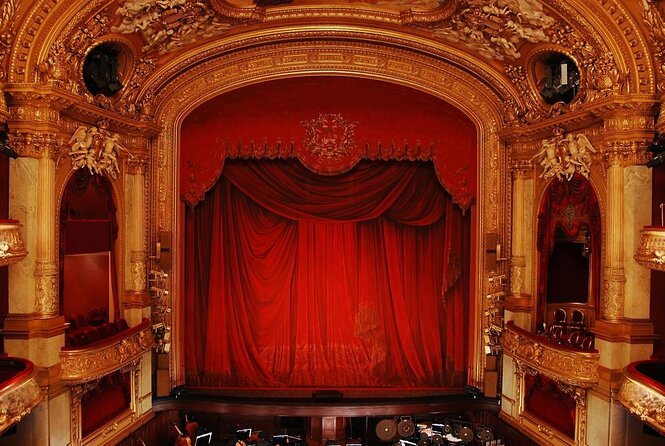
Royal Swedish Opera: Why Gustav III Changed Opera in Sweden
You start at the Royal Swedish Opera, a building tied to a turning point in Swedish performing arts. The opera has served as Sweden’s national theatre for opera and ballet since the first performance in January 1773.
The story behind the building also matters. In 1771, King Gustav III fired a French opera troupe that had performed in Stockholm for about 20 years. His aim was to build a Swedish ensemble that could stage Swedish operas. The French troupe continued at Bollhuset until a new opera house was completed in 1782, when the ensemble moved in.
For the challenge, you’ll be asked to look around to find the clue that moves you forward. This is a good opener because it teaches you how to notice: you’re not just at a pretty landmark—you’re at the start of a Swedish cultural shift.
You can also read our reviews of more tours and experiences in Stockholm






The “First Parliament” Connection: Arboga 1435 and the Four Estates
Next, you’re led into a political thread through Swedish history. The first parliament is often linked to Arboga in 1435, and from there Sweden’s government evolved through changes over time.
A key idea you’ll connect to is the system of the Four Estates: representatives from the nobility, clergy, burghers, and peasants. The puzzle here asks you to look around and identify the answer tied to the place you’re standing in.
This stop is a nice reminder that history in Gamla Stan isn’t only royal buildings and churches. It’s also civic structure—how people were organized, represented, and governed.
The Baroque-Era Palace Prompt: 18th-Century Stir in Europe
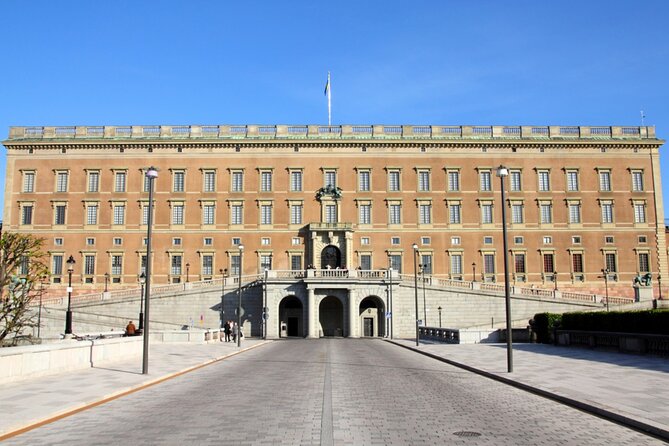
Your next stage points toward a palace associated with big European attention. When this palace was first built in the 18th century, it created a stir across Europe. Today, it’s treated as an emblematic example of the Baroque era.
Here, the challenge again follows the same method: you search your surroundings for the clue that ties the story to the exact site. The “consideration” with this kind of stop is simple: Baroque details can be subtle from street level. Take a slow look—your answer will likely be tied to something you’d normally overlook.
Royal Armoury Artefacts: Ceremonial Weapons and Gustavus Adolphus
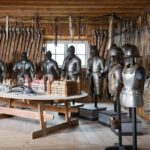
This stop leans into dramatic history. The Royal Armoury’s oldest artefacts include sets of royal state and ceremonial weapons stored in the old Three Crowns Palace during the 16th century.
You also get a startling detail tied to Gustavus Adolphus in the 1620s: he wanted his blood-spattered clothes saved as a perpetual memoria. That’s the kind of story detail that makes the phone quest feel more alive than a standard plaque reading.
In this phase, the challenge pushes you to scan the environment for the answer that lets you proceed, likely connecting the location to the armoury story rather than requiring museum time.
Storkyrkan (Stockholm Cathedral): Oldest Church of Gamla Stan
Storkyrkan—officially Church of St. Nicholas—is the oldest church in Gamla Stan. It’s first mentioned in 1279, and tradition says it was originally built by Birger Jarl, the founder of the city.
This is one of the most rewarding kinds of stops in a self-guided quest: you get both a name and a timeline. When a place is described as the oldest church in the old town, you can feel the layers of Stockholm around it.
As with the other stages, you’ll look around for the clue the challenge asks for. If you pause here longer than you planned, that’s not wasted time. It’s a natural place to stop, reset, and enjoy the sense of age in the streets.
The Liss Eriksson Sculpture: Hard to Find, Easy to Notice
Then you move to a sculpture story with a bit of a scavenger feel. The sculpture was created in 1954 by Swedish artist Liss Eriksson, but it was inaugurated in 1967. It’s located behind the Finnish Church, only a few meters off the Stockholm Palace, but it can be hard to spot because of its secluded location.
This stop is fun because it teaches you how Gamla Stan rewards attention. If you rush, you’ll likely miss it. If you slow down and scan the side paths, you’ll feel that small reward of finally spotting what the clue is pointing to.
Sten Sture the Elder Statue: Saint George and the Battle of Brunkeberg
Now you’re on a historical victory story. The statue was commissioned by Sten Sture the Elder after his victory over the Danish army in the Battle of Brunkeberg in 1471.
During the battle, Sten Sture placed his army under the protection of Saint George. The sculpture is widely attributed to the workshop of Bernt Notke, even though it isn’t signed by Sten Sture.
For your hunt, the challenge asks you to locate the answer on site. This is a good moment to look at how religious symbolism and political power overlap in public art—something you can miss if you only glance at statues while walking.
Den Gyldene Freden: Golden Peace and a Café That Stayed Put
Next is one of those Stockholm institutions that feels both charming and historically anchored: Den Gyldene Freden, translated as The Golden Peace. It opened in 1722 and has been delighting Stockholmers for almost 300 years, including members of the Royal Academy.
One practical detail makes it especially interesting: it hasn’t moved from its original location. So when you’re standing near it during the quest, you’re not just reading about continuity—you’re in the same place the story has been unfolding.
The puzzle here still makes you look and think, but the reward is more than correct answers. It’s the atmosphere of a long-running meeting place in a city famous for surviving centuries.
Järntorget: The Trade Square Dating Back to Around 1300
Your next stop is Järntorget, the second oldest square in Stockholm, slightly younger than Stortorget. It dates back to around 1300 and was the city’s most important trade centre for centuries.
The description of daily life is vivid: it was constantly busy, with scents and noise mixing as goods were transported from shore to shore across the square and up and down the attics of surrounding buildings.
This stop can be a highlight if you like everyday history. You’re not only seeing monuments—you’re imagining commerce, movement, and the practical work of the city.
Storkyrkoskolan and the “Street That Might Be a Square”
Then the route brushes up against an open space where the description even admits taste matters. By the area are the public library and Storkyrkoskolan, the School of the Great Church.
It’s named a square, but it may feel more like a street depending on your viewpoint. That detail is useful for you: don’t expect a dramatic “square moment” here. Expect an in-between space where the city’s flow continues.
This is also a good pause opportunity. Take a minute, orient yourself, and plan how you’ll handle the next steps without rushing.
Sankta Gertrud Church: A German-Dominated Neighborhood and Saint Gertrude
This stage points to Sankta Gertrud (officially dedicated to Saint Gertrude). The church’s name links to the medieval neighborhood once dominated by Germans in the Middle Ages.
Saint Gertrude (626–659) is described as abbess of the Benedictine monastery of Nivelles in present-day Belgium, and she’s the patron saint of travellers. That theme makes sense in an old town: streets were trade routes, travel was part of daily life, and churches often reflect who the community counted on.
The clue for this stop asks you to look around to find the answer. For this one, pay attention to signage or dedication cues you might miss when you’re just walking through.
The Palace of the Purse: Swedish Academy and Nobel Museum
Your final challenge sits near an important cultural and research anchor. The palace of the purse was built between 1773 and 1776 by Erik Palmsted in the French rococo style. Today it’s the seat of the Swedish Academy and the Nobel Museum.
You also get an architectural companion detail: the fountain in the square was built by the same architect. Since you’re finishing at Stortorget, this is a great moment to start thinking about your next stop in Stockholm, whether that’s a museum visit or just a long café break.
As usual, the app challenge asks you to look around to find the clue that ends your “hunt” sequence and brings you to the conclusion of the route.
Timing and Pace: Make This Work on Your Schedule
The total time is listed as about 50 minutes to 1 hour 15 minutes, which is perfect for a “short but meaningful” Gamla Stan walk. But here’s the practical part: self-guided quests reward preparation.
If you only start once you’re standing at the first stop, you might lose time. The negative feedback you’ll want to learn from is straightforward: allow extra time for setup, and don’t ignore unclear prompts. You can always pause and resume, but it’s easier when you’re calm and ready to start.
For the best experience, I’d plan:
- Start with daylight if you’re new to searching details in historic streets
- Keep your phone charged, since this is a mobile-first activity
- Give yourself a buffer so you’re not rushing your final clue at the end
Price and Value: Why $7.21 Can Be a Bargain
At $7.21 per person, the value comes from the combination, not the individual parts. You’re getting a private-style experience, a full story-driven route, and 12 interactive challenges without paying for a live guide.
This can be especially good for:
- Families who want kids to actively “do” something, not just follow
- Friends who travel together and want a flexible activity that doesn’t force a strict schedule
- Visitors who’ve already done a basic walk and want a reason to notice more
The main value trade-off is also clear: you’re relying on the phone for guidance. If you strongly prefer a human guide who can answer questions on the spot, this may feel too task-focused. But if you like problem-solving and learning as you move, it’s a low-cost way to get deeper than a typical walk-by.
Who Should Book This Troll Hunt (and Who Might Skip It)?
This is a great fit if you want:
- A private, self-paced Old Town experience
- A game-style way to learn about real places like Storkyrkan and Den Gyldene Freden
- A route that takes about an hour, not half a day
It might be less ideal if:
- You hate tech-based activities
- You’re worried about translation clarity on screen
- You need a live guide for questions and real-time clarification
In other words, treat it like a walking puzzle game with real historical anchor points, not like a traditional tour.
Should You Book the Stockholm Troll Hunt?

If you’re curious about Gamla Stan and you like learning through looking, I’d say yes. The combination of 12 challenges, a private group feel, and flexible pacing makes it a good “do it when it fits your day” option.
Just book with one smart rule: plan to handle setup and reading calmly. If you show up rushed, it’s easier for the experience to feel frustrating. If you show up ready, this is a fun way to turn Stockholm’s Old Town into a story you actively uncover rather than passively see.
FAQ
Where does the Stockholm Troll Hunt start and end?
It starts at the Royal Swedish Opera (Kungliga Operan), Gustav Adolfs torg 2, and ends at Stortorget 7.
How long does the experience take?
It’s listed at about 50 minutes to 1 hour 15 minutes.
Is this a private tour?
Yes. It’s described as a private tour/activity where only your group participates.
What language is available?
The experience is offered in English.
What do I get with the ticket?
You get a mobile access code for the quest, 12 interactive puzzle challenges, storyline content inspired by Stockholm’s legends and history, and the flexibility to pause and resume anytime.
What is not included?
A physical tour guide is not included.
Can I play it at any time?
The experience is fully virtual and described as flexible with pause and resume anytime, and it’s available during the listed daily hours from 5:00 AM to 9:00 PM.
Is service animal access allowed?
Yes, service animals are allowed.
What’s the cancellation policy?
Free cancellation is offered. You can cancel up to 24 hours in advance for a full refund.