REVIEW · STOCKHOLM
2-Day Small-Group Basic Skills Survival Course in Södermanland
Book on Viator →Operated by True Nature Sweden · Bookable on Viator
Two days in the Swedish woods changes your senses. This 2-day small-group survival course in Södermanland teaches fire and shelter skills you can actually practice, with instruction and coaching happening entirely in the wilderness. You’re not just watching tricks. You’re building competence and learning how to think when things go wrong.
I also like how practical the training is across the full survival picture. You’ll cover plants (edible, toxic, and medicinal), plus hands-on orientation skills like map reading and compass use, so you can respond fast if you get turned around. One consideration: the course has a minimum group size that varies by season, so some dates from early October to late April (needs at least 3) and early May to late September (needs at least 5) may be rescheduled or refunded if the minimum isn’t met.
In This Review
- Key things that make this survival course worth your time
- Meeting in Stockholm, then swapping city habits for wilderness skills
- Your guide William and the small-group energy (up to 8)
- Fire and shelter: what to build first when everything depends on basics
- Fire: making it work, not just talking about it
- Shelter: using the forest instead of fighting it
- The bigger lesson: priorities keep you calm
- Food and water: foraging skills plus the rules of survival nutrition
- Food: where to find it and how to prepare
- Water: collecting it the right way
- Plants and wildlife: how to spot risk and act without guessing
- Plants: edible, toxic, or medicinal
- Wildlife: tracking and danger awareness
- Orientation, map reading, compass basics, and finding your way
- Trapping, fishing, and the mindset behind getting food
- Sleeping in the forest and learning leadership as a safety skill
- Price and value: what $480.71 gets you (and what you don’t pay extra for)
- Who should book this survival course in Södermanland
- Should you book it?
- FAQ
- What is the duration of the survival course?
- Where does the course start and end?
- How many people are in the group?
- What’s included in the price?
- Is camping gear included?
- Who teaches the course?
- What if the course is canceled or my travel plans change?
Key things that make this survival course worth your time
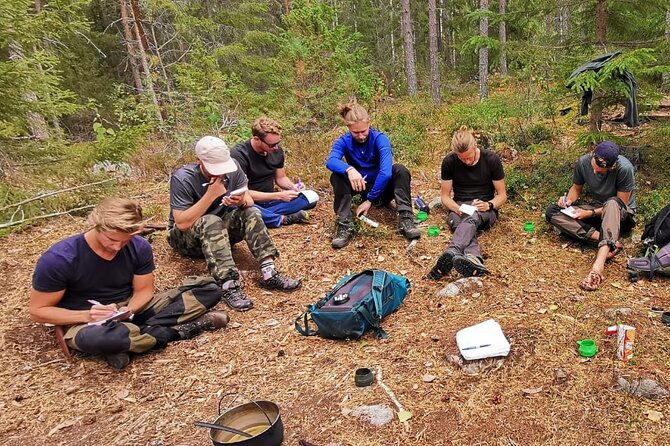
- Small group, max 8 people: more time for questions and feedback, not just a one-way lecture
- William’s full-skill approach: lots of step-by-step practice, not survival cosplay
- Real wilderness time: the course happens outside, including sleeping in the forest
- Survival basics taught as priorities: what to focus on first for fire, shelter, food, and water
- You learn more than gear tricks: navigation, tracking wildlife, and group leadership
- Included food and transportation: lunch, breakfast, dinner, plus private transport from central Stockholm
Meeting in Stockholm, then swapping city habits for wilderness skills
The experience starts at 9:00 am in central Stockholm, at True Nature Sweden AB on Tideliusgatan 62 (118 69). You’ll meet the team, get oriented, and then move with the group using private transportation. That matters more than it sounds: in a survival course, wasted time is wasted safety.
Once you’re out in the wilderness, the tone shifts. This is not a classroom. The course is given in the wilderness, which means you learn skills in the environment they’re meant for. You’ll practice things like building shelter, making fire, and orienting yourself with map reading while you can feel the forest around you.
The course also ends back at the same meeting point, so you’re not signing yourself up for a complicated multi-day trip puzzle. Two days is long enough to learn, practice, and absorb, but short enough that you can still get home without burning a whole week.
You can also read our reviews of more tours and experiences in Stockholm
Your guide William and the small-group energy (up to 8)
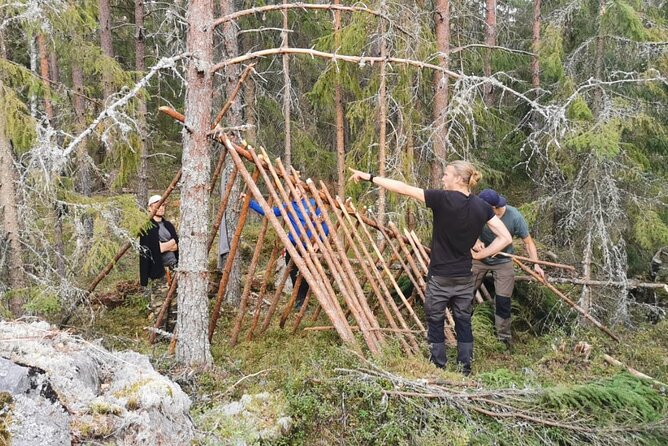
This is a small-group course with a maximum of 8 travelers. That’s a big deal for survival training. When you’re learning fire-starting methods, shelter building, or compass navigation, you want eyes on what you’re doing. A smaller group tends to mean more correction and more chances to try again.
In the feedback you’ll see the name William again and again. The recurring theme is that the instructor blends a lot of knowledge with patience, and he explains each step clearly—both practical and theoretical lessons. You also get the social upside of a mixed group. The vibe is focused, but it’s not just tough-guy tough talk. People who are beginners have still managed to learn a lot and feel confident doing the basics.
If you’re the type who gets nervous when you’re outside your comfort zone, that matters. A survival course is stressful by nature. The best versions of this style of training reduce the stress by making you capable. In a group this size, that’s more realistic.
Fire and shelter: what to build first when everything depends on basics
The course centers on three survival fundamentals, and they’re exactly where you want to start: fire, shelter, and the ability to secure food and water. The teaching doesn’t treat fire and shelter as just camp skills. It frames them as priority tools for warmth, safety, and survival rhythm.
Fire: making it work, not just talking about it
You’ll learn how to build a fire, and you’ll also learn the context around it—what you need and how to think through the process. Fire is one of those skills where a small mistake can waste time, and time is survival currency. That’s why step-by-step practice is the heart of this part.
One of the practical wins here is that you also get fire cooking. That’s a smart pairing: it helps you connect fire-making to real outcomes, not just a glowing stick you got once.
Shelter: using the forest instead of fighting it
You’ll learn how to build a shelter and with what. You’ll also get simple encampment tricks to make life easier when conditions aren’t ideal. Shelter training is valuable because it forces you to think about protection from wind and cold, not just a roof-of-sorts.
From the experience setup and what people describe, shelter-building includes hands-on practice in the forest environment. And you’ll likely do this while learning that survival isn’t about building a perfect cabin. It’s about making smart, quick choices with what’s around you.





The bigger lesson: priorities keep you calm
In real survival situations, the scary part isn’t only the danger. It’s the mental scramble. This course teaches the idea of knowing which basic needs to prioritize. That’s what turns panic into action: fire for warmth, shelter for protection, and then food and water to keep you going.
Food and water: foraging skills plus the rules of survival nutrition
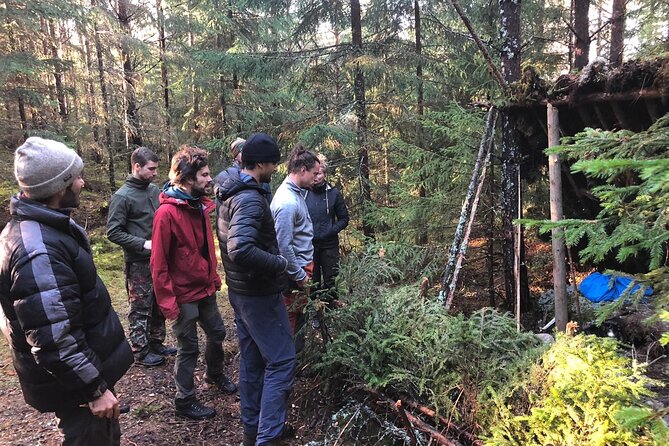
A survival day without food and water turns into a problem fast. This course treats food and water as core survival systems, not optional extras.
Food: where to find it and how to prepare
You’ll learn how to find what to eat, where to find food, and how to prepare dishes. That includes practical training that points toward real-world use. The forest gives you options, but you need a method to decide what’s worth your effort.
People also talk about how satisfying the food felt because it was tied directly to the fire. When you understand the chain—find, prepare, cook—you’re building a skill set that makes survival less mysterious.
Water: collecting it the right way
You’ll also learn where to find water and how to collect it. Water skills matter because the danger isn’t always obvious. In the wild, your senses can lie to you—so this training focuses on process and collection, not just vibes.
Even in a short course, teaching water collection with the same seriousness as fire and shelter gives you a more complete toolkit. You don’t leave thinking survival is only about being tough. You leave thinking survival is about doing the basics correctly.
Plants and wildlife: how to spot risk and act without guessing

Two of the most valuable parts of this course are plant knowledge and wildlife awareness. They connect nature’s beauty with nature’s real rules.
Plants: edible, toxic, or medicinal
You’ll get an introduction to plants and learn how to identify whether they’re edible, toxic, or medicinal. This is huge for confidence. When you’re in survival mode, guessing is expensive. Training your eye for categories helps you avoid the worst mistakes.
People specifically mention learning plant usage and practicing cooking on the fire after learning which plant materials matter. That combination is helpful because it turns plant knowledge into something usable.
Wildlife: tracking and danger awareness
You’ll also do wildlife tracking and talk about its dangers and how to continue when a survival situation arises. This isn’t about fear. It’s about respect and awareness. If you can read signs and understand potential risks, you make better choices about what to do next.
This course also includes survival in group dynamics, which ties into wildlife awareness in a subtle way: in the woods, you don’t just manage yourself. You manage the group’s safety and decisions.
Orientation, map reading, compass basics, and finding your way
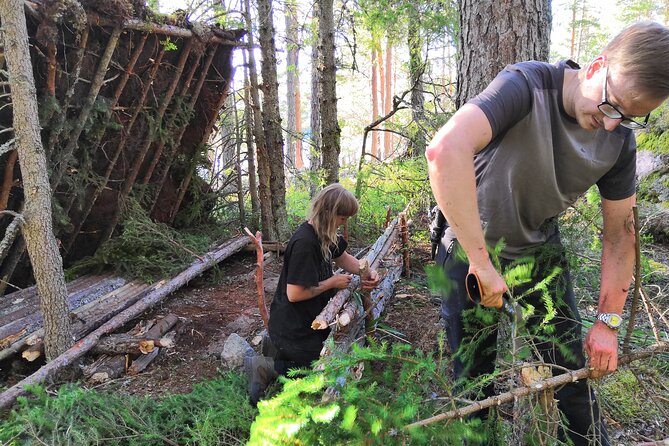
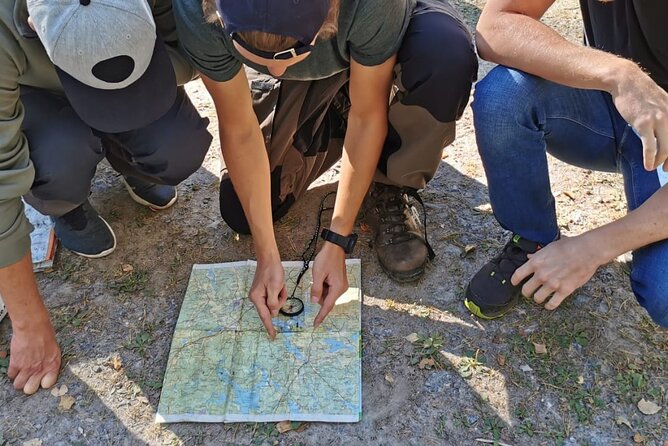
If you ever get turned around in a city, it’s annoying. In the forest, it can become dangerous. This course includes orientation and map reading, and people mention learning to use a compass.
What I like about this is that navigation skills don’t feel like extra homework. They’re integrated into survival thinking: you learn how to get your bearings fast and how to keep moving with purpose.
Map reading and compass training also strengthen your decision-making. Even if you never fully rely on navigation in real life, learning it gives you a mental framework for problem-solving. You start asking, Where am I? Where do I need to go? What route is safer?
Trapping, fishing, and the mindset behind getting food
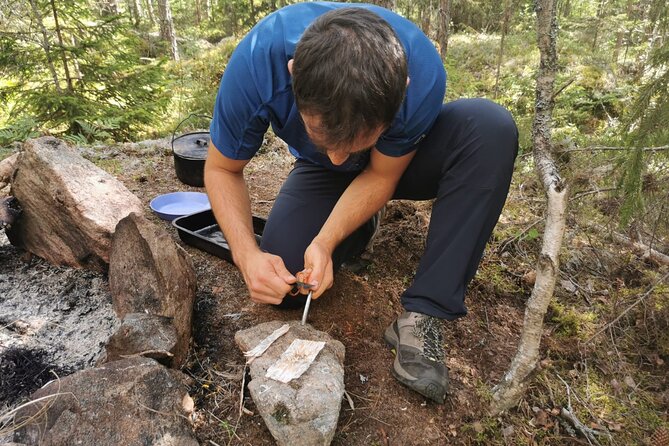
The course doesn’t stop at foraging. You’ll also do trapping and fishing as part of the food training. That gives you a wider survival menu and teaches you that getting food isn’t only about spotting something edible on the ground.
The practical value is the mindset: survival food methods come with tradeoffs—time, energy, and skill. Learning these techniques in a guided setting helps you understand what’s realistic when you’re tired, cold, or short on daylight.
And since the course already teaches food priorities and preparation, trapping and fishing feel like extensions of a system, not random add-ons.
Sleeping in the forest and learning leadership as a safety skill
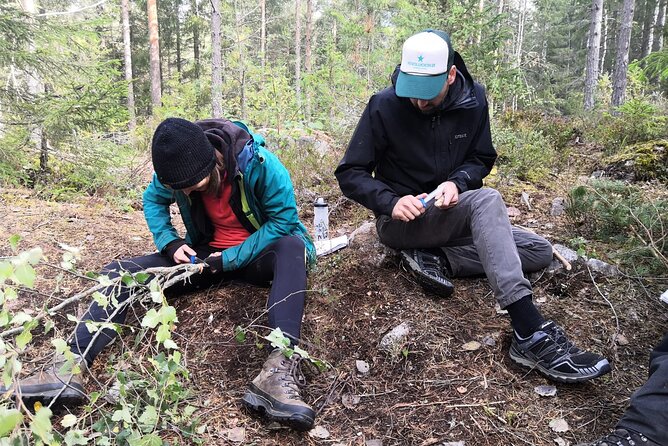
This is one of those courses where you can’t fake it, because you’re outside and you’re living the experience. Reviews mention sleeping in the forest, and that’s a meaningful part of learning.
When you sleep outdoors during training, you experience the shift from theory to body knowledge. The cold, the darkness, the sounds, and the comfort choices you make all reinforce why shelter and fire skills matter. You don’t just learn how to build something. You learn why people do.
You also learn survival in group dynamics, including leadership. That’s a practical topic you can use beyond the wilderness. In a survival situation, leadership is about clarity and calm: who checks navigation, who monitors warmth, who handles decision-making. Training this in a small group helps you understand your role—and how to support others.
Price and value: what $480.71 gets you (and what you don’t pay extra for)
At $480.71 per person for two days, this isn’t a budget course. But the price makes more sense when you look at what’s included:
- Meals included: lunch, breakfast, and dinner
- Private transportation: you’re not navigating the start and end alone
- All needed gears included: you’re not forced into a shopping spree right away
Those inclusions cut down on hidden costs. Many outdoor courses seem cheap until you add gear rental, extra transport, and meals. Here, those basics are handled, which makes it easier to compare value.
Also, the max group size of 8 means you’re paying for coaching and feedback. That’s often the difference between learning a skill once and learning it well enough to repeat.
There are optional add-ons: camping gear rental is listed as 450 kr per person, and backpack rental is 100 kr per person. Since all needed gear is included, these options likely matter more if you want to use your own setup or if you’re traveling with limited outdoor equipment.
Who should book this survival course in Södermanland
This course is a great fit if you want real competence fast. You should book it if:
- You’re a beginner who wants a solid intro, not a theory-heavy lecture
- You want a full set of basics: fire, shelter, food, water, plus plants and navigation
- You like small groups and hands-on practice where you can ask questions
- You want confidence for wilderness situations closer to reality
It’s also a good “try it before committing” step if you’re considering longer wilderness courses later. Two days can feel intense, but it’s enough to show you whether this style of learning works for you.
If you hate cold weather or dislike outdoor sleeping, then this may not be your type. But if you’re willing to take the experience seriously, it’s the kind of course that changes how you notice the forest.
Should you book it?
Yes, I’d book it if you want survival skills that are basic, practical, and taught with patience. The combination of wilderness-based practice, a small group (up to 8), and an instructor like William—known for clear step-by-step teaching—makes this feel like a true skills course rather than a stunt.
The only real reason to hesitate is scheduling expectations. The course depends on minimum group numbers that vary by season, so check your dates and be ready for a possible alternative date or full refund if the minimum isn’t met.
If you want to leave with a sharper compass in your hands, better plant confidence in your eyes, and actual fire/shelter habits in your mind, this is a strong choice.
FAQ
What is the duration of the survival course?
The course runs for 2 days (approx.) and starts at 9:00 am, ending back at the same meeting point.
Where does the course start and end?
It starts at True Nature Sweden AB, Tideliusgatan 62, 118 69 Stockholm, Sweden. It also ends back at the meeting point.
How many people are in the group?
The experience has a maximum of 8 travelers, which keeps the group small.
What’s included in the price?
Lunch, breakfast, and dinner are included, along with private transportation and all needed gears.
Is camping gear included?
All needed gear is included, but camping gear rental is available optionally for 450 kr per person.
Who teaches the course?
The instructor guiding the course is William.
What if the course is canceled or my travel plans change?
Cancellation is free up to 24 hours in advance for a full refund. If you cancel less than 24 hours before the start time, the amount you paid will not be refunded. The course also requires a minimum number of travelers depending on the season, and if that minimum isn’t met you’ll be offered a different date/experience or a full refund.