REVIEW · STOCKHOLM
Stockholm Old Town Private Walking Tour
Book on Viator →Operated by OURWAY Tours - Stockholm · Bookable on Viator
Gamla Stan is a time machine in shoes. This private walking tour takes you through Stockholm’s oldest quarter, from colorful squares to churchyards and palace-area views, with medieval stories tied to what you can see right there.
I like the personal pace that comes with a private guide, and I also like how the route covers major landmarks plus a few quirky stops most people miss. You’ll get context fast, so the Old Town stops feeling like random streets.
One watch-out: a lot of the route runs over cobblestones, and the tour is about two hours. Also, Royal Palace and Storkyrkan entry isn’t included, so expect exterior views there.
In This Review
- Key points to know before you go
- Gamla Stan, 2 hours, and a guide who links scenes to stories
- Price and what $328.75 per person is really buying
- Stortorget: where the Old Town’s power and tragedy both lived
- Prästgatan 13 and Hell’s Alley: the spooky street-name meaning
- Royal Palace area: Europe’s size, Sweden’s living monarchy
- Storkyrkan (Stockholm Cathedral): St George and royal weddings
- Järnpojken and St George & the Dragon: tiny statues with big meaning
- Brända Tomten and the fire insurance story
- Mårten Trotzigs grand (Mårten Trotzig’s alley): 90 cm of Old Town reality
- Iglesia Alemana: why a German church ended up in Stockholm
- Riddarholmen Church and Lake Mälaren: the view that ends the walk right
- Stockholm City Hall viewpoint and the Nobel Banquet date
- What a great guide changes (and why names like Sean, Kevin, Katrina, and George pop up)
- Cobblestones, weather, and timing: the practical stuff that affects your comfort
- Who should book this Stockholm Old Town private walk
- Should you book this Stockholm Old Town private walking tour?
- FAQ
- How long is the Stockholm Old Town Private Walking Tour?
- Where do I meet the guide?
- Where does the tour end?
- Is this tour private?
- What sights are included along the walk?
- Are tickets for the Royal Palace included?
- Are tickets for Storkyrkan included?
- What is included in the price?
- Does the tour run in bad weather?
- Is it hard to walk on cobblestones?
- Can I bring a service animal?
- FAQ
- Is the tour suitable for first-time visitors?
- What should I do after the tour ends?
- Are there group discounts?
- How do I choose a departure time?
- What’s the cancellation policy?
Key points to know before you go
- Private guide, private pace: Only your group walks together, with room to ask questions.
- Departure times throughout the day: Pick a time that fits your schedule instead of getting boxed in.
- Start at Stortorget, end at Riddarholmen: You’ll connect the postcard sights with clear storylines and a great finish.
- Classic landmarks plus oddball details: Iron Boy statues, Hell’s Alley, and the meaning behind Brända Tomten.
- Lots of photo-worthy moments: Golden-crown city symbols, views over Lake Mälaren, and dramatic church silhouettes.
Gamla Stan, 2 hours, and a guide who links scenes to stories
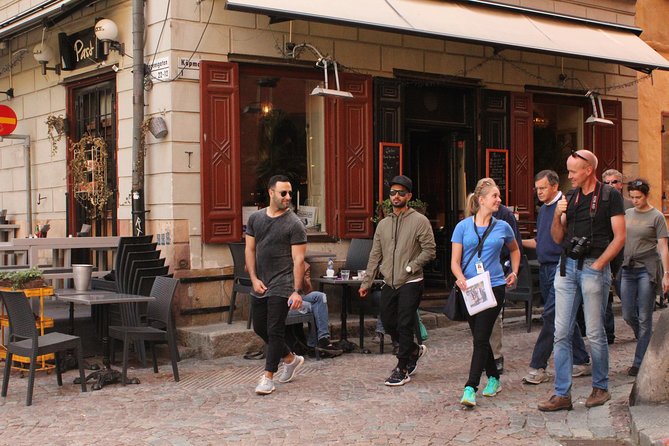
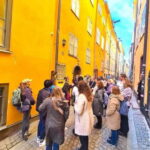
Stockholm’s Old Town, called Gamla Stan, has that rare feel where every corner seems to have a past. The streets are narrow, the buildings are colorful, and the history isn’t stuck behind museum glass—you can read it in squares, churches, and symbols.
This tour is built for people who want order, not chaos. You’ll move from one focal point to the next—starting at the big main square and working your way toward the island of Riddarholmen—while your guide connects the dots between medieval power, city life, and the legends people still repeat.
And yes, you’ll still enjoy the pretty parts: the painted façades, the steep alleyways, the stone-and-bronze details. But the real payoff is that you learn what those details mean.
You can also read our reviews of more walking tours in Stockholm
Price and what $328.75 per person is really buying
At $328.75 per person for a private tour lasting about two hours, you’re paying for three things: a guide, a route designed to be efficient, and time that won’t get wasted.
A private format matters in Old Town Stockholm because you’re not just passing landmarks. Your guide points out small, meaningful details you would likely miss on your own—like why a certain stretch of street earned the nickname Hell’s Alley, or why the Iron Boy matters in local symbolism. That’s hard to replicate with a self-guided stroll unless you’re doing serious homework beforehand.
The other value piece is coverage. You get a guided walk that hits major touchstones—Stortorget, the Royal Palace area, Storkyrkan, and viewpoints—while also including fun, compact stops like Järnpojken and Mårten Trotzig. In a short visit, that can save you from bouncing between multiple tours.
If you’re traveling with a group and the operator offers group discounts, the per-person math can get better. If you’re solo or a couple, it’s still a solid choice when you want a guided narrative instead of just seeing buildings.
Stortorget: where the Old Town’s power and tragedy both lived
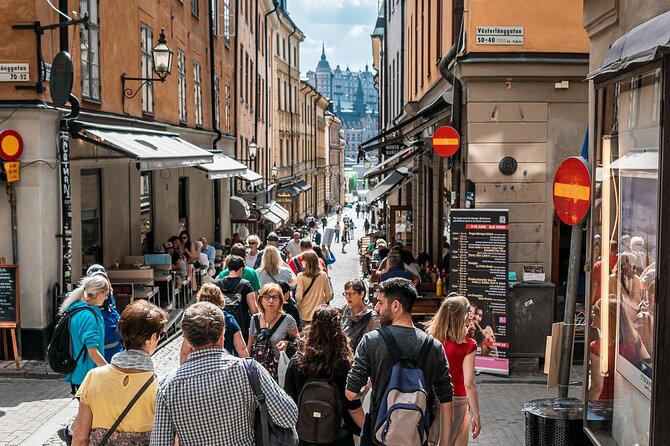
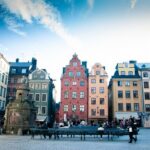
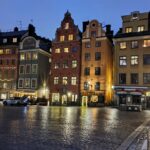
You meet at Stortorget 2, right in the beating heart of Gamla Stan. Stortorget is one of those squares where you can feel Stockholm’s layers: it’s compact, colorful, and built to concentrate public life—markets, announcements, ceremonies, and the occasional dark chapter.
This is where the tour starts threading together big stories. You’ll hear about the Stockholm Bloodbath and how later events like the Nobel Prize shaped the way people talk about the city. The guide’s job here is to make the place make sense: what this square was for, and why it kept mattering through centuries.
Practical tip: plan to look up as well as around. Old Town facades are colorful, but the stories often “live” in the details—street lines, building positions, and how the square connects to the lanes you’ll walk next.
Prästgatan 13 and Hell’s Alley: the spooky street-name meaning
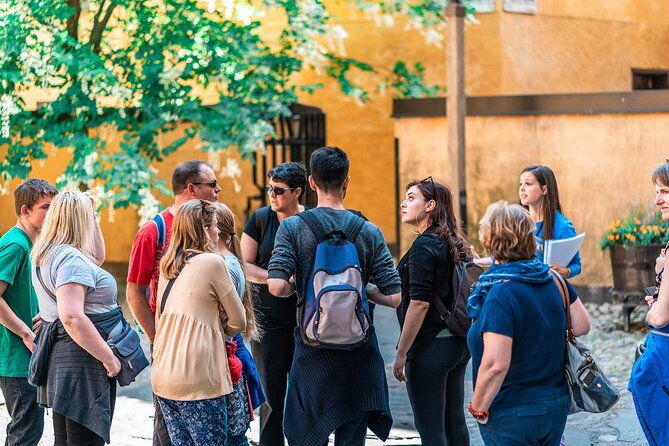
From the main square, you shift onto Prästgatan 13. This northern stretch has a medieval reputation tied to death rituals and fear. During the Middle Ages, people associated an area northwest of the church with a desecrated resting place for the dead, which helped give the street the name Helvetsgränd—Hell’s Alley.
Now you get a useful kind of context: it isn’t just that the name sounds dramatic. It explains how local belief and urban design mixed. Nearby landmarks also influenced naming, since Storkyrkan (Stockholm Cathedral) is just around the corner.
I like this stop because it gives you a feeling for medieval street psychology. Old Town Stockholm isn’t only about royal grandeur. It’s also about everyday fear, superstition, and how the city labeled what people couldn’t control.
Royal Palace area: Europe’s size, Sweden’s living monarchy
Next comes the Royal Palace zone. Even when you’re not going inside, the palace area can hit hard—this is described as one of Europe’s largest royal residences, and more importantly, it’s not a theme-park set. It’s the official residence for the king and queen’s working base for representation.
The tour keeps expectations realistic: palace admission isn’t included, so you’re seeing it as a major exterior landmark and orientation point. That said, it’s still a key moment. It helps you understand Stockholm’s power center and why Gamla Stan’s streets became the stage for state symbolism.
What to do with this stop: look for how the palace connects to the surrounding civic environment. A guided narrative makes those connections obvious, and you’ll start noticing them in the rest of your walk.
You can also read our reviews of more private tours in Stockholm





Storkyrkan (Stockholm Cathedral): St George and royal weddings
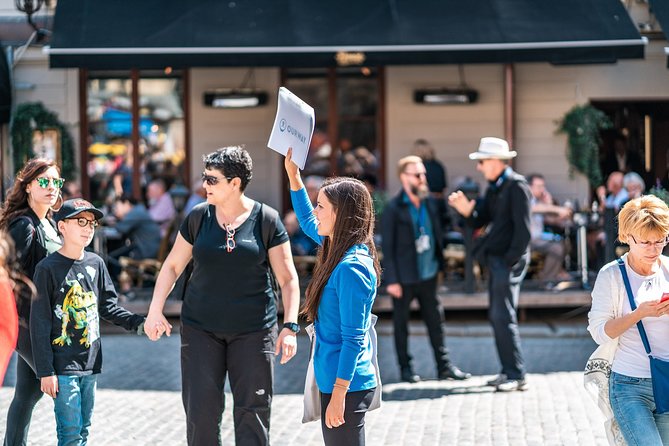
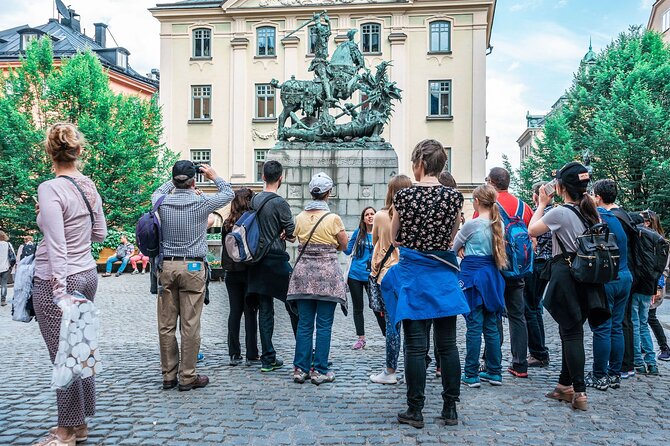
After the palace area, you head to Storkyrkan, one of Stockholm’s oldest buildings. This stop is famous for a specific object: a wooden statue of St George and the Dragon dating to the 1400s.
It’s also a living church in the ceremonial sense. Your guide explains how events like royal weddings take place here. A concrete example is the 2010 wedding of Crown Princess Victoria and Prince Daniel—an event that turned the cathedral into a modern reference point, not just a medieval one.
Just like the Royal Palace, Storkyrkan admission isn’t included, so plan on learning from the exterior/accessible areas and your guide’s context rather than a long interior visit.
Why I think this stop works: the story connects art, legend, and political legitimacy. The symbol of St George battling the dragon isn’t just decoration—it’s a story structure the city repeats.
Järnpojken and St George & the Dragon: tiny statues with big meaning
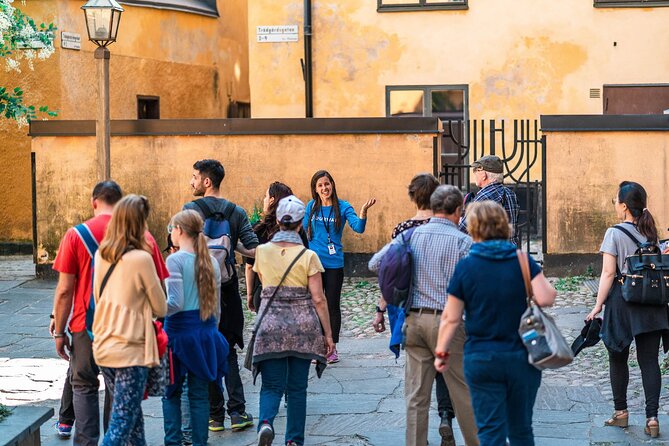
Then you get to one of the tour’s most charming breaks: Järnpojken, the Iron Boy statue. It’s described as Sweden’s smallest statue and also the cutest—officially named the Iron Boy, but popularly called the Boy looking at the Moon. Even if you don’t normally care about statues, this one is designed to be memorable, and it’s perfect for a mid-walk reset.
Right after that, you’ll see another St George connection: the St George & the Dragon statue nearby. This is a bronze copy, while the original wooden piece sits inside Storkyrkan. Again, the guide uses this to make you think like a local curator: copies tell you what mattered enough to replicate.
This part of the walk is where you stop treating Gamla Stan as a generic historic zone. You start seeing how symbols spread through the city—and how visitors and residents keep repeating certain images.
Brända Tomten and the fire insurance story
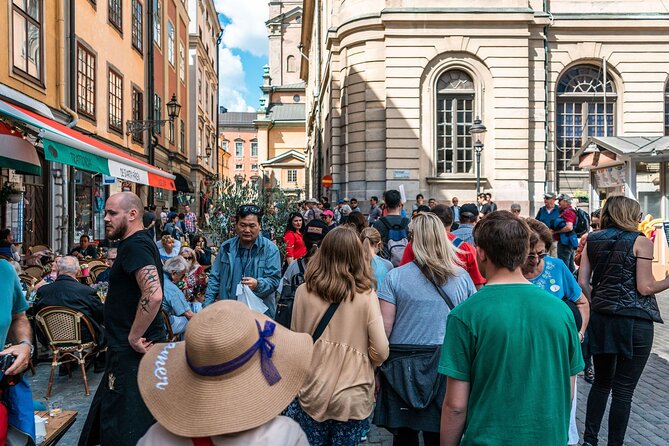
A few minutes later, you reach Brända Tomten, a small square with a name that literally points to past destruction. The name means “the brunt property,” and your guide ties it to fires that ravaged Old Town.
This isn’t just disaster trivia. The story includes the practical side: insurance and help from the fire department in the old days. It’s the kind of detail that makes medieval city life feel less distant. It reminds you that this area was not always stone-and-photos. It was also smoke, damage, and rebuilding decisions.
Short stops like this are a big reason the tour feels efficient. You get a complete story arc—cause, consequence, and how people responded—without spending the whole time in one museum-like spot.
Mårten Trotzigs grand (Mårten Trotzig’s alley): 90 cm of Old Town reality
Now for the alley that makes people slow down. Mårten Trotzig is described as the narrowest alley in Stockholm at its narrowest point—just 90 cm wide. Some guidebooks even claim it’s the narrowest alley in Europe, but this tour notes that isn’t accurate because there’s a narrower one in Prague at 60 cm.
That detail matters because it shows you something useful: your guide is focused on getting the story right, not exaggerating for effect. Still, 90 cm is narrow enough that you’ll naturally look for the physics of it—how the buildings lean, how light moves, and how people used to pass through.
If you’re claustrophobic, take it slow and move on quickly. If you love oddball facts, this is exactly your kind of stop.
Iglesia Alemana: why a German church ended up in Stockholm
Next is Iglesia Alemana, the German Church. The story here starts with the founding era. When Stockholm was founded in 1252, Birger Jarl invited Germans to help build the city, and the German church was built later, during the 1600s.
This stop helps you see Gamla Stan as a contact zone, not only a kingdom bubble. If you’ve visited other Scandinavian historic centers, you’ll recognize the pattern: trade, migration, skills, and culture flow into the city, and the buildings follow.
This is also a good moment for a photo because you’re not just capturing “pretty old stones.” You’re capturing evidence of how the city changed over time.
Riddarholmen Church and Lake Mälaren: the view that ends the walk right
The final stretch brings you to Riddarholmen, known as the Island of Nobility. Here, Riddarholmen Church is described as Stockholm’s oldest preserved building and a favorite spot for views looking over Lake Mälaren and the west side of Stockholm.
This is a smart ending choice. As you leave the tight lanes of Old Town, the scenery opens up. You get the feeling of the city’s geography—how water frames neighborhoods and why rulers and institutions loved these visible edges.
The tour ends at Evert Taubes Terrass (111 28 Stockholm), which gives you a built-in transition: you can keep sightseeing on your own or just sit and reset with the water view.
Stockholm City Hall viewpoint and the Nobel Banquet date
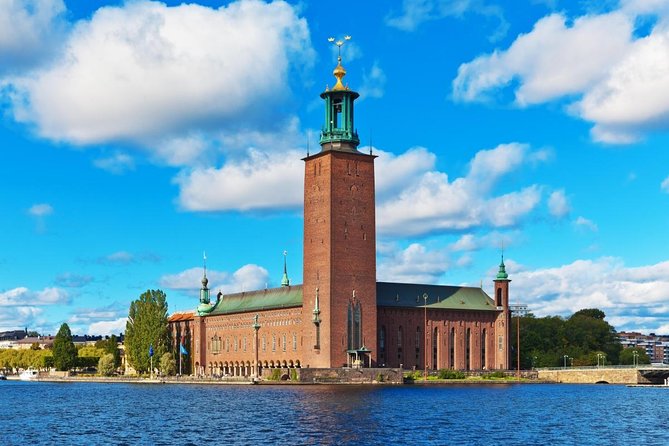
Before you fully settle into the lakeside mood, you’ll also get a view of Stockholm City Hall, topped by the three golden crowns symbol of Sweden. Your guide connects the building to one of the most famous calendar moments in the country: the Nobel Banquet held on December 10 each year.
Even though this is a viewpoint stop rather than a long indoor visit, it’s useful because it ties the city’s modern identity to the same space you’ve been walking through all morning. Gamla Stan isn’t only medieval. It’s also where the city keeps its national milestones.
What a great guide changes (and why names like Sean, Kevin, Katrina, and George pop up)
A private walking tour lives or dies on the guide’s ability to make history feel like a story you can track. On tours led by guides like Sean J., Kevin, Katrina, and George, the recurring strengths are clear: they’re funny, lively, and keep stops organized with good pacing.
If you like history but don’t want lectures, this matters. You’re not stuck memorizing dates. You’re getting anecdotes, and you’re getting them while standing where they happened or where symbols repeat.
It also helps when the guide gives practical add-ons—like pointing out traditional Swedish food nearby. That kind of bonus makes the walking tour feel like part of your day, not just a standalone activity.
Cobblestones, weather, and timing: the practical stuff that affects your comfort
This tour runs in all weather conditions, so dress for the day you actually get. Most of the walking is on cobblestones, which means your shoes matter. If you’re wearing soft-soled sneakers on wet stones, expect it to be slower and more careful.
The tour also runs about two hours. That’s enough time to cover a lot without dragging you through every lane in Gamla Stan. But it’s not a slow, wandering “no rush” drift either—there’s a clear sequence from Stortorget toward Riddarholmen.
The good news: it’s private, so your guide can likely adjust the pace to your group. Most people can participate, and service animals are allowed.
Who should book this Stockholm Old Town private walk
This is a great choice if:
- You’re a first-timer in Stockholm and want Gamla Stan’s main landmarks plus story context.
- You love medieval details, urban legends, and symbolism more than museum galleries.
- You want a personal guide instead of a crowded group bus-stopping routine.
- Your time is limited and you want a single route that leads to a scenic finish at Lake Mälaren.
It may be less ideal if:
- You need step-free routes and cobblestones are a deal-breaker for your comfort.
- You specifically want long museum or interior time at the Royal Palace and Storkyrkan, since admissions aren’t included and the stops are focused on guided viewing and context.
Should you book this Stockholm Old Town private walking tour?
If you want to see Gamla Stan and understand it at the same time, I’d book it. The route makes logical sense—start at Stortorget, follow the story to the palace and cathedral area, pick up the charming statue stops, then finish with a view-heavy sendoff on Riddarholmen.
The value question comes down to what you want from your time. If you just want photos, you could walk on your own. But if you want your landmarks explained in a way that feels like you’re learning how the city thinks, the private format and tight two-hour structure are exactly what you’re paying for.
Also, with flexible departures throughout the day, you can slot this in when the light and crowds suit you best. For an Old Town visit, that matters more than it sounds.
FAQ
How long is the Stockholm Old Town Private Walking Tour?
The tour is about 2 hours.
Where do I meet the guide?
You meet at Stortorget 2, 114 44 Stockholm.
Where does the tour end?
The tour ends at Evert Taubes Terrass, 111 28 Stockholm, on the island of Riddarholmen.
Is this tour private?
Yes. It’s a private tour/activity, so only your group participates.
What sights are included along the walk?
You’ll see key Old Town stops such as Stortorget, the Royal Palace area, Storkyrkan, Järnpojken, Riddarholmen Church, and you’ll also get a viewpoint of Stockholm City Hall.
Are tickets for the Royal Palace included?
No. Admission to the Royal Palace is not included.
Are tickets for Storkyrkan included?
No. Admission to Storkyrkan is not included.
What is included in the price?
A professional guide is included, and the tour uses a mobile ticket.
Does the tour run in bad weather?
Yes, it operates in all weather conditions. You’ll want to dress comfortably and appropriately.
Is it hard to walk on cobblestones?
A majority of the tour takes place where you’ll walk on cobblestones, so comfortable footwear helps.
Can I bring a service animal?
Yes, service animals are allowed.
FAQ
Is the tour suitable for first-time visitors?
Yes. It’s described as ideal for first-time visitors and history lovers.
What should I do after the tour ends?
The tour concludes in the Old Town with free time to continue your independent sightseeing.
Are there group discounts?
Yes, group discounts are mentioned as a feature.
How do I choose a departure time?
You select your desired departure time, with options throughout the day.
What’s the cancellation policy?
Free cancellation is available if you cancel up to 24 hours in advance for a full refund.