
REVIEW · STOCKHOLM
CityQuest in Stockholm – To See Stockholm and Die
Book on Viator →Operated by ARDI · Bookable on Viator
A murder mystery turns Stockholm into your crime scene. This CityQuest has you working like a detective agency for about 2 hours 30 minutes, with evidence at the start and a story that drives your walking route. I like the app-led criminal journal mechanic, and I also like that it doesn’t require deep Stockholm knowledge—just curiosity and good teamwork.
The main thing to plan for is tech and weather. You’ll need your own mobile phone and an internet connection, and the experience requires good weather, so bad days can mean a reschedule or refund.
In This Review
- Key highlights worth your time
- City streets become a detective case
- Price and value for a 2.5-hour phone-led mystery
- Central Station to the Royal Opera: your clue route
- Stop 1: The Royal Swedish Opera
- Stop 2: Royal Academy of Fine Arts
- Stop 3: Kungstradgarden
- Stop 4: Karl XII statue in Kungstradgarden
- Stop 5: Statue of Nils Ericson
- Stop 6: Sergels Torg
- The app, the criminal journal, and what to bring
- Difficulty level: puzzle brain, not trivia brain
- When CityQuest is a smart booking—and when it isn’t
- Should you book CityQuest Stockholm: To See Stockholm and Die?
- FAQ
- How long is the CityQuest in Stockholm?
- Where does the quest start?
- Where does the quest end?
- What do I receive at the start of the game?
- What app or online tool do I use during the quest?
- Do I need my own phone or internet?
- What landmarks are included on the route?
- Is this private or shared with other people?
- Do I need to know Stockholm beforehand?
Key highlights worth your time

- Evidence at the start that helps you navigate, find clues, and answer the final mystery.
- Criminal journal web application that you access during the walk to piece together the case.
- A timed detective mission where your goal is answering as many questions as possible before time runs out.
- A tight central route that moves from Central Station area toward the Royal Opera.
- Team-friendly puzzle play that keeps the pace manageable while still feeling challenging.
City streets become a detective case

This quest is built like a mystery game, not like a typical walking tour. You’re “investigating” the mysterious death of a Russian scientist visiting Stockholm, and the big question is whether he was unlucky or if the whole thing was planned.
You start with a set of evidence and basic instructions. Then you move from clue to clue, using what you’re given plus what you notice on the street, and you keep an eye on the clock because the mission is timed.
At the end, you get a summary of what happened to compare with your answers. That wrap-up matters, because it turns the walk from random scavenger searching into a real story arc—clues lead somewhere, and your choices get checked.
You can also read our reviews of more tours and experiences in Stockholm.



Price and value for a 2.5-hour phone-led mystery
At $20.31 per person for roughly 2 hours 30 minutes, CityQuest sits in that sweet spot between a paid activity and a “just walk around” afternoon. What you’re paying for is not a museum entry—it’s the game framework: evidence, a story trail, and the online criminal journal you use to solve the questions.
Here’s where the value gets real. You’re not only seeing landmarks; you’re actively using them as part of the puzzle. That usually makes city walking feel less like sightseeing chores and more like an engaging activity you can do with friends.
Just remember what’s not included. The experience lists mobile phone and internet connection as not included, so you’ll want to budget for data (or reliable Wi‑Fi) and make sure your phone battery is healthy. If your phone dies or your connection is shaky, the game loses most of its power.
One more practical plus: it’s a private tour/activity for only your group. That means you can play at your team’s rhythm, without needing to match pace with strangers.
Central Station to the Royal Opera: your clue route

The walking route is central and designed to keep you moving through classic Stockholm spots. You begin at Centralplan 15 by Central Station, and the mission is set up so you finish near the Royal Opera area.
Even though you’re not forced into a museum-style timeline, the route is smart. It keeps you in an easy-to-navigate part of town, where each stop feels like a natural “scene” in the story instead of a random dot on a map.
Stop 1: The Royal Swedish Opera
Your first major landmark is the Royal Swedish Opera. Since you’re starting your investigation, this is a good place to get your bearings and understand how the evidence-and-questions flow works.
The drawback here is also simple: it’s an active public area, so if you’re trying to read details carefully, you’ll want to pause in a way that doesn’t block foot traffic. The upside is that the setting helps kick the mystery tone into place.
Stop 2: Royal Academy of Fine Arts
Next comes the Royal Academy of Fine Arts. This stop tends to work well for this kind of game because it encourages you to look closely at what you’re seeing rather than rushing past it.
If you like puzzles that rely on observation, this is the right kind of scene. If you don’t like noticing small details, you might find yourself leaning hard on the evidence provided at the start.





Stop 3: Kungstradgarden
Then you hit Kungstradgarden. It’s a classic Stockholm public space, and it fits the game because it feels like a place where something could be hiding in plain sight.
This is also where teamwork helps most. In a timed quest, splitting tasks—one person navigates, one person scans for clue prompts, one person checks the criminal journal—keeps the group from bottlenecking.
Stop 4: Karl XII statue in Kungstradgarden
At the Karl XII statue in Kungstradgarden, the game tightens into more direct puzzle territory. Statues and memorials are great “clue objects” because they’re fixed, visible, and easy to reference in a story.
The consideration: statues can look similar from a distance. If you’re walking fast to stay on schedule, slow down a little here so your team doesn’t mis-identify the scene.
Stop 5: Statue of Nils Ericson
Next is the Statue of Nils Ericson. This stop gives you another way to connect the story to Stockholm’s built environment, not just its big-ticket attractions.
If your team enjoys solving questions that feel grounded in real places, this is where the city quest format really clicks. If you prefer lots of indoor stops, you might wish there were more breaks—though the route is built to move efficiently.
Stop 6: Sergels Torg
Finally, you reach Sergels Torg. This is a busier, more city-core-feeling area, which fits a closing act to a mystery: you finish your final questions with Stockholm around you, not tucked away in a quieter pocket.
Because it’s lively, the practical move is to keep your team organized at the end. Don’t scatter—gather near where the game prompt seems to be focused, then answer quickly so you maximize your time.
The app, the criminal journal, and what to bring
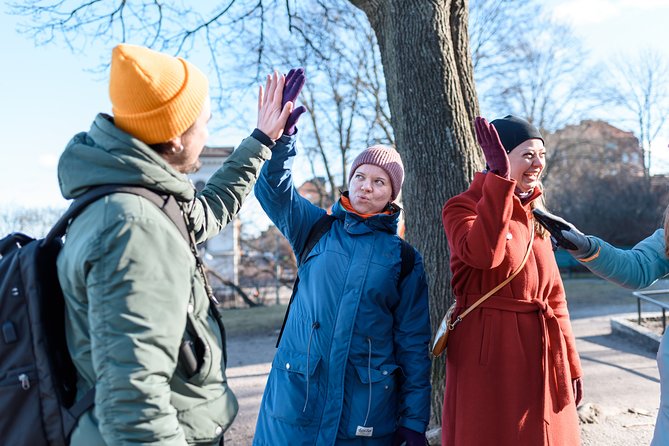
The mechanics are straightforward: you get evidence and instructions at the beginning, then you use your cellphone app to access the case materials. The key tool is the web application tied to the case—your criminal journal—which you consult as you walk.
That means you’re not only relying on landmarks. You’re cross-checking your observations against the case log, and the questions are designed to push you toward a final conclusion.
Since mobile phone and internet connection are not included, I’d treat this like an essential packing item. Bring a phone charger if you have one, keep your brightness reasonable, and plan to conserve data if you’re on a tight mobile plan.
Also check your timing. The quest is built for about 2.5 hours, and it’s timed for answering questions. So you’ll get the best experience if you don’t schedule a big museum visit right after—give yourself a buffer to finish strong and not sprint the whole route.
One other practical note: you don’t just get a “checkpoints only” experience. You finish with a summary that compares what you answered with what happened in the story. That feedback loop is a big reason these quests feel satisfying instead of random.
Difficulty level: puzzle brain, not trivia brain
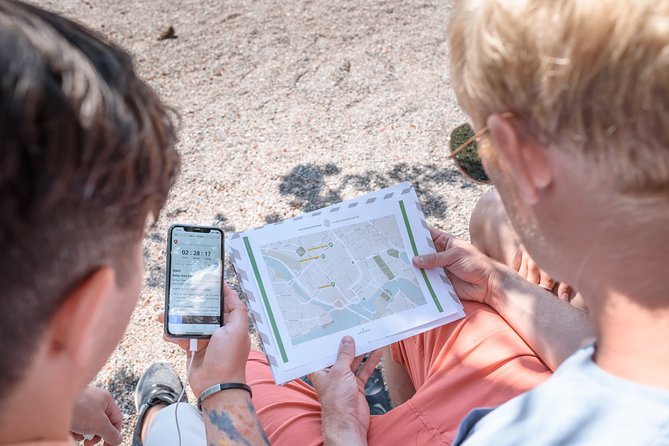
This quest is aimed at people who like detective-style puzzles and escape-room energy, but don’t want to stay indoors. The good news is that you don’t need special expertise in Stockholm. The game format pushes you to learn through looking and moving, so it works even if you’re new to the city.
The challenge level is often described as manageable. It’s the kind of puzzle work where your brain has to work, but it’s not trying to crush you with overly complicated logic. In other words: it should feel like a fun test of attention, not homework.
Team play matters here. Because the goal is answering as many questions as possible before time runs out, the best groups use a rhythm. One person can handle the app prompts while the others confirm what the street is showing you, so nobody gets stuck waiting for one person’s interpretation.
If you’re the solo type, you can still play, but you’ll likely solve slower and miss more “eyes on the scene” moments. This style of game rewards at least one teammate who will help you notice details quickly.
When CityQuest is a smart booking—and when it isn’t
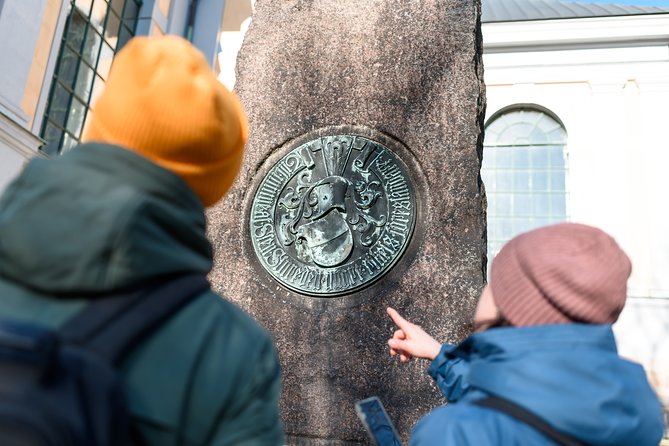
I’d book this if you want an active Stockholm afternoon that feels different from standard sightseeing. It’s a good match for friend groups and family groups who like puzzles, enjoy walking in the city center, and want a story that makes the landmarks feel connected.
I’d also book it if you like city exploration without needing a guide lecturing the whole time. You’re given evidence and a case journal, then you do the detective work yourself. That hands-on pace tends to make the city feel more personal.
Skip it or think twice if you hate phone-based games. You need your own device and an internet connection, and you’ll be using the app for the criminal journal and the questions. If you’re traveling with limited data, or you know your phone battery always drains quickly, the experience will feel stressful instead of fun.
And take the weather note seriously. The experience requires good weather, so rain or heavy wind can be a real factor if you’re the type who hates pushing through discomfort.
Should you book CityQuest Stockholm: To See Stockholm and Die?
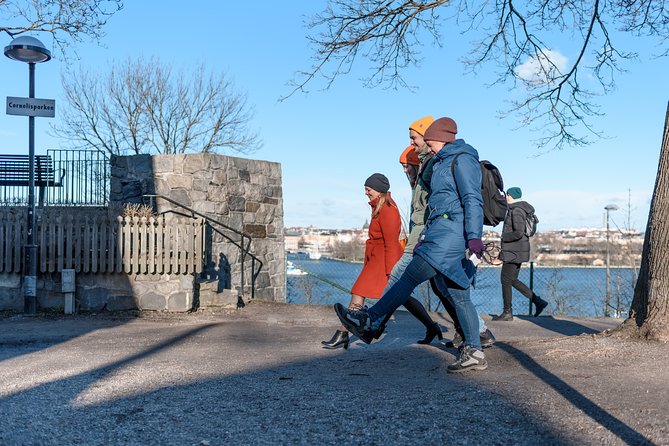
Yes, if you want a low-cost, timed detective walk that turns landmarks into clues and gives you a satisfying story wrap-up. At $20.31 per person, it’s strong value for a 2.5-hour activity because the game adds structure and purpose to the route—from Central Station through Kungstradgarden to the Opera area.
Book it especially if you’re traveling with a group that likes puzzles and quick problem-solving. You’ll get more from it when you divide roles and move as a team.
If you prefer traditional guided commentary, or you’re traveling with a phone/internet problem, it’s better to choose a different activity. This one runs on your device, the case journal, and good walking conditions.
FAQ

How long is the CityQuest in Stockholm?
It takes about 2 hours 30 minutes (approx.) to complete the game.
Where does the quest start?
The start point is Centralplan 15, 111 20 Stockholm, Sweden.
Where does the quest end?
The mission finishes next to the Royal Opera, and the activity is listed as ending back at the meeting point.
What do I receive at the start of the game?
You’ll get a set of evidence and simple instructions to help you navigate the city and solve the mystery.
What app or online tool do I use during the quest?
You’ll use a cellphone app and you’ll have access to an investigation web application with the criminal journal.
Do I need my own phone or internet?
Yes. Mobile phone and internet connection are not included, so you’ll need both to play.
What landmarks are included on the route?
The quest includes: the Royal Swedish Opera, Royal Academy of Fine Arts, Kungstradgarden, Karl XII statue (Kungstradgarden), Statue of Nils Ericson, and Sergels Torg.
Is this private or shared with other people?
It’s a private tour/activity, so only your group participates.
Do I need to know Stockholm beforehand?
No. The game is designed so a tourist can enjoy it without needing deep prior knowledge of Stockholm.